

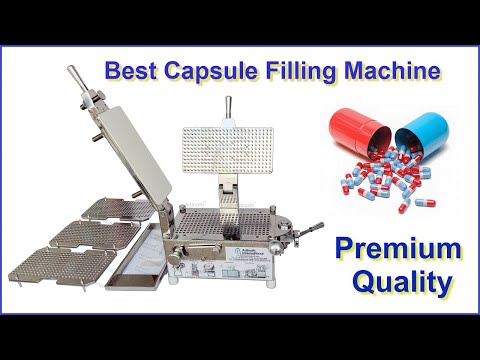
In pharmaceutical and nutraceutical manufacturing, capsule production requires a balance of accuracy, hygiene, and efficiency. While fully automated systems are widely used in large-scale industries, many mid-sized manufacturers still depend on flexible equipment that allows controlled operation and cost efficiency. Among these solutions, semi-automatic systems have become a practical choice for diverse production environments.
A semi automatic capsule filling machine is designed to streamline capsule production by combining manual handling with automated dosing mechanisms. This hybrid approach allows operators to maintain control over key stages of the process while benefiting from improved speed and precision. As a result, it is widely used in pharmaceutical companies, research facilities, and contract manufacturing setups where production requirements frequently change.
Table of Contents
ToggleWhat Makes Semi Automatic Systems Different?
Unlike fully manual machines that rely heavily on operator skill, or fully automatic machines that require high investment and infrastructure, semi-automatic systems strike a middle ground. They reduce human error while still allowing flexibility in production control.
The operator typically handles tasks such as loading capsules, monitoring the process, and initiating cycles, while the machine manages filling, dosing, and locking functions with mechanical precision. This combination ensures better consistency compared to manual methods without the complexity of fully automated systems.
Key Features of Semi Automatic Capsule Filling Machines
Semi-automatic capsule filling machines come with several advanced features that enhance productivity and operational control. Some of the most notable features include:
- Precision dosing system for consistent capsule filling
- Vacuum-based capsule separation for smooth processing
- Adjustable filling mechanism for different powder densities
- Stainless steel construction for hygiene and durability
- Easy-to-use control panel for operation management
- Modular design for simple maintenance and cleaning
These features ensure that the machine can handle different formulations, including powders, granules, and pellet-based products.
Working Efficiency and Operational Flexibility
One of the main advantages of this type of equipment is its operational flexibility. Manufacturers often deal with multiple product lines, and switching between formulations can be time-consuming on fully automated systems. Semi-automatic machines simplify this process.
Operators can quickly adjust dosage settings and replace product materials without extensive downtime. This makes the system particularly useful for small batch production and research-based manufacturing where frequent changes are required.
Additionally, the machine maintains consistent output quality, ensuring uniform capsule weight and proper sealing, which is critical in pharmaceutical applications.
Benefits of Using Semi Automatic Capsule Filling Machines
The advantages of using semi-automatic systems extend beyond basic functionality. They offer several operational and economic benefits that make them highly valuable in production environments.
1. Cost-Effective Production Solution
These machines require lower investment compared to fully automatic systems, making them suitable for small and medium enterprises.
2. High Accuracy and Consistency
The dosing mechanism ensures uniform filling, reducing product variation and improving quality control.
3. Reduced Labor Dependency
Although manual input is required, the machine significantly reduces the need for skilled labor during the filling process.
4. Hygienic Manufacturing Environment
With stainless steel construction and enclosed processing systems, contamination risks are minimized.
5. Easy Maintenance and Operation
Simple design and accessible components make cleaning and maintenance straightforward, reducing downtime.
Applications Across Industries
Semi-automatic capsule filling machines are widely used in industries where precision and flexibility are essential. Their applications include:
- Pharmaceutical manufacturing for tablets, antibiotics, and supplements
- Nutraceutical industries producing vitamins and herbal capsules
- Research laboratories conducting formulation trials
- Contract manufacturing organizations handling varied product batches
This versatility makes them an essential part of modern capsule production setups.
Why Manufacturers Prefer Semi Automatic Systems
Many manufacturers prefer semi-automatic machines because they offer a balance between productivity and control. Fully automated systems, while efficient, may not always be practical for small production runs or specialized formulations.
Semi-automatic systems allow operators to intervene when necessary, ensuring better oversight of product quality. This is particularly important in industries where formulation accuracy directly impacts product effectiveness and regulatory compliance.
Conclusion
The semi automatic capsule filling machine plays an important role in bridging the gap between manual and fully automated capsule production. With its combination of precision, flexibility, and cost efficiency, it is widely used across pharmaceutical and nutraceutical industries. Its key features and practical benefits make it a reliable choice for manufacturers looking to maintain quality while optimizing production processes.



More Stories
Therapy for Postpartum Depression: Supporting Mental Health After Childbirth
Key Differences Between Medical Silicone Tube Types and Their Uses
11 TMJ Disorder Treatment Solutions That Help Reduce Pain and Improve Function