

Modern food production facilities require reliable thermal processing equipment to maintain food safety, product quality, and consistent manufacturing output. As production operations become more automated, manufacturers increasingly rely on equipment that can regulate heating, pressure, and cooling with minimal manual intervention. Water spray sterilization technology is one approach used to process sealed food products under controlled thermal conditions.
An Automatic Water Spray Sterilizer combines heated water circulation with programmable controls to manage important stages of the sterilization cycle. By coordinating temperature, pressure, water distribution, and processing time, these systems help manufacturers follow established thermal processing procedures more consistently. Understanding their operating principles and automation features can support better equipment selection and production planning.
Understanding Automatic Water Spray Sterilizers
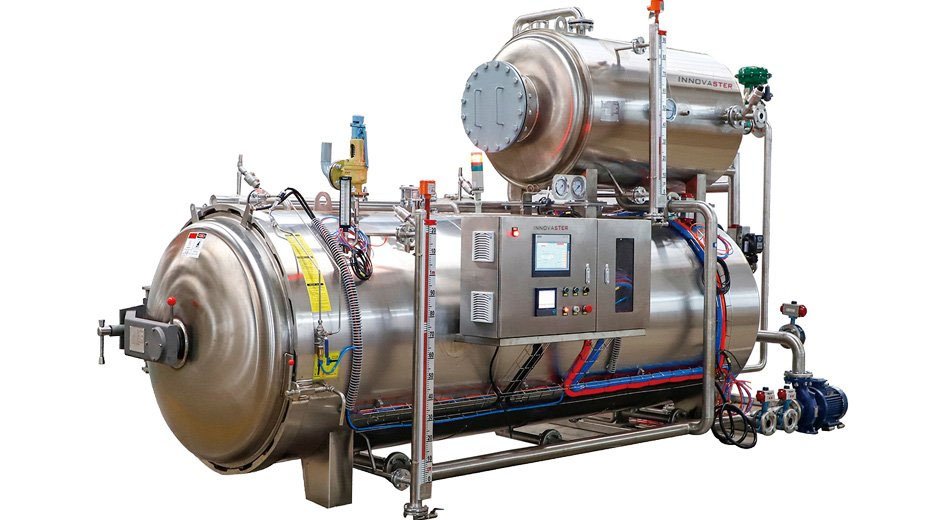
An automatic water spray sterilizer is an industrial retort system that uses heated water distributed through spray nozzles to process packaged food products.
The machine typically includes a pressure chamber, heating system, circulation pump, spray distribution network, sensors, and programmable control panel. These components work together to provide controlled heating and cooling.
Automatic water spray sterilizers can be used for compatible products such as:
- Canned vegetables and fruits
- Meat and poultry products
- Seafood
- Soups and sauces
- Ready-to-eat meals
- Retort pouch products
- Other heat-resistant packaged foods
The appropriate equipment configuration depends on the food formulation, packaging material, container dimensions, production volume, and validated thermal process.
Why Process Control Matters in Food Production
Thermal processing requires careful coordination of several operating conditions. Variations in temperature, pressure, or processing time can affect the effectiveness of the treatment and the quality of the finished product.
Effective process control helps manufacturers:
- Maintain repeatable processing conditions
- Monitor important operating parameters
- Reduce unnecessary manual adjustments
- Identify deviations during production
- Improve batch documentation
- Support quality assurance and traceability
- Coordinate sterilization with other production operations
Automation can help manage these activities, but it does not replace proper equipment maintenance, operator training, or thermal process validation.
Main Components of an Automatic Water Spray Sterilizer
Understanding the main equipment components helps manufacturers evaluate system performance and maintenance requirements.
1. Retort Chamber
The chamber is the pressure vessel where packaged products undergo thermal processing.
It must be designed to withstand the intended operating temperature and pressure. Its internal dimensions also determine the available loading capacity.
Important considerations include chamber construction, door sealing, product basket compatibility, internal circulation, and maintenance access.
2. Heating System
The heating system raises the temperature of the circulating water.
Depending on the equipment design, heat may be supplied through steam injection or a heat exchanger. Heating capacity should match the intended batch size and processing requirements.
3. Water Circulation Pump
The circulation pump moves heated water through the distribution system.
Its performance influences water flow and spray coverage throughout the chamber. Pump capacity should be suitable for the chamber design and intended loading arrangement.
4. Spray Nozzles
Spray nozzles distribute heated water over the product load.
Their position and condition affect water distribution. Regular inspection helps identify deposits, blockages, or damage that could reduce circulation performance.
5. Temperature and Pressure Sensors
Sensors monitor important operating conditions throughout the processing cycle.
Temperature instruments provide information about heating conditions, while pressure sensors help maintain suitable chamber pressure.
Both require regular calibration to support reliable measurements.
6. Programmable Control Panel
The control panel coordinates the automated operating sequence.
Depending on the machine configuration, it may provide:
- Programmable processing recipes
- Temperature and pressure monitoring
- Heating and cooling control
- Cycle timing
- Alarm notifications
- Batch data recording
- Operator access management
7. Cooling System
The cooling system reduces product temperature after the sterilization holding period.
Cooling must be controlled carefully to protect containers from damage caused by unsuitable pressure differences or rapid temperature changes.
How Automatic Water Spray Sterilization Works
An automatic water spray sterilizer follows a sequence of programmed operating stages. The exact sequence depends on the machine design and validated processing schedule.
Stage 1: Product Loading
Sealed containers are arranged in baskets or racks and placed inside the retort chamber.
The loading arrangement should allow water to circulate effectively around the products.
Stage 2: Chamber Preparation
The chamber door is closed and secured.
The control system follows the required preparation procedure before heating begins. This may include checking water levels, circulation conditions, and other operating parameters.
Stage 3: Water Heating
The heating system raises the circulating water temperature according to the selected processing recipe.
Sensors monitor operating conditions and provide feedback to the control system.
Stage 4: Water Distribution
The circulation pump moves heated water through the spray nozzles.
The nozzles distribute water throughout the chamber to transfer thermal energy to the product load.
Stage 5: Sterilization Holding
Once the required conditions are reached, the system maintains them for the specified holding period.
The necessary time and temperature must be established for the specific food and packaging combination.
Stage 6: Controlled Cooling
After the holding period, the system begins cooling the products.
Water circulation and pressure are managed according to the validated process and packaging requirements.
Stage 7: Cycle Completion and Unloading
When the cooling stage is complete and the chamber is safe to open, products can be unloaded for inspection and subsequent production operations.
How Automation Improves Process Control
Automation supports more consistent management of the retort cycle by coordinating equipment functions through programmed instructions and sensor feedback.
Programmable Processing Recipes
Different food products may require different processing schedules.
Recipe-based controls allow authorized operators to select established settings for specific products and packaging formats. This can reduce the risk of manually entering incorrect parameters.
Automatic Temperature Regulation
Temperature sensors provide feedback to the control system, allowing heating operations to be adjusted according to programmed requirements.
Reliable regulation helps the machine follow the intended processing sequence.
Pressure Monitoring
Pressure sensors provide information about chamber conditions during heating and cooling.
The control system can monitor pressure against defined operating limits and alert operators when deviations occur.
Automatic Cycle Sequencing
Automated controls coordinate different stages of the processing cycle, including heating, holding, and cooling.
This helps reduce unnecessary manual intervention and supports repeatable operating procedures.
Alarm and Fault Notifications
Depending on the control system, alarms can notify operators about abnormal conditions such as temperature deviations, pressure variations, or equipment faults.
Operators must follow approved procedures to investigate and resolve these events.
The Importance of Heat Distribution and Penetration
Automation alone cannot guarantee uniform sterilization. The equipment must also distribute thermal energy effectively throughout the chamber and into the food.
Heat Distribution
Heat distribution describes how temperature varies across different locations within the retort chamber.
In water spray systems, distribution depends on:
- Spray nozzle arrangement
- Pump performance
- Water flow rate
- Chamber design
- Product basket configuration
- Container spacing
Temperature distribution testing helps identify potential variations under defined loading conditions.
Heat Penetration
Heat penetration describes how thermal energy moves from the container surface into the food.
Product composition, container dimensions, fill weight, and initial product temperature all influence the rate of heating.
Heat penetration studies help identify the slowest-heating location within the product and support the development of an appropriate processing schedule.
Packaging Compatibility in Automatic Water Spray Systems
Packaging selection influences equipment requirements and processing performance.
Metal Cans
Metal cans are widely used for commercially sterilized foods. Their dimensions, fill weight, headspace, and closure integrity must be considered when establishing processing conditions.
Glass Jars
Glass containers can be processed in suitable retorts, but heating and cooling must be controlled to reduce the risk of thermal shock.
Retort Pouches
Flexible pouches can offer efficient heat transfer because of their relatively thin product profile.
However, pouch thickness, sealing quality, and pressure management are important considerations.
Heat-Resistant Plastic Containers
Some plastic trays and containers are designed for retort applications.
Manufacturers should confirm that packaging materials can withstand the intended temperature and pressure conditions without losing structural or sealing integrity.
Data Recording and Production Traceability
Automatic control systems may provide useful production records that help manufacturers review completed processing cycles.
Depending on the equipment configuration, records may include:
- Batch identification
- Processing start and finish times
- Temperature readings
- Pressure readings
- Heating and cooling information
- Alarm history
- Recipe details
- Operator information
These records can support internal quality checks, traceability, process review, and regulatory documentation.
Manufacturers should establish procedures for reviewing records and investigating any deviations from approved processing requirements.
Maintenance Requirements for Automatic Water Spray Sterilizers
Regular maintenance is essential for keeping the equipment operating reliably.
Important maintenance activities include:
- Inspecting the chamber: Check for corrosion, damage, and structural concerns.
- Cleaning spray nozzles: Remove deposits that may restrict water flow.
- Checking circulation pumps: Inspect pump performance, seals, and motors.
- Inspecting valves and piping: Look for leakage, blockages, or wear.
- Calibrating sensors: Verify temperature and pressure measurement accuracy.
- Checking control components: Confirm that sensors, alarms, and automated functions operate correctly.
- Testing safety devices: Follow manufacturer procedures and applicable equipment requirements.
- Reviewing cycle records: Identify recurring alarms or unusual operating variations.
A preventive maintenance schedule should follow the manufacturer’s recommendations and the facility’s operating conditions.
Common Process Control Challenges
Even automated systems can experience operating problems that affect sterilization consistency.
Blocked Spray Nozzles
Deposits can reduce water flow and affect distribution throughout the chamber.
Routine cleaning and inspection help maintain nozzle performance.
Inaccurate Sensors
Uncalibrated temperature or pressure instruments can provide unreliable readings.
Regular calibration is necessary to support dependable process monitoring.
Incorrect Loading Arrangements
Overloading or using an unsuitable basket arrangement can restrict water circulation.
The production loading pattern should match the configuration used during process validation.
Inconsistent Product Preparation
Variations in formulation, fill weight, container dimensions, or initial product temperature can affect heat penetration.
Manufacturers should maintain consistent preparation and packaging procedures.
Unresolved Process Alarms
Ignoring alarms or making unapproved changes to operating parameters can compromise process control.
Operators should follow established procedures for investigating deviations and obtaining technical approval before resuming production.
Food Safety Validation and Regulatory Considerations
An automatic sterilizer must be evaluated according to its ability to deliver the required thermal treatment to the actual product load.
Reaching the target chamber temperature does not automatically prove that every container has received adequate processing.
Two important evaluations support process validation:
Temperature distribution testing: Determines how temperature varies throughout the chamber under defined loading and operating conditions.
Heat penetration testing: Evaluates how quickly heat reaches the slowest-heating location within the food container.
These studies help qualified thermal processing specialists establish scientifically supported processing schedules.
For low-acid shelf-stable foods, scheduled processes should be established in accordance with applicable regulations. Changes to formulation, packaging, fill weight, or loading configuration may require a review or revalidation.
Selecting an Automatic Water Spray Sterilizer
Choosing suitable equipment requires an assessment of both current production requirements and future manufacturing plans.
Manufacturers should evaluate:
- Required batch capacity
- Product types and formulations
- Packaging materials and container dimensions
- Heating and cooling performance
- Water circulation capacity
- Temperature and pressure control features
- Automation and data recording functions
- Available steam, water, and electrical utilities
- Maintenance access and service support
- Applicable pressure equipment requirements
The selected system should match the facility’s production needs while supporting validated food safety processes.
Conclusion
Automatic water spray sterilizers help modern food production facilities manage thermal processing through coordinated water circulation, temperature regulation, pressure control, and automated cycle sequencing. These features support repeatable operations and provide useful monitoring information for production and quality assurance teams.
However, reliable sterilization depends on more than automation. Manufacturers must also maintain effective heat distribution, validate heat penetration, use compatible packaging, and follow established processing procedures. With appropriate equipment selection, preventive maintenance, and qualified process oversight, automatic water spray systems can support consistent and dependable commercial food production.
About Post Author



More Stories
How Iron Castings Manufacturers Meet Custom Industrial Component Requirements
How to Evaluate the Production Capabilities of a Thermal Printer Manufacturer
The Role of Xprinter Thermal Printers in Improving Retail Checkout Efficiency