

Steel channels are essential components in many construction and industrial projects because they provide structural support while remaining relatively easy to fabricate and install. Among the available options, the 4-inch C channel is commonly considered for applications that require a compact steel section with a practical balance of strength, weight, and versatility. Its C-shaped profile makes it suitable for framing, equipment supports, and various secondary structural elements.
When selecting a 4 Inch C Channel, it is important to understand its dimensions, material properties, manufacturing standards, and intended use. Although the nominal size provides a useful starting point, the actual performance of a channel depends on its complete cross-sectional geometry and the conditions under which it will be installed.
What Is a 4 Inch C Channel?
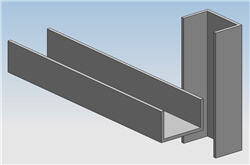
A 4-inch C channel is a structural steel section with a nominal web height of approximately four inches. It features a central web and two flanges extending from the same side, creating a profile that resembles the letter C.
This shape provides convenient surfaces for fastening and connecting the channel to other structural components. Depending on the product series, the flanges may be parallel or tapered, and the channel may have different thicknesses and corner radii.
The term “4 inch” generally refers to the nominal depth of the channel rather than its complete dimensions. Flange width, web thickness, flange thickness, and weight per unit length can vary between manufacturers and standards.
Common Specifications of a 4-Inch C Channel
Understanding the main specifications helps buyers and engineers determine whether a particular channel is appropriate for a project.
1. Web Height
The web is the central vertical portion of the channel. In a nominal 4-inch section, its depth is approximately four inches, although the precise dimension depends on the applicable product standard.
Web height influences the channel’s structural depth and its compatibility with surrounding components.
2. Flange Width
The flanges extend outward from the web and provide surfaces for fastening, welding, and connecting other materials.
Different 4-inch channel series can have different flange widths. Therefore, the nominal depth alone is not enough to establish whether a channel will fit a particular connection or assembly.
3. Material Thickness
Web and flange thicknesses affect the channel’s weight, strength, and resistance to local deformation. Some products use relatively thin steel for lightweight framing, while heavier sections are manufactured for more demanding applications.
Always check the manufacturer’s technical drawing to confirm the actual thickness measurements.
4. Steel Grade
The steel grade determines important mechanical properties, including yield strength, tensile strength, and ductility.
Carbon steel is commonly used for structural channels, but the specific grade should be selected according to the project’s design requirements and applicable standards.
5. Weight per Unit Length
Channel weight is an important purchasing and engineering consideration. It affects transportation, handling, installation, and material cost.
The weight of a 4-inch C channel varies according to its flange dimensions, thickness, and manufacturing specification. Product data sheets should be used for accurate calculations.
Manufacturing Methods
A 4-inch C channel may be manufactured using different production methods, each offering distinct characteristics.
Hot-Rolled C Channels
Hot-rolled channels are formed by passing heated steel through rolling equipment. They are commonly used in structural applications where robust sections and standardized dimensions are required.
Their cross-sectional geometry and material properties make them suitable for many construction and industrial support systems.
Cold-Formed C Channels
Cold-formed channels are produced by shaping steel sheets or coils at room temperature. They are often used in lightweight framing, wall systems, roof structures, and equipment supports.
These channels can offer consistent dimensions and efficient material use, depending on the design and manufacturing specifications.
Galvanized C Channels
Galvanized channels feature a zinc coating that helps protect the underlying steel from corrosion. They are useful in applications where the material may be exposed to moisture or outdoor conditions.
The coating type and thickness should be selected based on the expected environmental exposure.
Benefits of Using a 4-Inch C Channel
The 4-inch channel profile offers several practical advantages across construction and manufacturing projects.
Compact Structural Design
Its nominal depth makes it useful in applications where a moderate-sized structural section is needed without occupying excessive space. This can be beneficial for secondary framing, support brackets, and compact equipment assemblies.
Convenient Fabrication
Steel C channels can generally be cut, drilled, welded, and bolted using suitable fabrication techniques. Their open profile also provides accessible surfaces for many connection arrangements.
Fabrication procedures should account for the steel grade, thickness, and relevant safety requirements.
Versatile Applications
A 4-inch C channel can be incorporated into different types of structures, including building frameworks, storage systems, machinery supports, and transportation equipment.
Its adaptability allows designers to use a familiar section across multiple components, provided the engineering requirements are satisfied.
Efficient Material Use
The C-shaped profile can provide useful structural properties without requiring a solid steel section. This may help reduce material consumption and overall weight when compared with less efficient alternatives for a particular application.
Compatibility With Other Components
C channels can be connected to steel plates, angles, beams, tubes, and other framing materials. This makes them useful in assemblies that combine multiple structural profiles.
Common Construction Applications
The 4-inch C channel is used in several areas of construction and industrial development.
Building Frames and Secondary Supports
C channels can be used as secondary framing members, wall supports, and roof components. Their suitability depends on the required span, loading conditions, and connection design.
For primary load-bearing applications, the channel must be verified through structural calculations.
Roof and Wall Systems
In some building systems, C channels provide support for roofing materials, cladding, and wall assemblies. Cold-formed varieties are especially common in lightweight construction.
The selected section must account for wind loads, spacing, fastener requirements, and the overall building design.
Warehouse and Storage Structures
Storage racks, shelving frames, and support assemblies may use C channels as part of their structural framework.
The channel dimensions should be matched to the expected storage loads and the design of the complete rack system.
Equipment and Machinery Supports
Manufacturers may use 4-inch channels to build equipment bases, machine frames, mounting structures, and maintenance platforms.
Their open geometry makes it easier to incorporate brackets and connection plates into customized assemblies.
Transportation and Trailer Components
Suitable C channels may be used in trailer frames, vehicle support structures, and transport equipment. These applications can involve vibration, repeated loading, and impact forces, so fatigue performance and connection design should be evaluated carefully.
How to Choose the Right 4-Inch C Channel
Selecting a suitable product requires reviewing more than its nominal size. The following considerations can help guide the decision.
- Confirm the dimensions: Check the web height, flange width, web thickness, flange thickness, and overall length.
- Evaluate the loading conditions: Identify the expected loads, support spacing, bending forces, and possible torsional effects.
- Select the correct steel grade: Ensure that the material meets the required mechanical properties and applicable project standards.
- Consider corrosion protection: Choose an appropriate surface treatment for indoor, outdoor, humid, or industrial environments.
- Review connection details: Make sure the channel can be securely connected to the surrounding structural elements.
- Compare product specifications: Check technical drawings, dimensional tolerances, and weight information before purchasing.
For structural use, a qualified engineer should verify the section’s capacity, deflection, stability, and connection requirements.
4-Inch C Channel vs. Other Steel Sections
A 4-inch C channel is not the only option for compact structural applications. Other profiles may offer different advantages.
An angle section has two perpendicular legs and is often used for bracing, brackets, and connections. An I-beam is generally more suitable for applications requiring efficient bending resistance about its strong axis. Rectangular hollow sections have closed profiles that can provide improved torsional resistance compared with open channels.
C channels are often preferred when accessible connection surfaces and an open profile are useful. The best option depends on the direction of loading, available space, fabrication needs, and overall structural design.
Purchasing and Quality Considerations
Before ordering a 4-inch C channel, buyers should confirm that the supplied product matches the project specification.
Important details include the manufacturing standard, steel grade, exact dimensions, surface finish, and required quantity. Material certificates and inspection documentation may also be necessary for projects with formal quality-control requirements.
It is also useful to consider stock availability, standard supply lengths, cutting services, packaging, and delivery schedules. Comparing complete product specifications rather than nominal sizes alone helps prevent errors during installation.
Conclusion
A 4-inch C channel is a versatile steel section that can support a wide range of construction, manufacturing, and industrial applications. Its compact C-shaped profile, fabrication flexibility, and compatibility with other structural components make it useful for secondary framing, equipment supports, storage systems, and selected building components.
Choosing the right product requires careful evaluation of dimensions, thickness, steel grade, loading conditions, and environmental exposure. By checking technical specifications and obtaining appropriate engineering verification, project teams can select a channel that meets their structural and practical requirements.
About Post Author





More Stories
How to Clean and Maintain a Neoprene Beach Bag After Beach Trips
U Type Sheet Pile: Features, Benefits, and Applications in Foundation Projects
How to Choose Pool Finishes and Colors for a Custom Swimming Pool