

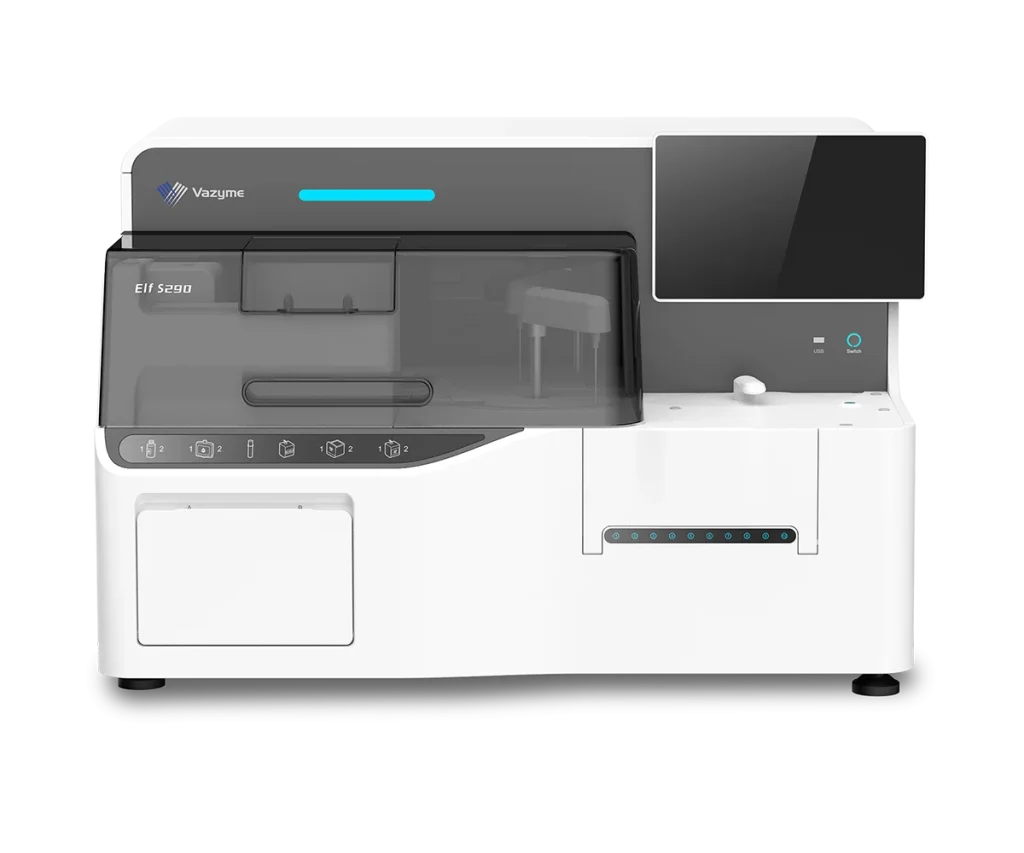
Alzheimer’s disease is a progressive neurological disorder that affects memory, thinking, behavior, and the ability to perform everyday activities. As researchers work to understand its underlying mechanisms, identifying reliable biological indicators has become an important part of diagnostic research. Biomarkers can provide evidence of disease-related changes that may not be fully captured by cognitive assessments or clinical observations alone.
An Ad Biomarker Panel combines measurements of multiple biological indicators associated with Alzheimer’s disease, allowing researchers to investigate different aspects of its pathology. Depending on the panel, these indicators may include amyloid-beta peptides, phosphorylated tau proteins, and markers of neuronal injury or glial activity. By examining these measurements together, researchers can develop a more comprehensive understanding of disease-related biology, evaluate diagnostic approaches, and support the design of clinical studies.
Understanding Alzheimer’s Disease Biomarker Panels
A biomarker panel is a group of laboratory measurements selected to provide complementary information about a biological condition. In Alzheimer’s disease research, panels are designed to investigate processes associated with amyloid accumulation, abnormal tau changes, neuronal damage, and other neurological responses.
Unlike a single-marker test, a panel can capture several biological signals within one testing framework. This approach is valuable because Alzheimer’s disease involves multiple interacting processes, and individual biomarkers differ in their specificity and the information they provide.
Panels may use blood plasma, serum, or cerebrospinal fluid (CSF), depending on the biomarkers being measured and the study’s objectives. The appropriate specimen and analytical platform depend on the intended application, assay characteristics, and available validation evidence.
Key Biomarkers Used in Diagnostic Research
Selecting appropriate biomarkers is essential to developing a useful panel. Researchers typically consider the biological process represented by each marker, its analytical performance, and its relevance to the research question.
Amyloid-Beta Peptides
Amyloid-beta peptides are associated with amyloid plaque formation, one of the characteristic pathological features of Alzheimer’s disease. Researchers frequently investigate amyloid-beta 42 (Aβ42), amyloid-beta 40 (Aβ40), and the Aβ42/Aβ40 ratio.
In cerebrospinal fluid, a reduced Aβ42 concentration or Aβ42/Aβ40 ratio can be associated with amyloid deposition in the brain. Blood-based amyloid measurements are also an active area of research, although their reliability depends on the assay and the population being evaluated.
Including amyloid-related markers can help researchers investigate whether biological evidence of amyloid pathology is present.
Phosphorylated Tau Proteins
Tau is a protein involved in maintaining neuronal structure. In Alzheimer’s disease, abnormal tau-related changes are associated with disease pathology and the development of neurofibrillary tangles.
Phosphorylated tau biomarkers, including p-tau181 and p-tau217, are widely studied in CSF and blood. Their measurement can contribute to the biological assessment of Alzheimer’s disease, particularly when interpreted alongside amyloid-related markers and relevant clinical information.
The performance of individual tau assays can vary, so researchers must use methods validated for their specific purpose.
Neurofilament Light Chain
Neurofilament light chain (NfL) is a protein associated with neuronal axons. When nerve cells are damaged, NfL can be released into CSF and blood.
Elevated NfL concentrations can indicate neuroaxonal injury, making this biomarker useful in research investigating neurological damage and disease progression. However, NfL is not specific to Alzheimer’s disease and may be elevated in other neurological conditions.
Its inclusion in a panel can add information about neuronal injury, complementing markers more closely associated with amyloid or tau pathology.
Glial Fibrillary Acidic Protein
Glial fibrillary acidic protein (GFAP) is associated with astrocytes, which support and protect neurons. Changes in GFAP levels can reflect astrocyte activation and related responses within the central nervous system.
Researchers study GFAP to understand glial activity in Alzheimer’s disease and other neurological conditions. When assessed alongside amyloid and tau biomarkers, it may help characterize additional aspects of the biological processes involved.
How Biomarker Panels Support Diagnostic Research
Biomarker panels can contribute to several stages of Alzheimer’s disease research, from investigating early biological changes to evaluating candidate diagnostic methods.
Providing a More Complete Biological Profile
Alzheimer’s disease cannot always be characterized adequately through a single biological measurement. Amyloid-related biomarkers, phosphorylated tau, and indicators of neuronal injury reflect different processes.
Measuring complementary biomarkers can help researchers identify patterns that would be difficult to understand from an isolated result. This broader assessment can improve the characterization of study populations and support investigations into how different biological processes relate to one another.
Investigating Early Disease-Related Changes
Some biological changes associated with Alzheimer’s disease may begin before noticeable cognitive symptoms develop. Researchers use biomarkers to investigate these changes and explore how they relate to later clinical outcomes.
Panels can help researchers compare biomarker patterns across different stages of disease and evaluate potential approaches for identifying individuals who may benefit from further assessment.
However, an abnormal biomarker result does not independently establish when symptoms will appear or determine an individual’s future clinical course.
Evaluating Diagnostic Performance
Diagnostic research requires evidence that a test can distinguish relevant biological conditions with acceptable accuracy. Biomarker panels allow researchers to evaluate multiple measurements and determine whether combinations of markers improve classification compared with individual biomarkers.
Studies may assess sensitivity, specificity, predictive values, and performance across different populations. These measures help determine whether a panel is appropriate for a proposed use, such as research screening or supporting clinical evaluation.
Results must be validated in independent and representative populations before conclusions about broader clinical performance can be drawn.
Supporting Clinical Trial Recruitment
Many Alzheimer’s clinical trials investigate treatments targeting specific disease mechanisms. Biomarker evidence can help researchers identify participants whose biological profiles align with a study’s eligibility criteria.
For example, amyloid-related measurements may help establish evidence of amyloid pathology, while tau-related markers can contribute additional biological information. Using validated biomarkers can make participant selection more consistent and help researchers define the population being studied.
The biomarkers required depend on the treatment target, trial protocol, and applicable study standards.
Laboratory Methods for Measuring Alzheimer’s Biomarkers
Reliable diagnostic research depends on analytical methods that can measure target proteins accurately and consistently. Because many Alzheimer’s-related biomarkers occur at low concentrations in blood, assay sensitivity and specificity are particularly important.
Immunoassays
Immunoassays use antibodies to detect and quantify specific proteins in biological samples. Depending on the platform, they may use enzyme-based, chemiluminescent, or other signal-detection techniques.
These methods are widely used in biomarker research because they can be designed to target particular proteins or protein forms. Their performance depends on antibody specificity, calibration, interference, and the assay’s validated measurement range.
High-Sensitivity Analytical Platforms
Some biomarkers require highly sensitive detection because their concentrations in blood can be low. Specialized platforms may help researchers quantify these targets and distinguish relevant biological differences.
The choice of platform should reflect the biomarker being measured, the specimen type, the expected concentration range, and the requirements of the study.
Multiplex Testing
Multiplex methods are designed to measure multiple targets in the same sample or analytical workflow. This can be useful when a study needs to evaluate several biological processes while conserving specimen volume and improving testing efficiency.
However, measuring more biomarkers at once does not automatically improve diagnostic performance. Each target requires appropriate analytical validation, and the combined panel must be evaluated as a whole.
Blood-Based Panels and Cerebrospinal Fluid Testing
Blood-based and CSF biomarker panels have different practical and scientific characteristics.
Blood collection is generally more accessible and less invasive than lumbar puncture. This makes blood-based testing attractive for large research studies, repeated sampling, and investigations into scalable testing approaches. Nevertheless, blood biomarkers can be affected by factors such as peripheral biological processes, sample handling, and assay sensitivity.
CSF provides a different source of biological information and has an established role in Alzheimer’s biomarker research. Measuring amyloid and tau-related markers in CSF can support the assessment of disease-associated pathology, but collection requires a lumbar puncture performed by a qualified professional.
The choice between blood and CSF depends on the research question, testing platform, clinical context, and available validation data. Findings from one sample type should not automatically be assumed to apply to another.
Factors That Influence Biomarker Panel Reliability
A biomarker panel is only as useful as the quality of its measurements and the evidence supporting its interpretation. Several factors can affect research findings.
- Analytical validity: Each assay should demonstrate suitable precision, sensitivity, specificity, and reproducibility.
- Sample quality: Collection procedures, processing delays, storage conditions, and repeated freeze-thaw cycles can affect biomarker measurements.
- Standardization: Consistent protocols and appropriate calibration improve comparability between laboratories and studies.
- Population characteristics: Age, coexisting conditions, and other biological factors may influence certain biomarkers.
- Clinical validation: The panel should be tested in populations relevant to its intended application.
- Interpretation criteria: Thresholds and decision rules should be supported by evidence and appropriate for the specific assay.
Researchers should also evaluate whether the combination of markers provides meaningful additional information beyond the individual measurements. A larger panel may increase complexity without improving diagnostic accuracy if its markers are redundant or poorly validated.
Limitations in Alzheimer’s Diagnostic Research
Despite their potential, biomarker panels have important limitations. Some biomarkers reflect general neurological injury or inflammation rather than Alzheimer’s disease specifically. Consequently, an abnormal result may require further investigation to determine its significance.
Biomarker levels can also vary according to disease stage, biological characteristics, and laboratory methods. Differences in assay calibration or sample processing may make it difficult to compare results across studies unless procedures are appropriately standardized.
Another consideration is that biological evidence and clinical symptoms do not always correspond directly. A panel may provide evidence of disease-associated pathology without establishing the degree of cognitive impairment or the impact on everyday functioning.
For these reasons, biomarker findings should be interpreted within the context of clinical assessment, medical history, and other relevant investigations. Research-use tests should not be treated as clinically established diagnostic tools unless they have been validated and authorized for the intended use.
The Role of Biomarker Panels in Drug Development
Biomarker panels can support Alzheimer’s drug development by helping researchers characterize participants, investigate treatment mechanisms, and monitor biological changes during clinical studies.
Before treatment begins, biomarker measurements may establish a baseline profile. During a trial, repeated testing can help researchers determine whether an investigational therapy affects the biological pathway it was designed to target.
These measurements can provide valuable evidence about biological activity, but they do not automatically demonstrate that a treatment improves memory, daily functioning, or other clinical outcomes. Researchers must evaluate biomarker results alongside appropriate clinical endpoints and safety data.
Panels can also help researchers explore differences in treatment response among participants with distinct biological profiles, potentially informing the design of future studies.
Future Developments in Alzheimer’s Biomarker Research
Research continues to focus on improving blood-based testing, increasing assay sensitivity, and establishing more consistent measurement standards. These developments could make biomarker assessment more practical across a wider range of research settings.
Another promising direction is the integration of biomarker results with cognitive assessments, brain imaging, genetic research, and longitudinal clinical data. Such combined approaches may help researchers understand the relationships between biological changes and clinical progression.
Machine learning and statistical modeling may also help identify informative biomarker combinations. However, these approaches require careful validation to avoid overfitting and to ensure that results remain reliable across different populations and laboratory environments.
Future progress will depend on reproducible findings, well-designed studies, transparent reporting, and clear definitions of how each panel should be used.
Conclusion
An Alzheimer’s disease biomarker panel supports diagnostic research by combining complementary biological measurements to investigate amyloid pathology, tau-related changes, neuronal injury, and other disease-associated processes. These panels can help researchers characterize study populations, evaluate diagnostic performance, investigate early biological changes, and support clinical trial recruitment.
Their effectiveness depends on appropriate biomarker selection, reliable laboratory methods, standardized sample handling, and validation for the intended application. Although biomarker panels offer important opportunities to advance Alzheimer’s research, their results must be interpreted carefully and alongside relevant clinical evidence.
As analytical technologies and validation studies continue to improve, well-designed biomarker panels may contribute to more accurate, accessible, and informative approaches to Alzheimer’s disease research and clinical assessment.
About Post Author




More Stories
A Guide to Designing Custom Animatronic Spinosaurus Models
Essential Mining Substation Equipment for Safe and Reliable Power Distribution
How TikTok Creator Tools Help Creators Analyze Performance and Increase Engagement