

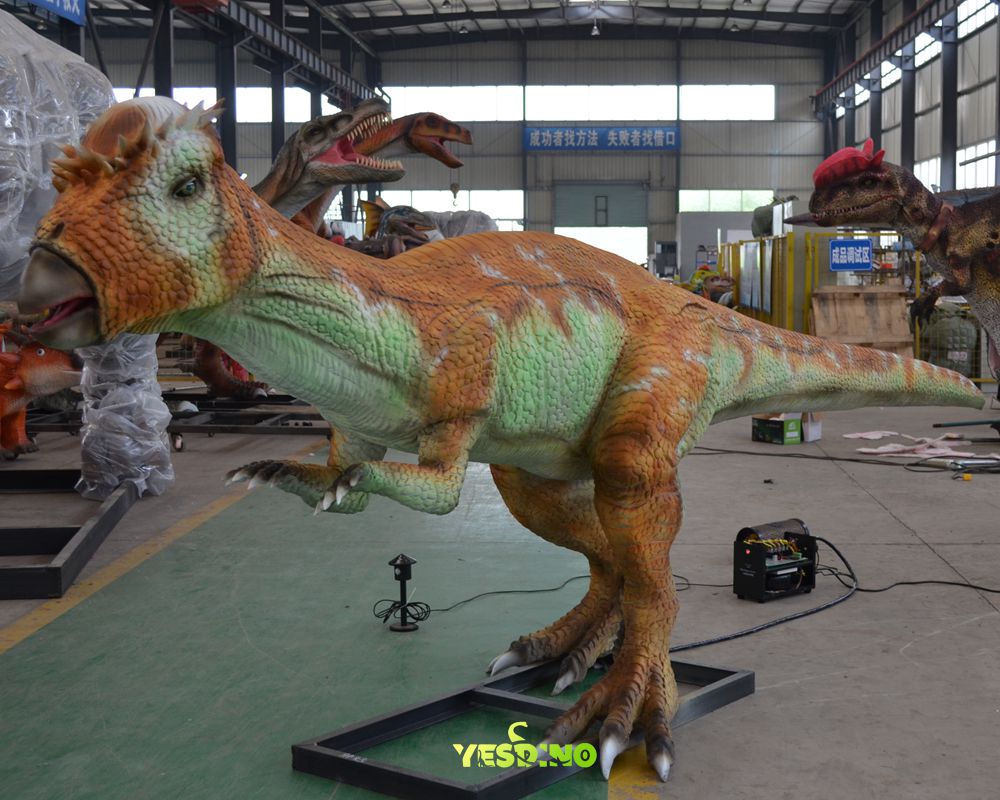
Custom dinosaur displays have become popular features in theme parks, museums, educational exhibitions, and family entertainment venues. Among the many prehistoric species available for recreation, Spinosaurus stands out for its elongated snout, distinctive back sail, and unusual body proportions. These characteristics make it an exciting subject for animatronic design, where artistic craftsmanship and mechanical engineering work together to bring a prehistoric creature to life.
A Custom Animatronic Spinosaurus can be designed around specific requirements, including size, movement capabilities, appearance, and installation environment. Whether intended for a permanent exhibition or a temporary attraction, a successful model begins with a clear concept and careful planning across every stage of development.
Understanding the Design Requirements
Before production begins, designers need to understand how the animatronic dinosaur will be used. A model intended for a science museum may prioritize anatomical detail and educational value, while a theme park installation may emphasize movement, sound, and visual impact.
The available space, expected audience, operating schedule, and environmental conditions also influence the design. An indoor installation may require different materials and protective measures from a model intended for continuous outdoor use.
Establishing these requirements early helps the design team make informed decisions about dimensions, mechanical complexity, materials, and maintenance needs.
Choosing the Right Size and Pose
Size affects nearly every aspect of animatronic construction. Larger models require stronger supporting frameworks, more careful weight distribution, and additional planning for transportation and installation.
The pose also determines the mechanical layout. A standing Spinosaurus with a relatively stable posture may have different structural requirements from a model designed with a lowered head, extended tail, or more dynamic body position.
Designers should consider viewing angles as well. A model intended to be viewed from all sides needs a consistent finish across its entire body, whereas a display positioned against a backdrop may prioritize its front and side profiles.
Designing an Authentic Spinosaurus Appearance
Scientific research provides the foundation for a convincing dinosaur reconstruction. Spinosaurus lived during the Cretaceous Period, approximately 100 million years ago, in what is now North Africa.
Its elongated skull, conical teeth, prominent back sail, and distinctive body proportions make it easy to distinguish from many other large predatory dinosaurs. Fossil evidence also suggests adaptations associated with aquatic environments, although some aspects of its locomotion and behavior remain debated.
Anatomical Proportions
The first priority is establishing the dinosaur’s overall silhouette. The relationship between the skull, torso, limbs, tail, and back sail should reflect the available anatomical evidence.
An incorrectly proportioned head or oversized sail can make the model look more like a fictional creature than a recognizable Spinosaurus. Designers can reduce this risk by using fossil-based references and reviewing the proposed shape before fabrication.
Because scientific interpretations continue to evolve, the design should distinguish established anatomical features from details that require artistic judgment.
Skin Texture and Surface Details
Surface details contribute significantly to the model’s visual realism. Sculpted scales, wrinkles, skin folds, and variations in surface texture help create depth and prevent the exterior from looking uniformly artificial.
Flexible materials are especially important around moving joints. The skin must accommodate repeated movement without excessive stretching, cracking, or interfering with the underlying mechanism.
The level of detail should also suit the model’s size and viewing distance. Large displays need surface features that remain visually effective when viewed from several meters away, while smaller exhibits may benefit from finer detailing.
Color and Finishing
The exact skin coloration of Spinosaurus is unknown, so designers generally rely on artistic interpretations informed by naturalistic color schemes.
Earthy browns, muted greens, gray tones, and contrasting undersides can create a cohesive appearance. Layered painting techniques and subtle shading help emphasize the skull, muscles, sail, and other anatomical features.
For outdoor models, the finishing system should also provide appropriate resistance to ultraviolet exposure and moisture. Protective coatings help preserve the appearance of the exterior over time.
Planning the Animatronic Movement System
A major advantage of animatronic construction is the ability to reproduce selected movements. The number and complexity of these actions depend on the intended experience, available budget, and structural requirements.
Head and Neck Movement
Head movement is often one of the most noticeable features of an animatronic dinosaur. A controlled turn, gradual tilt, or slow lowering motion can make the model appear more dynamic.
The mechanism must account for the weight of the head, the required range of motion, and the forces placed on the neck structure. Smooth transitions are generally more convincing than sudden movements that reveal the mechanical system.
Jaw and Mouth Animation
Opening and closing the jaws can add character to a Spinosaurus display. This movement may be synchronized with sound effects to create a more engaging performance.
The jaw mechanism should be designed around the skull’s proportions and intended movement range. Components must be securely mounted, and the system should operate consistently during repeated use.
Any accompanying vocalization is speculative because the actual sounds produced by Spinosaurus are unknown. Educational installations can acknowledge this distinction without sacrificing entertainment value.
Tail and Body Movement
Tail motion can make a model feel more lifelike, but it introduces additional mechanical and structural considerations. A long tail requires sufficient clearance and a mechanism capable of supporting its weight throughout the intended movement range.
Some designs may also incorporate subtle torso movement or other coordinated actions. These features should be selected according to their practical value rather than added simply to increase complexity.
A carefully programmed sequence with a few smooth, coordinated movements can be more effective than a larger number of disconnected actions.
Selecting Materials for Custom Construction
Materials influence durability, flexibility, weight, appearance, and overall production costs. A custom animatronic Spinosaurus typically combines several materials because no single option is ideal for every component.
Metal Frameworks
A metal framework provides structural support for the body and moving mechanisms. Steel may be used where strength and load-bearing capacity are important.
The framework must account for the model’s weight, movement patterns, mounting points, and installation environment. Large models may require engineered supports and secure foundations, particularly when installed outdoors.
Protective treatments can help limit corrosion and extend the useful life of exposed structural components.
Flexible Exterior Materials
Silicone, rubber, and specialized foam-based compounds may be suitable for different parts of the exterior. Flexible materials are useful around joints, while more rigid sections can preserve the shape of the skull, sail, and other structural features.
The choice depends on the desired surface quality, movement requirements, environmental exposure, and maintenance plan.
Designers should also consider how the exterior will be attached to the internal structure. Poorly planned connections can cause visible seams, unwanted friction, or premature wear.
Motors, Actuators, and Electronic Controls
Motors and actuators provide the movement, while electronic controllers coordinate the actions. The system must be sized appropriately for the model’s weight and required performance.
Control programming determines movement speed, timing, and coordination. More advanced systems may incorporate sensors that trigger specific actions when visitors approach, depending on the installation’s purpose.
Reliable wiring, accessible service points, and suitable electrical protection are essential for long-term operation.
Customization for Different Applications
One of the main benefits of custom design is the ability to adapt a model to a particular environment and audience.
Museums and Educational Exhibitions
Museum models often prioritize anatomical detail and educational interpretation. Movement can be used to demonstrate selected features while information panels explain the scientific evidence behind the reconstruction.
A Spinosaurus exhibit might highlight its elongated snout, unusual teeth, back sail, and possible aquatic adaptations. Where evidence remains uncertain, the display can explain how scientific interpretations develop over time.
Theme Parks and Tourist Attractions
Theme parks may require larger models with a strong visual presence and coordinated movement. Lighting, scenery, and sound effects can help integrate the dinosaur into a broader themed environment.
The installation layout should account for visitor flow, viewing angles, safe clearances, and access for maintenance personnel.
Shopping Centers and Indoor Entertainment Venues
Indoor displays may have stricter limits on dimensions, noise, floor loading, and available space. Compact designs or models with a limited range of movement may be more practical in these environments.
Designers should also consider access routes and ceiling heights before finalizing the model’s dimensions.
Outdoor Installations
Outdoor animatronic dinosaurs need appropriate protection against sunlight, rain, dust, and temperature changes. Structural engineering must also account for wind loads, particularly when the model includes a large sail or other broad surfaces.
Drainage, corrosion protection, suitable coatings, and routine inspections help maintain the installation’s condition.
Balancing Budget, Quality, and Complexity
Custom animatronic projects can vary considerably in cost. Size, materials, mechanical capabilities, finishing quality, and installation requirements all influence the overall investment.
A useful approach is to identify the features that matter most to the intended experience. For example, a museum may prioritize anatomical detail and dependable operation, while a theme park may place greater emphasis on scale and synchronized movement.
Before production begins, the project team should establish:
- Overall dimensions and the intended pose
- Required movements and control capabilities
- Exterior materials and finishing specifications
- Indoor or outdoor installation conditions
- Transportation and assembly requirements
- Expected operating hours and maintenance needs
Clear specifications make it easier to compare design options and reduce the risk of expensive changes during production.
Safety, Installation, and Maintenance
Safety must be considered throughout the design process rather than added after the model has been completed. Moving parts require suitable clearances, while structural supports and foundations must be appropriate for the installation environment.
Electrical systems should be protected against relevant environmental conditions, and visitor access should be managed to prevent contact with hazardous components. Commercial installations should follow applicable safety requirements and manufacturer recommendations.
Maintenance planning is equally important. Regular inspections should cover actuators, joints, wiring, sensors, exterior materials, and movement sequences.
Accessible components and replaceable parts can simplify servicing. For outdoor installations, additional checks may be necessary to identify corrosion, coating damage, water penetration, or weather-related deterioration.
A well-planned maintenance routine helps preserve the model’s appearance and reduces the likelihood of unexpected downtime.
Common Mistakes to Avoid
Several problems can undermine the quality of a custom animatronic dinosaur if they are not addressed early.
Overcomplicated movement: Adding too many actions can increase mechanical complexity and maintenance requirements without improving the visitor experience.
Inaccurate anatomy: Incorrect proportions or poorly shaped features can weaken the resemblance to Spinosaurus, regardless of the model’s size.
Unsuitable materials: Materials that cannot tolerate repeated movement or outdoor exposure may deteriorate prematurely.
Insufficient installation planning: Ignoring transport dimensions, foundation requirements, or maintenance access can create costly difficulties after fabrication.
Neglected finishing details: Visible seams, uneven paint, and poorly integrated joints can detract from an otherwise impressive model.
Coordinating artists, engineers, fabricators, and installation teams from the beginning helps reduce these risks.
Conclusion
Designing a custom animatronic Spinosaurus requires a balance of scientific understanding, mechanical engineering, artistic skill, and practical planning. Accurate anatomy establishes the dinosaur’s identity, while suitable materials, carefully programmed movements, and detailed finishing create a convincing final result.
The most successful projects begin with clear objectives and consider the entire lifecycle of the installation, from concept development and fabrication to transportation, operation, and maintenance. By matching the design to its intended environment and audience, creators can develop engaging prehistoric displays that combine visual impact with reliable performance and educational value.
About Post Author


More Stories
How an Alzheimer’s Disease Biomarker Panel Supports Diagnostic Research
Essential Mining Substation Equipment for Safe and Reliable Power Distribution
How TikTok Creator Tools Help Creators Analyze Performance and Increase Engagement