

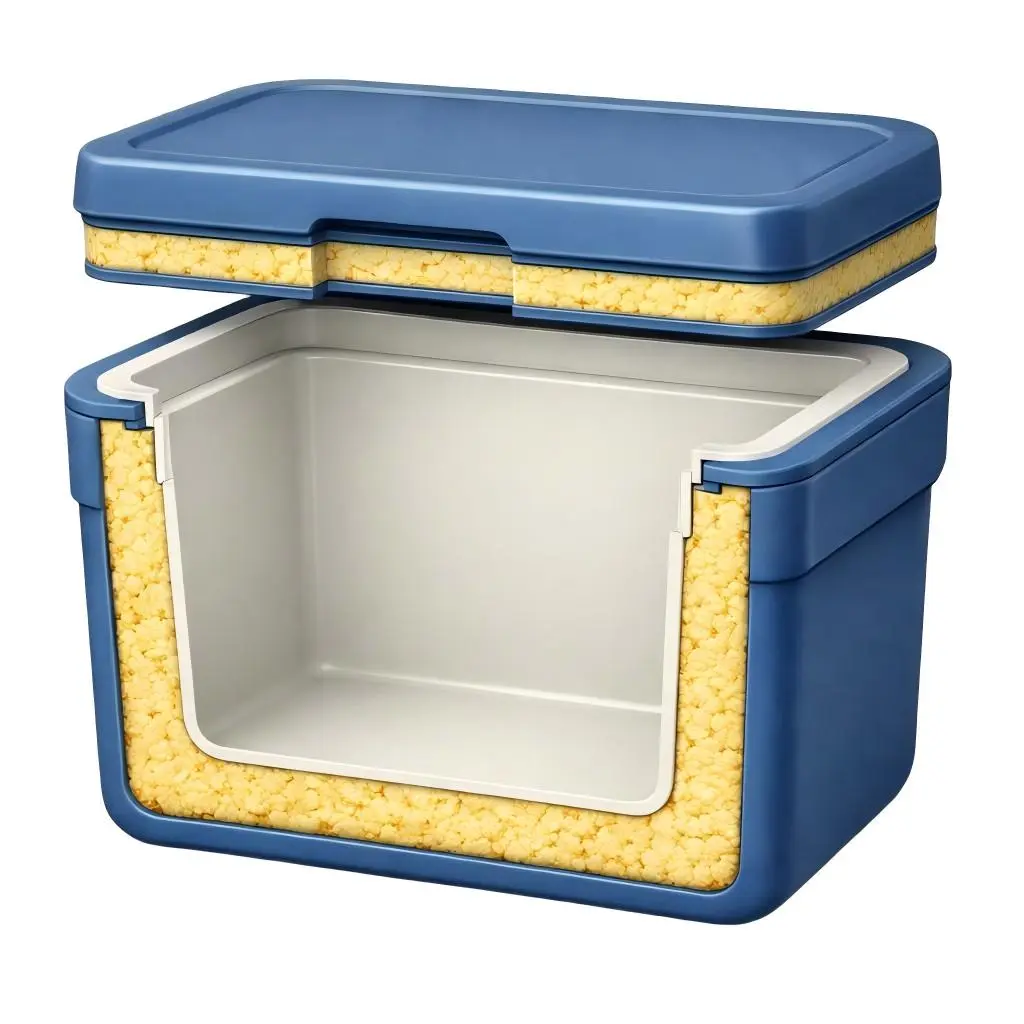
Temperature-controlled storage is important wherever products can be affected by heat, cold, or sudden environmental changes. Food businesses need to protect chilled ingredients, laboratories may handle sensitive materials, and distributors often move products that require specific storage conditions. Even temporary storage outside a refrigerated room can introduce risks if the surrounding temperature is unsuitable. Choosing appropriate insulated equipment helps businesses manage these situations with greater care.
An Insulated Cold Box provides an enclosed space designed to slow heat transfer between its contents and the surrounding environment. Used with an appropriate cooling source, it can help maintain a more stable internal environment for a planned period. Its actual performance depends on the insulation, construction, lid fit, cooling materials, external conditions, and how often the container is opened.
Understanding the Role of Insulation
Insulation reduces the rate at which heat moves through a material. In a cold storage container, insulated walls help slow the entry of heat from the warmer surroundings. This does not mean that the container produces cold air or can maintain a fixed temperature indefinitely.
A cooling source is usually needed when products must remain chilled. Ice packs, gel packs, or other suitable materials may be used depending on the contents and required temperature range. The correct arrangement should be selected according to the product’s handling instructions.
1. Helps Limit Temperature Fluctuations
Products placed in ordinary containers can be exposed quickly to changes in the surrounding environment. An insulated cold box adds a protective barrier that slows this exchange.
This can be useful during temporary storage, loading, short-distance transportation, and movement between temperature-controlled locations. By reducing the speed of temperature change, insulation provides additional time for the cooling system to perform its role.
However, performance varies. A box left in direct sunlight or opened frequently may warm more quickly than one kept in a shaded area with its lid closed.
2. Useful Across Different Industries
Insulated cold boxes have applications in several sectors. Food suppliers may use them to move chilled ingredients, restaurants may rely on them for prepared orders, and outdoor catering teams may use them when a fixed refrigerator is unavailable.
Healthcare and laboratory operations may also require insulated transport equipment for specific materials. These applications demand particular attention to temperature limits, packaging qualification, and monitoring. A general-purpose cold box should not be assumed suitable for regulated medical or pharmaceutical products without appropriate evidence.
3. Provides Flexible Storage and Transport
One practical advantage of an insulated container is that it can be used in more than one stage of an operation. Depending on its design, the same box may support temporary holding at a collection point, loading into a vehicle, and delivery to a receiving location.
This flexibility can simplify handling for smaller businesses and mobile teams. Containers with suitable handles, manageable dimensions, and secure closures are easier to move between work areas.
For repeated use, businesses should define when the box is suitable for storage, when it is suitable for transportation, and how it should be prepared between uses.
4. Helps Organize Products and Supplies
An enclosed container provides a clear space for arranging products and their cooling materials. Items can be placed in sealed packages, grouped by destination, or separated using suitable internal dividers.
Good organization can reduce unnecessary handling and make it easier to locate particular items. It also helps prevent products from being crushed or coming into direct contact with unsuitable cooling materials.
Clear labeling can identify the contents, intended destination, packing time, and handling instructions. These simple steps are especially valuable when multiple containers are being prepared simultaneously.
5. Supports More Predictable Operating Procedures
Businesses can use insulated cold boxes as part of a standardized storage and transport process. Staff can follow written instructions for pre-chilling, packing, arranging cooling materials, closing the lid, and checking temperatures.
A consistent procedure reduces reliance on individual judgment and makes training easier. It can also help managers investigate problems because packing steps and temperature readings can be reviewed.
Where product safety depends on a defined temperature range, suitable monitoring equipment should be used. The frequency of checks and the response to temperature excursions should be established in advance.
6. What to Look for When Choosing One
The best container depends on the intended application. Before purchasing, review these factors:
- Insulation quality: Consider material, thickness, and available performance data.
- Lid and closure: Check whether the lid fits securely and is easy to operate.
- Capacity: Choose enough space for products and cooling materials without excessive empty volume.
- Durability: Assess the outer shell, handles, corners, and internal surfaces.
- Cleaning: Confirm that the container can be maintained using appropriate procedures.
- Monitoring: Check whether temperature probes or data loggers can be used effectively.
Testing the selected model under realistic operating conditions is a sensible step before introducing it into regular use.
7. Maintenance and Correct Use
After each use, remove contents and cooling materials, clean the container as directed, and allow it to dry thoroughly. Inspect the lid, seals, and walls for damage. Avoid overloading the container or forcing the lid closed around poorly arranged packages.
Keep it away from direct sunlight and minimize unnecessary opening. These practices can help preserve performance and extend the useful life of the equipment.
Conclusion
An insulated cold box is a valuable tool for operations that need temporary temperature-controlled storage or transportation. By slowing heat transfer and providing a defined space for products and cooling materials, it can help make handling more consistent. The best results come from selecting a suitable design, following product-specific temperature requirements, monitoring conditions where necessary, and maintaining the container correctly.
About Post Author




More Stories
Exploring Color, Texture, and Finish Options in KKR Solid Surface Materials
How KingKonree Supports Architects and Designers with Custom Bathroom Solutions
How Solid Surface Manufacturers Maintain Consistency in Large-Volume Orders