

Table of Contents
ToggleIntroduction to Till Point Machine Hardware
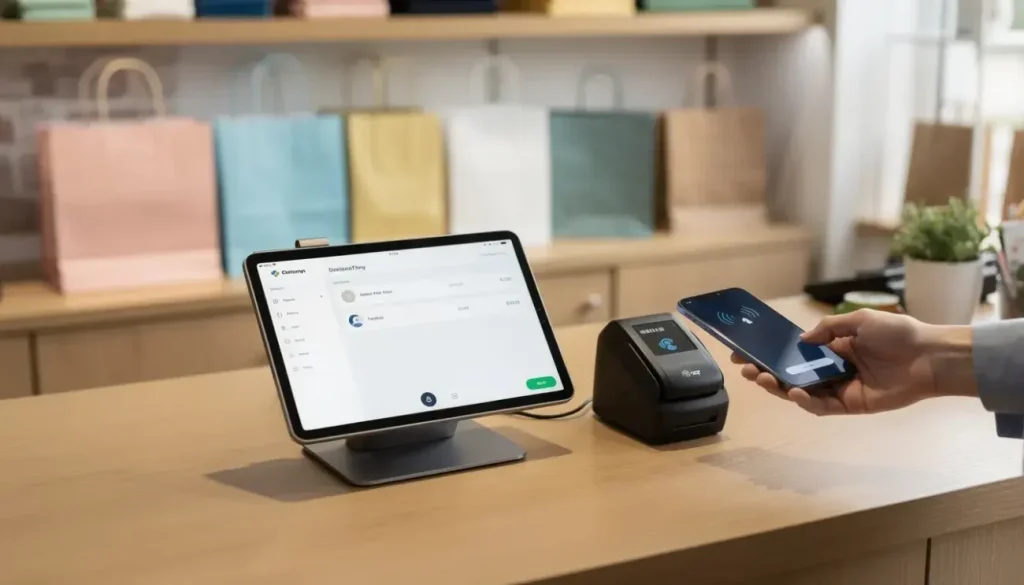
A reliable checkout environment depends heavily on the quality and compatibility of hardware components used in retail and service businesses. Modern transaction processing requires systems that can operate quickly, accurately, and securely. A Till Point Machine is a specialized device designed to handle sales operations, payment processing, and record management in a retail checkout setting.
Hardware components play a fundamental role in determining how efficiently a point-of-sale environment operates. Businesses that invest in high-quality equipment experience fewer operational disruptions and improved customer service speed. Understanding the internal and external components of a till point machine helps business owners maintain equipment properly and extend device lifespan.
The demand for automated checkout technology has increased as businesses aim to reduce manual transaction errors and improve productivity. Retail stores, restaurants, and service centers rely on advanced checkout hardware to manage high customer traffic while maintaining accuracy in financial records.
The Till Point Machine serves as a central hardware solution that integrates multiple operational functions. This Till Point Machine allows businesses to process transactions, print receipts, and manage customer payments efficiently while maintaining data integrity.
Processing Unit and Main Control Hardware
The processing unit is the core component of a till point machine. It functions similarly to a computer processor by managing software execution and device communication. The processor determines system speed, response time, and multitasking capability.
Modern checkout machines use energy-efficient processors designed for continuous operation. Retail businesses often require systems that can operate for long hours without performance degradation. The processor works with memory modules to store temporary transaction data during checkout operations.
Random access memory (RAM) supports software execution and allows multiple processes to run simultaneously. Adequate memory capacity ensures that barcode scanning, payment processing, and receipt printing functions operate smoothly.
Storage components are also important because they retain transaction records, customer data, and inventory information. Solid-state storage devices are commonly used due to their durability and fast data access speed.
Display Screen Hardware Components
Display systems are essential for user interaction. The screen allows employees to view product information, transaction totals, and customer payment details. Modern till point machines use touchscreen displays that simplify operation and reduce checkout time.
Touchscreen technology improves usability because it eliminates the need for external input devices. Staff members can navigate menus, select products, and process transactions directly through the screen interface.
Display resolution and brightness are important factors in hardware selection. High-resolution screens provide clearer visibility, especially in environments with strong lighting conditions.
Some systems also include secondary customer-facing displays. These displays show transaction information, helping improve transparency during payment processing.
Input Devices and Scanning Hardware
Input hardware components allow users to enter product information quickly. Barcode scanners are among the most important devices in retail environments. These scanners reduce manual data entry errors and accelerate checkout speed.
Modern scanners support multiple barcode formats and can operate using wired or wireless connections. Wireless scanning devices provide greater flexibility for store layout design.
Keyboard and touch input options are also available depending on system configuration. Some businesses prefer compact input devices to save counter space.
Magnetic stripe readers and chip card readers are integrated into many checkout machines. These devices support electronic payment processing and enhance customer convenience.
Printing Hardware Components
Receipt printing hardware is a critical part of transaction documentation. Thermal printers are widely used because they offer fast printing speed and low maintenance requirements.
Printing components must be properly maintained to avoid paper jams and print quality degradation. Cleaning printer heads and replacing worn parts help maintain operational performance.
Businesses use receipt printers to provide customers with purchase records, return documentation, and warranty information.
Connectivity and Communication Hardware
Modern checkout machines rely heavily on connectivity technology. Network ports, wireless adapters, and USB interfaces enable communication between POS terminals and external systems.
Stable network hardware ensures real-time data synchronization. This is especially important for cloud-based transaction management systems.
Security features are also integrated into communication hardware. Encryption technology helps protect financial and customer information during transmission.
Power Supply and Protection Hardware
Reliable power supply systems are essential for continuous operation. Many checkout machines use stabilized power units to prevent damage caused by voltage fluctuations.
Uninterruptible power supply systems provide backup energy during power outages. This helps prevent transaction data loss and system shutdown during critical operations.
Surge protection devices protect hardware components from electrical spikes.
Conclusion
Understanding hardware components of a Till Point Machine is essential for maintaining efficient checkout operations. Processing units, display systems, input devices, printing modules, connectivity hardware, and power protection systems work together to support retail transaction management.
Investing in high-quality hardware improves operational reliability, reduces maintenance costs, and enhances customer satisfaction. Businesses that maintain their checkout equipment properly can achieve better productivity and long-term operational stability.
As retail technology continues to advance, hardware innovation will play a major role in shaping modern transaction environments and improving business performance.



More Stories
How to Choose a Website Management Company for Your Business
AMPIN Energy Secures $195 Million Green Loan for 100 MW Solar-Wind-BESS Project
Choosing a Panel Printer for Space-Constrained Applications