

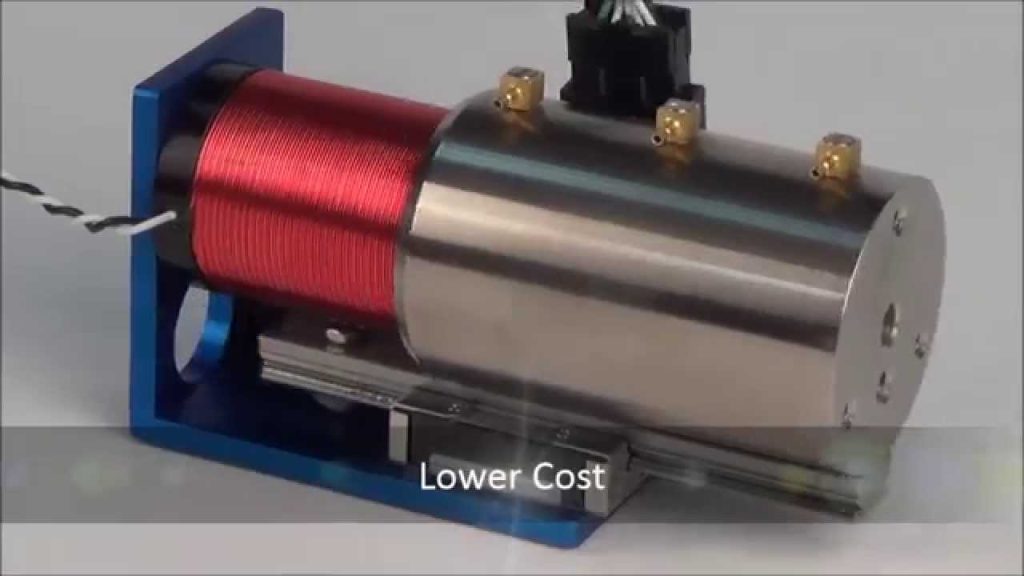
Precision positioning has become a core requirement in modern engineering fields such as semiconductor manufacturing, medical imaging, robotics, and optical alignment. As systems demand faster response times and higher accuracy, engineers increasingly turn to advanced motion control technologies that can deliver both speed and repeatability with minimal mechanical complexity.
A voice coil actuator is a direct-drive linear motion device that uses electromagnetic force to generate highly controlled movement. Unlike mechanical transmission systems that rely on screws or gears, it produces motion directly through magnetic interaction, reducing friction and improving responsiveness. A detailed overview of a voice coil actuator helps highlight why it is widely used in applications requiring fine positioning and rapid dynamic response.
Table of Contents
ToggleHigh Precision and Exceptional Positioning Accuracy
One of the most important advantages of voice coil technology is its ability to deliver extremely accurate positioning. Because the system operates without mechanical backlash or gear play, it can achieve highly repeatable motion profiles.
When integrated with feedback sensors such as encoders or laser position systems, the actuator can maintain micron-level or even sub-micron accuracy. This makes it ideal for applications where even the smallest deviation can impact performance, such as wafer alignment or optical focusing systems.
The absence of mechanical contact during motion also ensures that accuracy does not degrade quickly over time, improving long-term stability.
Fast Dynamic Response and High Acceleration
Voice coil actuators are known for their exceptional speed. Their lightweight moving components and direct-drive design allow them to respond almost instantly to electrical input signals.
This results in:
- Rapid acceleration and deceleration
- Smooth directional changes without lag
- Excellent performance in high-frequency motion cycles
Because there are no gears or lead screws to slow down the system, the actuator can achieve precise positioning in milliseconds. This is particularly beneficial in inspection systems and high-speed automation where cycle time reduction is critical.
Smooth and Vibration-Free Motion
Another key advantage is the smoothness of motion. Traditional mechanical actuators often produce vibration due to friction, backlash, or gear engagement. In contrast, voice coil systems generate continuous and controlled force through electromagnetic interaction.
This results in:
- Low vibration output
- Quiet operation
- Stable motion profiles even at low speeds
Such characteristics are essential in optical systems, microscopy, and medical imaging devices where vibration can distort results or reduce measurement accuracy.
Low Maintenance and Long Operational Life
Because a voice coil actuator has very few moving parts, it experiences significantly less mechanical wear compared to traditional systems. There are no screws, belts, or gear assemblies that require regular lubrication or replacement.
This leads to:
- Reduced maintenance requirements
- Longer operational lifespan
- Lower risk of mechanical failure
In industrial environments where downtime is costly, this reliability provides a significant operational advantage.
Compact Design and Integration Flexibility
Voice coil actuators are often compact and lightweight, making them easy to integrate into space-constrained systems. Their simple structure allows engineers to design flexible motion platforms without complex mechanical assemblies.
They are commonly used in modular systems where multiple axes of motion must be tightly synchronized. Their scalability also makes them suitable for both small precision instruments and larger automated systems.
High Repeatability in Cyclic Operations
In applications that require repetitive motion, repeatability is just as important as accuracy. Voice coil actuators maintain consistent performance across millions of cycles due to their non-contact operation.
This makes them ideal for:
- Automated testing equipment
- High-speed pick-and-place systems
- Repetitive inspection processes
The consistent force output ensures that each motion cycle behaves identically, improving system reliability and product quality.
Efficient Force Control for Sensitive Applications
Another important advantage is precise force control. Because force output is directly proportional to current, engineers can finely tune the actuator’s behavior in real time.
This is particularly useful in applications such as:
- Delicate assembly processes
- Medical device manipulation
- Material testing systems
The ability to control force as well as position allows for highly adaptive and sensitive motion systems.
Conclusion
Voice coil actuators offer a unique combination of speed, precision, and simplicity that makes them ideal for advanced positioning applications. Their direct-drive design eliminates mechanical inefficiencies while delivering smooth, accurate, and repeatable motion.
For industries that demand high performance and reliability in compact systems, the advantages of a voice coil actuator make it a highly effective solution for modern precision engineering challenges.



More Stories
Comparing the Best Portable Sound Machines for Noise Masking
Bead Mill Machine Operation Process and Performance Optimization
HEMA and TPO Free Gel Polish: Performance Factors and Application Tips