

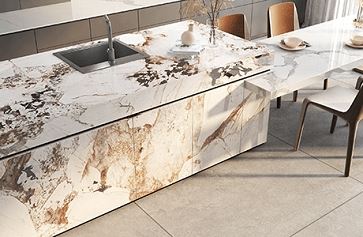
Marble-inspired surfaces are widely used in modern architecture and interior design because they combine an elegant natural-stone appearance with options for different dimensions, colors, and finishes. Among manufactured decorative surfaces, full body marble products attract attention for their material structure and visual continuity. Their suitability for a project depends on how they are formulated, processed, finished, and inspected.
Choosing a reliable Full Body Marble Manufacturer requires more than comparing product photographs or selecting an attractive pattern. Buyers should understand the material’s composition, the consistency of its decorative characteristics, its surface treatment, and its intended applications. These factors help architects, contractors, distributors, and homeowners evaluate whether a product meets both design expectations and practical requirements.
1. Understanding Full Body Marble Products
The term “full body marble” is used in the manufactured surface market to describe products designed with color or decorative characteristics that extend through a substantial part of the material’s body, rather than being limited to a thin surface treatment. However, the exact construction and composition can vary by product and manufacturer.
Buyers should therefore confirm what the term means in the supplier’s technical documentation. It is important to distinguish between natural marble, engineered marble, and other manufactured surfaces that reproduce marble-like appearances.
Depending on the product’s construction, full body characteristics may offer advantages during fabrication and finishing, particularly where cut edges or shaped details remain visible.
Potential features include:
- More continuous color characteristics through the material
- Decorative patterns designed for a coordinated appearance
- Options for different thicknesses and dimensions
- A selection of polished, matte, or textured finishes
- Suitability for selected interior and architectural applications
Actual properties depend on the material formulation and manufacturing process, so product-specific specifications should always guide purchasing decisions.
2. How Material Composition Influences Product Quality
Material composition is one of the most important factors affecting the appearance and performance of manufactured marble surfaces.
Different manufacturers may use different combinations of mineral materials, aggregates, pigments, and binding components. The formulation is developed according to the intended appearance, production method, and technical requirements.
Mineral Components
Mineral materials form the main body of many engineered marble products. Their physical characteristics and proportions influence the material’s density, processing behavior, and finished appearance.
Consistent sourcing and inspection help reduce unwanted variations between production batches.
Pigments and Color Distribution
Pigments determine the base color and contribute to decorative effects. Their accurate measurement and distribution are important when producing coordinated slabs or tiles.
For full body products, buyers should ask how color consistency is maintained throughout the material and whether visible edges are expected to match the main surface.
Aggregates and Decorative Elements
Some products incorporate different mineral particles or decorative components to create depth, movement, and natural-stone-inspired patterns.
The selection and distribution of these elements influence the finished product’s visual character.
Formulation Control
A well-managed formulation process helps manufacturers maintain repeatable material characteristics. Accurate weighing, mixing procedures, and batch records can support better production consistency.
3. Production Processes Behind Full Body Marble
The manufacturing process varies according to the product category and factory technology. However, several general stages are commonly involved in producing engineered marble surfaces.
Raw Material Preparation
Raw materials are selected, inspected, and prepared according to the required formulation. Preparation may include crushing, grinding, screening, measuring, and blending.
Consistent particle characteristics and accurate proportions help establish a stable material mixture.
Mixing and Material Distribution
Prepared components are combined to achieve the intended composition and decorative effect. Uniform mixing is important, although some designs may require controlled variation to produce a specific pattern.
Manufacturers need to manage the balance between material consistency and the desired visual characteristics.
Forming and Compaction
The prepared mixture is shaped into the required slab or tile format. Depending on the production technology, forming may involve specialized equipment and controlled pressure.
Uniform material distribution and dimensional control are important for producing slabs suitable for subsequent processing.
Curing or Thermal Treatment
The material may undergo curing, thermal processing, or other treatments depending on its composition and manufacturing method. These stages help develop the required structure and physical characteristics.
The correct process conditions must be established for the specific formulation rather than assumed to be identical across all manufactured marble products.
Cutting and Calibration
After the material has developed its required properties, slabs may be cut into tiles or other formats. Calibration helps achieve consistent thickness and dimensional accuracy.
Accurate cutting is especially important when products are intended for large installations or coordinated architectural designs.
4. Why Material Consistency Matters
Material consistency affects how products look, how they are fabricated, and how they perform during installation.
For projects involving multiple slabs or tiles, differences in color, pattern, thickness, or surface quality can become noticeable. A manufacturer should therefore establish suitable controls throughout production.
Important consistency factors include:
Color uniformity: Base colors should remain within the approved visual range.
Pattern distribution: Decorative elements should match the intended design and be distributed appropriately.
Material structure: The product should meet its defined composition and physical requirements.
Thickness accuracy: Consistent thickness helps simplify installation and joint alignment.
Surface condition: Slabs should be checked for scratches, cracks, pits, and other unacceptable defects.
Edge appearance: Where the product is described as full body, buyers should confirm how the material looks after cutting, shaping, or edge finishing.
For large projects, approved samples and batch identification records can help reduce differences between deliveries.
5. Surface Finishing Options
Finishing determines the final appearance and tactile character of a manufactured marble surface. The same material can create different design effects depending on the finishing process.
Polished Finish
A polished finish creates a reflective surface that can emphasize color depth and decorative patterns. It is commonly selected for elegant residential interiors, reception areas, and feature surfaces.
Buyers should consider the visibility of fingerprints, water marks, and surface scratches under the intended lighting conditions.
Matte Finish
Matte surfaces have a restrained appearance with limited reflection. They suit contemporary interiors and designs that emphasize understated materials.
Cleaning requirements depend on the surface texture and product formulation.
Honed Finish
A honed finish offers a smooth, low-gloss appearance. It can create a natural and refined effect without the strong reflection of a polished surface.
Textured Finish
Textured finishes add tactile variation and can help create distinctive architectural features. Their suitability for floors, walls, and other applications should be confirmed through relevant product specifications.
Edge Finishing
Edge treatment is important for countertops, furniture components, and exposed slab edges. Depending on the material, options may include straight, beveled, rounded, or mitered profiles.
Buyers should confirm which profiles are supported by the manufacturer’s fabrication guidance.
6. Quality Inspection and Performance Testing
Quality control should cover both appearance and technical characteristics. A manufacturer may inspect materials during preparation, forming, finishing, and final packaging.
Relevant inspection areas include:
- Dimensional accuracy: Checking length, width, and thickness against specified tolerances.
- Flatness: Evaluating whether the slab meets the required geometric standards.
- Surface appearance: Identifying cracks, scratches, stains, and irregularities.
- Color consistency: Comparing products with approved references.
- Physical performance: Testing relevant properties according to the material category and intended application.
- Edge quality: Checking cut edges for damage or unacceptable finishing.
- Batch traceability: Recording production details to support identification and quality investigations.
Depending on the product, performance testing may include water absorption, flexural strength, abrasion resistance, chemical resistance, or other relevant properties.
Buyers should request current test reports that identify the product tested and the methods used. General claims about performance should not replace product-specific documentation.
7. Applications in Modern Architecture and Interior Design
Full body marble products may be used in different settings, depending on their construction, dimensions, and technical characteristics.
Flooring
Marble-inspired surfaces can create a coordinated appearance across residential and commercial floors. Buyers should assess abrasion resistance, slip characteristics, and suitability for expected foot traffic.
Wall Cladding
Large-format slabs can create visually continuous feature walls and decorative interior surfaces. Installation planning should account for product weight, substrate conditions, fixing methods, and joint details.
Kitchen Countertops
Countertops require careful evaluation of staining, heat, scratching, and chemical resistance. Fabrication requirements and the suitability of exposed edges should also be confirmed.
Bathroom Vanity Tops
These surfaces can coordinate with bathroom wall finishes and cabinetry. Moisture exposure, cleaning practices, and installation details are important considerations.
Reception Counters and Commercial Spaces
Hotels, offices, retail environments, and hospitality projects may use marble-inspired surfaces to create a refined visual identity. Product selection should reflect the level of use and maintenance requirements.
Furniture and Decorative Elements
Manufactured marble surfaces may also be fabricated into tabletops, shelving, display counters, and selected furniture components. The material should be compatible with the required cutting and edge-finishing methods.
8. Comparing Full Body Products with Other Marble Surfaces
Buyers may encounter several types of marble and marble-inspired products in the market. Understanding their differences helps prevent confusion when comparing specifications.
Natural Marble
Natural marble is quarried stone with geological patterns and mineral variations. Each piece has a distinctive appearance, and its properties depend on the specific stone.
Engineered Marble
Engineered marble is manufactured using mineral aggregates and binding materials. Its appearance and characteristics depend on the formulation and production method.
Surface-Decorated Products
Some manufactured surfaces use decorative treatments concentrated near the top surface. Their appearance may differ at cut edges, depending on the construction.
Full Body Products
Products described as full body are intended to provide greater continuity of certain visual characteristics through the material. However, the degree of continuity varies, and buyers should confirm the actual structure with the manufacturer.
Comparisons should be based on composition, technical data, sample inspection, and the intended application rather than product names alone.
9. Choosing the Right Thickness and Dimensions
Slab thickness and dimensions affect appearance, weight, handling, fabrication, and installation.
Different manufacturers offer different product formats, so buyers should confirm the available sizes and thicknesses for each collection.
Important considerations include:
- Application: Wall panels, flooring, countertops, and furniture may require different specifications.
- Structural support: Heavier or larger slabs may require suitable support and fixing systems.
- Fabrication: Cutting and edge finishing must be compatible with the material thickness.
- Transportation: Slab dimensions influence packaging, loading, and handling requirements.
- Installation tolerances: Consistent dimensions help achieve accurate joints and alignment.
- Material utilization: The slab format should be considered when planning cutting layouts and reducing waste.
The appropriate specification should be confirmed with the manufacturer, fabricator, and installation contractor.
10. What Buyers Should Evaluate in a Full Body Marble Manufacturer
Selecting a manufacturer requires reviewing more than product appearance. Buyers should assess whether the company can supply the required materials consistently and provide suitable technical and commercial support.
A practical evaluation checklist includes:
- Product composition: Ask for clear information about the material structure.
- Manufacturing capability: Review the factory’s forming, processing, and finishing technology.
- Product range: Compare colors, patterns, dimensions, thicknesses, and finishes.
- Quality management: Understand how raw materials and finished products are inspected.
- Technical documentation: Request product data sheets and relevant test reports.
- Sample approval: Examine physical samples and representative slabs before ordering.
- Production capacity: Confirm the factory can meet quantity and delivery requirements.
- Customization: Ask about special patterns, dimensions, and finish options.
- Packaging: Review how slabs are protected during handling and transportation.
- After-sales support: Check how product questions, delivery issues, and quality concerns are managed.
A structured review makes it easier to compare manufacturers using consistent criteria.
11. Packaging and Transportation Requirements
Large-format surfaces require appropriate packaging and careful handling. Even products designed for demanding applications can be damaged by impact, poor support, or incorrect loading.
Before confirming an order, buyers should clarify:
- Protective packaging materials
- Crate or rack specifications
- Slab identification and batch labels
- Shipment dimensions and weight
- Loading and unloading procedures
- Storage and handling recommendations
- Freight responsibilities and insurance
- Delivery schedules and damage-reporting procedures
For international shipments, customs documentation and agreed delivery terms should also be reviewed.
Clear logistics arrangements help protect product quality and reduce unexpected costs.
12. Common Sourcing Mistakes to Avoid
Several common mistakes can create problems during procurement and installation.
Relying only on photographs: Digital images may not show the actual material structure, edge appearance, or surface texture. Request physical samples.
Assuming all full body products are identical: The term can describe products with different compositions and manufacturing methods. Confirm the exact construction.
Ignoring technical documentation: Product suitability should be supported by specifications and relevant test results.
Overlooking fabrication limitations: Cutting, drilling, polishing, and edge treatments may require specific tools and techniques.
Failing to confirm batch consistency: Products supplied in different batches may show visible variations.
Choosing without installation planning: Slab weight, dimensions, substrate conditions, and fixing systems should be considered before purchase.
Comparing incomplete quotations: Ensure that product specifications, packaging, quantities, and delivery terms are equivalent.
Avoiding these issues can help buyers make more informed decisions and improve project coordination.
13. Building a Reliable Supplier Relationship
Long-term relationships with manufacturers can support more predictable sourcing and better project planning.
Buyers should maintain records of approved samples, technical specifications, batch information, inspection results, and delivery details. These records help establish clear expectations for repeat orders.
Regular communication is also important when discussing product development, changing project requirements, production schedules, and potential quality concerns.
A dependable manufacturing partnership is based on transparent information, consistent product standards, realistic commitments, and effective technical support.
Conclusion
Full body marble products combine marble-inspired aesthetics with manufactured material structures and a range of design possibilities. Their quality depends on material composition, production controls, decorative consistency, surface finishing, and inspection procedures.
When evaluating a full body marble manufacturer, buyers should confirm the product’s actual construction, review technical documentation, inspect samples, and assess production and delivery capabilities. A careful selection process helps ensure that the chosen surface is appropriate for the intended application and meets the project’s visual and practical requirements.
About Post Author





More Stories
How Iron Castings Manufacturers Meet Custom Industrial Component Requirements
How to Evaluate the Production Capabilities of a Thermal Printer Manufacturer
The Role of Xprinter Thermal Printers in Improving Retail Checkout Efficiency