

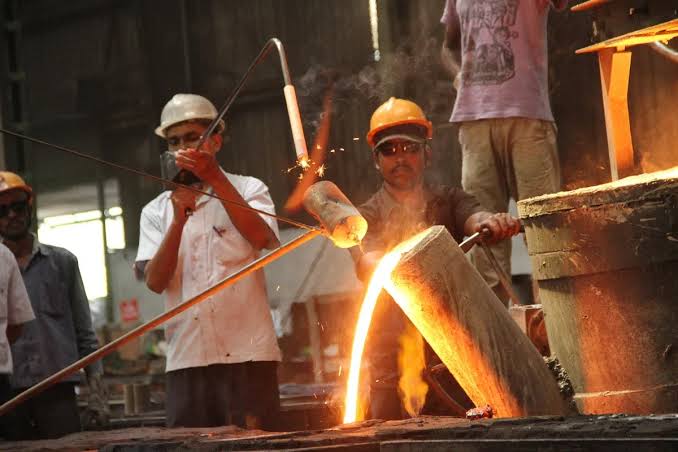
Industrial equipment often requires components with specific shapes, dimensions, material properties, and performance characteristics. Standard parts may not always meet these requirements, particularly when machinery operates under high loads, vibration, pressure, or demanding environmental conditions. Custom iron casting provides a practical solution by allowing components to be designed and manufactured according to individual application needs.
The process involves more than simply pouring molten iron into a mold. Manufacturers must understand the customer’s technical specifications, select suitable materials, develop accurate patterns, and control production conditions. An experienced Iron Castings Manufacturer can coordinate these stages to produce components that match engineering drawings and functional requirements while maintaining consistent quality.
1. Understanding Customer Requirements
Custom casting production begins with understanding how the component will be used. Manufacturers work with customers to identify the operating conditions, mechanical demands, and dimensional requirements of the finished part.
Important considerations often include:
- Component dimensions and weight.
- Required material grade.
- Tensile strength and hardness.
- Operating temperature.
- Exposure to vibration or impact.
- Surface finish and dimensional tolerances.
- Machining and assembly requirements.
For example, a casting used in agricultural machinery may need to withstand repeated mechanical stress, while a component for a pump system may require accurate internal passages and properly finished mounting surfaces.
A clear understanding of these requirements helps manufacturers determine an appropriate production method before manufacturing begins.
2. Selecting the Right Iron Material
<AsyncImage query=”gray iron and ductile iron industrial cast metal components foundry” aspectRatio=”16:9″ width=”100%”/>
Material selection is one of the most important decisions in custom iron casting. Different grades offer different combinations of strength, hardness, machinability, wear resistance, and vibration damping.
Two commonly used categories are gray iron and ductile iron.
Gray iron contains graphite in flake form. It is widely used for machine bases, housings, engine components, and other parts where machinability and vibration damping are important.
Ductile iron contains graphite in nodular form. Its structure generally provides greater tensile strength and ductility, making it suitable for components exposed to higher mechanical loads.
Manufacturers may also consider alloying elements and specialized material grades when the application requires particular characteristics.
Choosing the correct material helps ensure that the finished casting performs reliably under its intended operating conditions.
3. Developing Custom Designs and Engineering Drawings
Custom industrial components often have geometries that differ from standard casting products. Manufacturers therefore review engineering drawings and design information before creating patterns and molds.
Computer-aided design (CAD) software allows engineers to examine component geometry, wall thickness, internal cavities, and connection points. Three-dimensional models can also help identify design features that may create manufacturing difficulties.
During this stage, manufacturers may recommend adjustments to improve castability without affecting the component’s intended function.
For example, uniform wall thickness, suitable corner radii, and appropriate draft angles can help reduce manufacturing complications. These design considerations may also improve material flow and solidification.
Early communication between customers and foundry engineers helps prevent unnecessary design changes after production has started.
4. Creating Patterns and Molds for Custom Components
<AsyncImage query=”custom industrial sand casting pattern and mold production foundry workshop” aspectRatio=”16:9″ width=”100%”/>
Once the design is approved, the manufacturer develops a pattern that represents the required casting geometry. Pattern dimensions account for factors such as metal shrinkage and machining allowances.
The pattern is then used to create the mold cavity. Sand casting is frequently selected for custom iron components because it supports a broad range of shapes, dimensions, and production volumes.
For components with internal passages or complex cavities, foundries may use specially designed cores.
The mold and core systems must be prepared carefully to maintain dimensional accuracy and provide suitable conditions for molten metal flow.
Manufacturers select pattern materials and molding techniques according to the component’s complexity, production quantity, and required precision.
5. Using Casting Simulation to Improve Design Accuracy
Modern foundries can use casting simulation software to study how molten metal is expected to move through a mold and solidify.
Simulation helps engineers identify possible manufacturing problems before producing physical castings. These may include incomplete mold filling, air entrapment, shrinkage porosity, and uneven cooling.
The software can also help evaluate the positioning of gates, runners, risers, and other mold features.
By identifying potential issues during the design stage, manufacturers can make adjustments that reduce trial-and-error production and improve the likelihood of achieving the required specifications.
Simulation does not replace physical testing or quality inspection, but it provides useful information for planning complex custom casting projects.
6. Controlling Melting and Chemical Composition
The material used in a custom casting must meet the required chemical and mechanical specifications. Manufacturers therefore control the melting process and monitor the composition of molten iron.
Raw materials are selected and combined according to the intended grade. The metal is melted in a suitable furnace, and its temperature is monitored before pouring.
Chemical analysis may be performed using spectrometers or other testing equipment. This helps verify the levels of carbon, silicon, manganese, and other relevant elements.
Some iron grades also require additional treatment. For example, ductile iron production generally involves magnesium treatment to encourage the formation of nodular graphite.
Careful control of melting and treatment conditions helps manufacturers produce castings with more predictable material properties.
7. Managing Casting Production for Different Order Sizes
Custom industrial requirements can involve anything from a small prototype order to repeated large-scale production. Manufacturers must select production arrangements that match the customer’s quantity and delivery expectations.
For low-volume orders, flexible pattern and mold preparation may be appropriate. Larger orders may benefit from standardized tooling, organized production schedules, and repeatable manufacturing procedures.
Production planning considers:
- Available furnace and molding capacity.
- Pattern and tooling requirements.
- Material availability.
- Production cycle times.
- Inspection capacity.
- Delivery schedules.
Efficient planning helps balance production costs, manufacturing consistency, and lead times without compromising technical requirements.
8. Providing Precision Machining and Finishing
<AsyncImage query=”CNC machining custom iron cast industrial machine housing milling drilling” aspectRatio=”16:9″ width=”100%”/>
Many custom castings require additional machining before they can be installed in industrial equipment. Casting processes can create the general shape of a component, but certain surfaces and features need further processing to achieve precise dimensions.
Common machining operations include:
- CNC milling for flat surfaces and slots.
- Turning for cylindrical features.
- Drilling for mounting and connection holes.
- Boring for accurate internal diameters.
- Grinding for selected surface finishes.
Manufacturers must consider machining allowances during the original casting design. This ensures that sufficient material remains for producing the required final dimensions.
Combining casting and machining operations can also help coordinate dimensional requirements across the manufacturing process.
9. Meeting Specific Surface and Functional Requirements
Different industrial applications require different surface conditions. Some components need smooth machined surfaces, while others may require particular treatments to improve corrosion resistance or support assembly.
Manufacturers select finishing methods based on the material, component geometry, and operating environment.
Possible finishing requirements include:
- Removal of casting flash and excess material.
- Shot blasting to clean external surfaces.
- Grinding to improve selected areas.
- Protective coatings where specified.
- Machining of sealing and contact surfaces.
For example, a pump housing may require accurately machined sealing faces, while a machine frame may mainly require dimensional consistency and a suitable surface condition.
Defining these requirements before production helps manufacturers plan the necessary finishing operations.
10. Applying Quality Control Throughout Production
Quality control is essential when manufacturing custom industrial components because small variations can affect assembly, operation, and service life.
Rather than inspecting only the finished product, manufacturers can perform checks at different production stages. These checks help identify problems before additional processing increases the cost of correction.
Common inspection methods include:
Dimensional inspection: Verifies dimensions, tolerances, and geometric features against engineering drawings.
Chemical analysis: Confirms that the material composition meets the specified grade.
Hardness testing: Measures resistance to indentation and helps evaluate material consistency.
Tensile testing: Assesses mechanical properties when required by the component specification.
Visual inspection: Identifies visible surface defects and irregularities.
Non-destructive testing: Methods such as ultrasonic or radiographic inspection may be used when internal integrity needs to be evaluated.
The appropriate inspection plan depends on the component’s function, material grade, industry standards, and customer requirements.
11. Supporting Prototypes and Design Modifications
Some custom casting projects begin with prototypes before moving into regular production. Prototyping allows customers and manufacturers to evaluate the design, dimensions, assembly compatibility, and functional performance of a component.
If the prototype reveals a problem, engineers can review the design and make adjustments before committing to larger production quantities.
This approach is particularly useful for new machinery, specialized replacement parts, and components with complex geometries.
Prototype evaluation may include dimensional measurement, machining trials, assembly checks, and mechanical testing.
Identifying design issues early can reduce the risk of costly modifications during full-scale production.
12. Maintaining Consistency in Repeat Orders
Industrial customers often need replacement components or additional castings over several years. Manufacturers must therefore maintain production records and repeatable procedures to support consistent results.
Important practices include maintaining approved drawings, documenting material specifications, controlling pattern dimensions, and recording inspection results.
Tooling maintenance is also important. Damaged or worn patterns can gradually affect dimensional accuracy, especially when components are produced repeatedly.
Standardized production instructions and quality checks help reduce variation between manufacturing batches.
This consistency is particularly important for components that must fit existing equipment or match previously supplied parts.
Industries That Benefit From Custom Iron Casting
Custom iron casting supports a wide range of industrial applications because it can produce components with complex shapes and different mechanical characteristics.
Some major industries include:
Automotive manufacturing: Engine blocks, brake components, housings, and other structural parts.
Agricultural machinery: Gear housings, brackets, machine frames, and equipment components.
Construction equipment: Structural castings, mounting parts, and heavy machinery components.
Mining: Wear-related parts, housings, and components used in material-handling equipment.
Pumps and valves: Pump bodies, valve housings, and other components requiring specific internal and external geometries.
General industrial machinery: Machine bases, supports, covers, and mechanical housings.
The material grade and manufacturing process must be selected according to the specific operating conditions of each application.
Conclusion
Meeting custom industrial component requirements requires careful coordination between engineering, material selection, pattern development, mold preparation, casting production, machining, and quality inspection. Each stage contributes to the accuracy, durability, and functional performance of the finished component.
By evaluating customer specifications and applying suitable manufacturing methods, iron foundries can produce components for a wide range of industrial applications. Effective communication, controlled production procedures, and consistent quality checks also help ensure that custom castings meet both immediate project requirements and long-term equipment needs.
About Post Author



More Stories
How to Evaluate the Production Capabilities of a Thermal Printer Manufacturer
The Role of Xprinter Thermal Printers in Improving Retail Checkout Efficiency
Rounders Game Set: Essential Components for Organized Sports and Recreational Play