

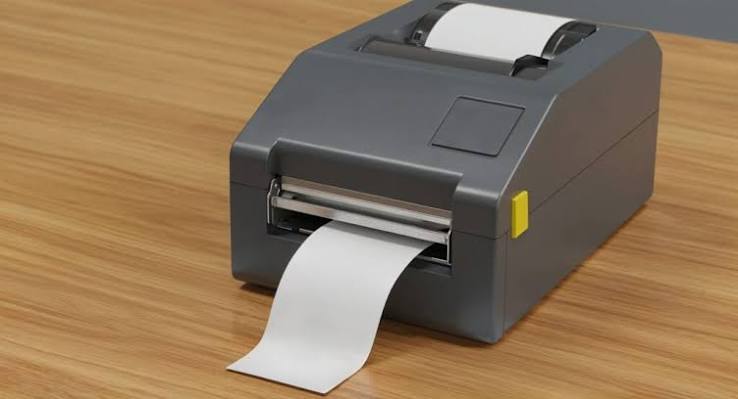
Selecting a suitable manufacturing partner is an important decision for businesses that depend on thermal printing equipment. Whether the requirement involves receipt printers, barcode label printers, industrial printing devices, or portable models, the manufacturer’s production capabilities directly influence product quality, order fulfillment, and long-term supply reliability.
A professional Thermal Printer Manufacturer should have the technical expertise, production resources, and quality management systems needed to meet different customer requirements. However, evaluating manufacturing capabilities involves more than checking factory size or available product models. Businesses should examine production capacity, engineering resources, component sourcing, customization options, and delivery performance before establishing a partnership.
1. Examine the Manufacturer’s Production Facilities
The manufacturing facility provides an initial indication of a company’s ability to produce thermal printing equipment efficiently. Businesses should understand the types of production equipment, assembly areas, testing facilities, and supporting infrastructure available.
A well-organized factory generally has designated areas for component preparation, electronic assembly, mechanical integration, product inspection, and packaging.
When evaluating production facilities, consider:
- Availability of modern manufacturing equipment.
- Organization of production workstations.
- Separate inspection and testing areas.
- Storage facilities for components and finished products.
- Equipment maintenance procedures.
- Workplace safety and operational standards.
If possible, request a virtual or physical factory tour. Observing production activities can provide a clearer understanding of manufacturing operations than relying exclusively on company descriptions.
2. Assess Overall Production Capacity
Production capacity determines how many units a manufacturer can produce within a specific period. This is particularly important for distributors, wholesalers, and businesses planning large purchasing orders.
A manufacturer with limited capacity may struggle to handle sudden increases in demand or fulfill multiple large orders simultaneously.
Ask potential suppliers about their monthly or annual production capacity and whether they can accommodate seasonal demand fluctuations.
It is also useful to understand how production capacity is allocated between different printer models. A factory may have substantial overall output but limited capacity for specialized equipment.
Businesses should evaluate whether the manufacturer’s actual production capabilities match their expected purchasing volume.
3. Evaluate Manufacturing Equipment and Technology
The equipment used during production influences manufacturing accuracy, efficiency, and consistency. Thermal printers contain electronic circuits, mechanical assemblies, and precision components that require suitable manufacturing methods.
Depending on the product design, manufacturing facilities may use automated electronic assembly equipment, injection molding machines, precision assembly tools, and specialized testing instruments.
Important areas to investigate include:
Electronic assembly: Suitable equipment helps ensure accurate placement and installation of electronic components.
Mechanical production: Precision tools support consistent dimensions and proper component fitting.
Automated assembly: Automation can improve production efficiency and reduce repetitive manual errors.
Inspection technology: Testing equipment helps identify manufacturing defects and performance inconsistencies.
Manufacturers that regularly maintain and upgrade their equipment may be better positioned to support changing production requirements.
4. Review Engineering and Technical Expertise
Production capabilities depend heavily on the knowledge and experience of the engineering team. Thermal printer manufacturing involves electronic design, mechanical engineering, firmware development, and product integration.
An experienced technical team should understand how these systems interact and how design decisions influence final product performance.
Evaluate whether the manufacturer has engineers who can support:
- Printer hardware development.
- Thermal printhead integration.
- Electronic circuit design.
- Firmware programming.
- Mechanical structure development.
- Connectivity and software compatibility.
- Product testing and troubleshooting.
Strong engineering capabilities are especially important when businesses require customized equipment or modifications to existing printer models.
5. Check the Range of Products Manufactured
A manufacturer’s product portfolio can reveal the diversity of its production capabilities. Companies serving multiple industries often need different equipment configurations, manufacturing processes, and technical specifications.
Common thermal printer categories include:
Desktop Thermal Printers
These compact devices are generally used in offices, retail stores, small warehouses, and service counters. They support everyday receipt and label printing requirements.
Industrial Thermal Printers
Industrial models are designed for demanding printing applications and larger workloads. They are frequently used in manufacturing facilities, distribution centers, and logistics operations.
Mobile Thermal Printers
Portable printers support field employees, delivery personnel, and transportation businesses that require printing away from fixed workstations.
POS Receipt Printers
These printers are designed for retail and hospitality environments where fast transaction processing and reliable receipt production are important.
Barcode Label Printers
Barcode printers produce machine-readable labels for inventory management, shipping, product identification, and asset tracking.
A diverse product range may indicate that a manufacturer can support different business applications and future equipment requirements.
6. Investigate Component Sourcing and Supply Chain Management
A thermal printer contains numerous components that must meet specific quality and compatibility requirements. These include printheads, control boards, motors, sensors, rollers, connectors, and power supplies.
A manufacturer’s ability to source these components consistently has a direct influence on production stability.
Businesses should investigate how suppliers are selected, how incoming components are inspected, and whether alternative sourcing arrangements exist for critical parts.
Important questions include:
- Does the manufacturer work with established component suppliers?
- Are incoming materials inspected before production?
- How are component shortages managed?
- Are alternative components evaluated before use?
- Can the manufacturer maintain consistent specifications across repeat orders?
Effective supply chain management helps reduce production interruptions and supports more predictable delivery schedules.
7. Examine Quality Control and Testing Capabilities
Production capacity alone does not guarantee reliable products. Manufacturers must also maintain inspection procedures to ensure that finished printers meet their technical specifications.
Quality control should cover multiple stages, beginning with incoming materials and continuing through assembly and final product testing.
Important inspection areas include:
- Component dimensions and electrical characteristics.
- Printhead alignment and performance.
- Printing clarity and barcode readability.
- Paper-feeding and cutting mechanisms.
- Connectivity and software functionality.
- Product appearance and assembly accuracy.
- Final operational performance.
Ask manufacturers whether they maintain documented inspection procedures and whether relevant testing reports are available.
Consistent quality control is particularly important for businesses purchasing large quantities because defects across multiple units can create significant operational problems.
8. Evaluate OEM and ODM Manufacturing Capabilities
Some businesses require customized thermal printers rather than standard products. These requirements may involve branding, product appearance, hardware configurations, firmware, or specialized functionality.
OEM and ODM services allow manufacturers to support these projects.
OEM manufacturing generally involves producing equipment according to customer specifications and branding requirements. ODM manufacturing may include product design, engineering, and development.
When evaluating customization capabilities, consider whether the manufacturer can provide:
- Customized external housing designs.
- Private-label branding.
- Customized packaging.
- Different connectivity configurations.
- Firmware modifications.
- Specialized product specifications.
- Prototype development and testing.
Also, clarify minimum order quantities, development costs, production lead times, and ownership of customized designs before beginning a project.
9. Assess Production Flexibility and Scalability
Business requirements can change over time. A company that initially purchases a small quantity of desktop printers may eventually require larger orders or additional product categories.
A capable manufacturer should be able to adjust production planning according to changing demand without compromising quality.
Production flexibility may involve switching between different models, accommodating customized specifications, adjusting manufacturing schedules, and managing varying order quantities.
Scalability is equally important. Evaluate whether the manufacturer has sufficient workforce, equipment, component availability, and factory space to support future growth.
A supplier that can accommodate both current and anticipated requirements may provide greater value as a long-term business partner.
10. Review Product Development and Research Capabilities
Research and development capabilities help manufacturers improve existing products and introduce new printing solutions.
Engineering teams may work on improving printhead technology, developing more efficient electronic systems, refining mechanical structures, and enhancing wireless connectivity.
R&D is also important when developing customized printers or adapting products to specialized industry applications.
Ask whether the manufacturer has an in-house product development team and whether it can produce prototypes for evaluation.
The ability to test new designs before mass production can reduce technical risks and help ensure that customized products meet the required specifications.
11. Examine Production Planning and Inventory Management
Efficient production planning helps manufacturers coordinate materials, labor, assembly activities, and order schedules.
Without proper planning, even a factory with advanced equipment may experience delays, material shortages, or inconsistent output.
Inventory management is another important consideration. Manufacturers need sufficient supplies of essential components while avoiding unnecessary storage costs.
Businesses should ask how production schedules are created, how component availability is monitored, and how urgent orders are handled.
A structured planning system can support more reliable manufacturing timelines and improve order fulfillment.
12. Verify Compliance and Manufacturing Standards
Manufacturers supplying international markets should understand the regulatory requirements applicable to their products.
Depending on the destination market and printer configuration, these may include electrical safety, electromagnetic compatibility, and environmental compliance requirements.
Ask for relevant certificates, test reports, and quality management documentation.
It is important to verify that documents apply to the specific products being purchased rather than assuming that one certification covers an entire product range.
Compliance awareness demonstrates that a manufacturer understands the technical and regulatory responsibilities associated with supplying electronic equipment.
13. Compare Lead Times and Delivery Performance
Production capabilities should also be evaluated through the manufacturer’s ability to deliver orders on schedule.
Lead times can vary according to order size, product specifications, component availability, customization requirements, and current production workload.
Request realistic estimates for sample development, bulk production, inspection, and packaging.
You should also examine how the manufacturer handles unexpected delays and whether it communicates changes promptly.
For businesses with ongoing inventory requirements, consistent delivery performance can be just as important as the initial product price.
14. Review After-Sales Support and Spare Parts Availability
A manufacturer’s responsibilities extend beyond production and delivery. Businesses may need technical assistance, replacement components, firmware updates, or warranty services during the equipment’s operating life.
Evaluate whether the manufacturer can provide reliable support after the purchase.
Important considerations include:
- Warranty coverage and claim procedures.
- Availability of replacement printheads and rollers.
- Technical troubleshooting assistance.
- Product manuals and installation guidance.
- Firmware and driver updates.
- Maintenance recommendations.
Reliable after-sales service helps businesses maintain equipment performance and reduce unnecessary downtime.
15. Request Samples and Conduct a Practical Evaluation
One of the most effective ways to assess manufacturing capabilities is to test actual products before placing a large order.
Samples allow businesses to evaluate printing performance, product construction, connectivity, software compatibility, and ease of operation.
During testing, examine print clarity, barcode accuracy, paper feeding, mechanical stability, and overall product usability.
If customization is involved, request a prototype that reflects the proposed specifications. This helps identify potential design issues before mass production begins.
Testing samples also provides an opportunity to compare the manufacturer’s actual product quality with its stated technical specifications.
Conclusion
Evaluating the production capabilities of a thermal printer manufacturer requires a comprehensive examination of its facilities, equipment, engineering expertise, component sourcing, quality control, and production capacity.
Businesses should also investigate customization services, production flexibility, research and development, inventory management, delivery performance, and after-sales support.
Rather than judging a manufacturer by factory size or product pricing alone, consider how effectively it can maintain consistent quality while meeting present and future requirements. A structured evaluation process can help businesses identify a capable manufacturing partner and establish a reliable supply arrangement for their thermal printing equipment.
About Post Author



More Stories
The Role of Xprinter Thermal Printers in Improving Retail Checkout Efficiency
Rounders Game Set: Essential Components for Organized Sports and Recreational Play
How to Identify High-Quality Tissue Culture Plants Before Purchasing