

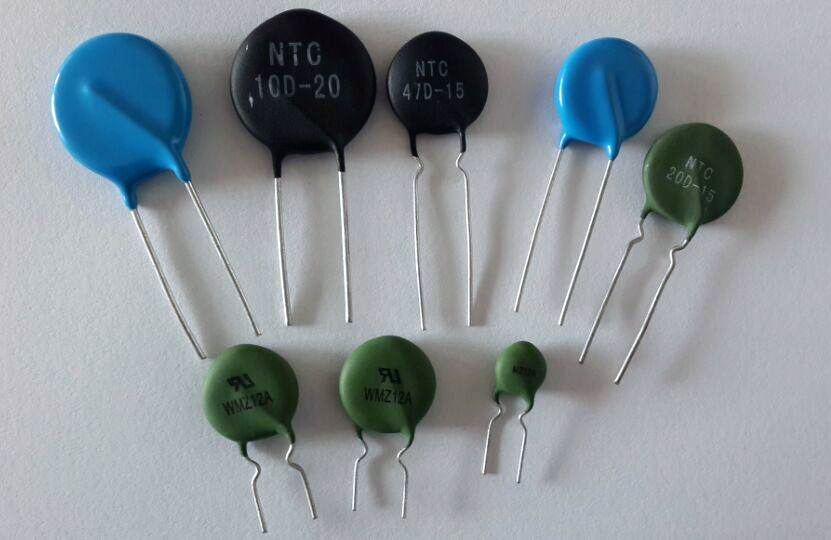
Modern electrical and electronic devices depend on accurate temperature monitoring to maintain stable performance, improve energy efficiency, and prevent component damage. Excessive heat can affect circuit behavior, reduce equipment lifespan, and create safety concerns. To address these challenges, manufacturers use temperature-sensitive components that detect thermal changes and provide feedback to control systems. Negative Temperature Coefficient (NTC) thermistors are among the most widely used solutions because their electrical resistance decreases as temperature increases.
An NTC thermistor converts temperature variations into measurable resistance changes, making it useful for sensing, monitoring, and circuit protection. Integrating an Ntc Electronic Component into an electrical or electronic device can help regulate operating temperatures, limit startup current, and protect sensitive components from thermal stress. These components are found in everything from household appliances and computers to automotive systems, battery packs, and industrial equipment.
What Is an NTC Electronic Component?
An NTC electronic component is a temperature-sensitive resistor with a negative temperature coefficient. Its resistance decreases when its temperature rises and increases when its temperature falls.
NTC thermistors are typically manufactured using semiconductor ceramic materials containing metal oxides. Their resistance changes significantly with temperature, allowing electronic circuits to detect thermal conditions with relatively simple measurement arrangements.
Unlike conventional resistors, which are designed to maintain a relatively stable resistance, NTC thermistors respond to changes in temperature. This property makes them suitable for applications where thermal feedback is necessary for accurate measurement or automatic control.
How NTC Components Work
The operating principle of an NTC thermistor is based on the temperature-dependent conductivity of its semiconductor material.
As temperature increases, the number of available charge carriers generally increases, allowing electrical current to pass more easily through the material. Consequently, resistance decreases. When temperature falls, resistance increases.
A typical temperature measurement process involves:
- The NTC thermistor experiences a temperature change.
- Its electrical resistance changes according to its temperature characteristics.
- A connected circuit detects the resistance variation.
- A controller converts the electrical signal into a temperature reading.
- The system uses the reading to adjust operation or activate protective measures.
Many circuits use a voltage divider to measure the thermistor’s resistance indirectly. A microcontroller or temperature controller then processes the voltage signal to determine the temperature.
Key Applications of NTC Electronic Components
NTC thermistors are used across numerous industries because they provide a practical way to monitor temperature and respond to changing thermal conditions.
1. Temperature Sensors in Electronic Devices
One of the most common applications of NTC components is temperature sensing. Their resistance changes allow electronic circuits to estimate the temperature of a device, surface, or surrounding environment.
They are commonly used in:
- Digital thermometers
- Computer temperature monitoring circuits
- Electronic control boards
- Power supply systems
- Temperature measurement instruments
Their compact size and sensitivity make them suitable for devices where space is limited and continuous temperature feedback is required.
2. Household Appliances
Many household appliances rely on temperature monitoring to maintain consistent operating conditions.
NTC thermistors are frequently used in refrigerators, air conditioners, washing machines, ovens, and water heaters. For example, a refrigerator may use an NTC sensor to monitor internal air temperature and provide feedback to its control board.
The controller can use this information to regulate compressor operation and maintain the desired cooling level. In washing machines, thermistors can monitor water temperature and help control heating cycles.
3. Power Supply Circuit Protection
Power supply circuits can experience sudden current surges when switched on. These surges may place stress on capacitors, rectifiers, and other electronic components.
NTC thermistors are commonly used as inrush current limiters. When the thermistor is cold, it has relatively high resistance, which restricts the initial current. As current passes through it, the component heats up and its resistance decreases.
This helps reduce startup stress and supports more reliable power supply operation.
4. Battery Management Systems
Rechargeable batteries are sensitive to temperature variations, particularly during charging and discharging. Excessive heat can affect performance and create safety concerns.
NTC thermistors are installed in many battery packs to monitor cell or pack temperatures. A battery management system uses these measurements to adjust charging current, regulate power delivery, and activate protective responses when temperatures move outside permitted limits.
Common applications include:
- Electric vehicle battery packs
- Portable electronic devices
- Power tool batteries
- Energy storage systems
- Rechargeable consumer electronics
5. Automotive Electronics
Modern vehicles contain many electronic systems that generate heat or require temperature monitoring.
NTC thermistors can be used in engine-related monitoring, battery management, climate control, electronic power modules, and charging systems. They provide temperature feedback that helps vehicle controllers maintain suitable operating conditions.
In electric vehicles, battery temperature monitoring is particularly important because battery performance and charging behavior depend on thermal conditions.
6. Computers and Data Processing Equipment
Computers, servers, and other data processing equipment generate heat during operation. Processors, graphics processing units, power supplies, and other components may require continuous temperature monitoring.
NTC thermistors can detect rising temperatures and provide information to system controllers. Based on this feedback, equipment may increase fan speed, adjust performance, or activate protective shutdown procedures.
This helps reduce thermal stress and maintain stable operation.
7. Industrial Automation and Machinery
Industrial equipment often operates for extended periods under demanding conditions. Motors, transformers, power converters, and control panels can generate substantial heat.
NTC components can be installed near critical equipment to monitor temperature and provide feedback to programmable controllers or monitoring systems.
They support functions such as:
- Motor temperature monitoring
- Power electronics protection
- Transformer thermal monitoring
- Industrial heating control
- Equipment condition monitoring
These applications help reduce the risk of overheating and unexpected equipment interruptions.
8. HVAC and Climate Control Systems
Heating, ventilation, and air conditioning systems use temperature sensors to regulate indoor environments and monitor equipment conditions.
NTC thermistors can measure room temperature, air duct temperature, evaporator temperature, and other thermal conditions. The control system uses these readings to adjust compressors, fans, and heating elements.
Accurate temperature feedback helps maintain comfort while supporting efficient system operation.
9. Medical and Laboratory Equipment
Medical and laboratory devices often require controlled temperature conditions for reliable operation.
NTC thermistors can be used in diagnostic instruments, temperature-controlled equipment, laboratory devices, and monitoring systems. Their role is to provide temperature feedback so that the equipment can maintain its required operating range.
For applications with strict accuracy or safety requirements, the thermistor must be selected and calibrated according to the equipment’s specifications.
Main Advantages of NTC Electronic Components
NTC thermistors offer several characteristics that make them useful in modern electrical and electronic designs.
High Temperature Sensitivity
Their resistance changes noticeably with temperature, allowing circuits to detect relatively small thermal variations.
Compact Construction
Many NTC components are available in small packages, making them suitable for space-constrained devices and circuit boards.
Cost-Effective Design
NTC thermistors provide a practical temperature measurement solution for many consumer and industrial applications.
Simple Circuit Integration
They can be connected to common measurement circuits, including voltage dividers, and used with microcontrollers and temperature controllers.
Fast Thermal Response
Depending on their design and installation, NTC thermistors can respond quickly to temperature changes.
Multiple Application Options
Different resistance values, temperature ranges, and physical packages allow designers to select components for a wide variety of functions.
Important Characteristics to Consider When Selecting an NTC Component
Choosing the correct NTC thermistor is essential for accurate temperature measurement and dependable operation.
| Characteristic | Description | Why It Matters |
|---|---|---|
| Nominal resistance | Resistance at a specified reference temperature, commonly 25°C | Determines compatibility with the measurement circuit |
| B-value | Parameter describing resistance-temperature behavior over a specified range | Supports temperature calculations |
| Temperature range | Minimum and maximum operating temperatures | Ensures suitability for the application |
| Resistance tolerance | Permitted deviation from nominal resistance | Influences measurement accuracy |
| Response time | Time required to react to a temperature change | Affects monitoring speed |
| Package type | Physical construction and dimensions | Determines installation suitability |
| Long-term stability | Ability to maintain consistent characteristics over time | Supports equipment reliability |
Engineers should also consider maximum power dissipation, operating current, environmental exposure, and the thermal contact between the thermistor and the monitored component.
NTC Versus PTC Thermistors
NTC and PTC thermistors are both temperature-sensitive resistors, but they behave differently as temperature changes.
| Feature | NTC Thermistor | PTC Thermistor |
|---|---|---|
| Temperature coefficient | Negative | Positive |
| Resistance when temperature increases | Decreases | Increases |
| Common applications | Temperature sensing and inrush current limiting | Overcurrent protection and thermal switching |
| Typical behavior | Gradual nonlinear resistance reduction | Resistance may increase sharply near a characteristic temperature |
NTC thermistors are frequently used for temperature measurement and startup current limiting. PTC thermistors are often selected for applications where increasing resistance provides a protective or switching function.
Design Considerations for Reliable Operation
Although NTC components are relatively simple to integrate, several design factors can affect their performance.
Self-heating: Current flowing through an NTC thermistor generates heat. If the measurement current is excessive, the component may become warmer than its surroundings and produce an inaccurate reading. Appropriate measurement current helps minimize this effect.
Nonlinear resistance behavior: The relationship between temperature and resistance is nonlinear. Accurate measurement across a broad temperature range may require calibration data, lookup tables, or mathematical conversion methods.
Component placement: The thermistor should be positioned where it can accurately detect the temperature of the target component or environment. Poor thermal contact may cause delayed or misleading readings.
Electrical compatibility: The selected resistance value and tolerance must be compatible with the measurement circuit. Engineers should also verify power dissipation and current limits.
Environmental protection: Moisture, vibration, dust, and other environmental factors can affect long-term reliability. The package and installation method should suit the operating environment.
Conclusion
NTC electronic components play an important role in modern electrical and electronic devices by supporting temperature measurement, thermal regulation, and circuit protection. Their negative temperature coefficient allows resistance to decrease as temperature rises, making them useful for monitoring thermal conditions and limiting inrush current.
From household appliances and computers to automotive electronics, battery management systems, and industrial machinery, NTC thermistors help maintain stable operating conditions and reduce the risk of heat-related damage. By considering resistance, B-value, temperature range, response time, and environmental requirements, engineers can select suitable NTC components for reliable and efficient electronic designs.
About Post Author




More Stories
The Role of Xprinter Thermal Printers in Improving Retail Checkout Efficiency
How to Identify High-Quality Tissue Culture Plants Before Purchasing
Understanding Acoustic Panel Specifications Before Placing a Bulk Order