

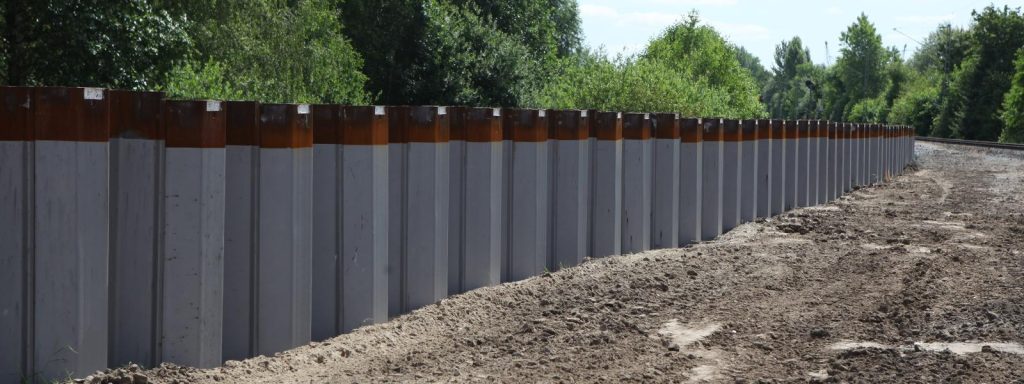
Foundation construction often involves challenging ground conditions, groundwater control, and the need for reliable soil retention. Engineers require materials that can provide structural stability while supporting efficient construction processes. Steel sheet piles are widely used in these situations because they create continuous retaining walls that help control soil movement and provide support during excavation.
Among the different sheet pile profiles available, U-shaped sections are particularly popular in foundation and infrastructure projects. A U Type Sheet Pile features a distinctive cross-sectional design that offers structural strength, practical installation characteristics, and versatility across different applications. Its ability to form interconnected retaining walls makes it a useful solution for temporary and permanent construction requirements.
What Is a U Type Sheet Pile?
A U type sheet pile is a structural steel section with a U-shaped cross-sectional profile. It is manufactured with interlocking edges that allow individual sections to connect and form a continuous wall.
These piles are typically installed vertically into the ground using vibratory hammers, impact hammers, or hydraulic press-in equipment. Once connected, they create a retaining system capable of resisting lateral soil and water pressure.
U-shaped sheet piles are available in different dimensions, thicknesses, steel grades, and lengths. Engineers select the appropriate specifications according to soil conditions, excavation depth, structural loading, and project requirements.
Key Features of U Type Sheet Piles
The design of U-shaped sheet piles provides several characteristics that make them suitable for demanding foundation applications.
1. U-Shaped Structural Profile
The distinctive U-shaped cross-section provides bending resistance and allows the piles to form interconnected retaining walls.
The profile is designed to distribute structural stresses efficiently, although its actual performance depends on the section dimensions, steel grade, and installation arrangement.
2. Interlocking Connections
Each sheet pile includes specially designed interlocks that connect adjacent sections.
These connections help create a continuous wall and reduce the movement of soil between individual piles. Additional sealing measures may be necessary when projects require higher levels of water resistance.
3. High Load-Bearing Capacity
Steel provides excellent tensile and bending strength, making U-shaped sheet piles suitable for retaining systems exposed to significant lateral forces.
Their load-bearing performance depends on factors such as wall height, soil pressure, groundwater conditions, and structural support arrangements.
4. Multiple Size Options
U-shaped sheet piles are manufactured in different widths, thicknesses, and section depths.
This variety allows engineers to select suitable products for small excavation projects as well as larger infrastructure developments.
5. Reusability
In temporary construction projects, U-shaped sheet piles can often be extracted after completion and reused elsewhere.
Their suitability for reuse depends on their condition after extraction, including possible deformation, corrosion, and interlock damage.
Different Types of U Type Sheet Piles
U-shaped sheet piles are available in different configurations to accommodate various engineering and construction requirements.
1. Single U-Shaped Sheet Piles
Single U-shaped sections are individual steel piles designed to connect with adjacent sections through their interlocking edges.
They are commonly used in temporary excavation support, retaining walls, and small to medium-sized foundation projects.
2. Double U-Shaped Sheet Piles
Double U-shaped sheet piles consist of two connected sections that work together as a combined structural element.
This configuration can provide greater section capacity and may be used in applications requiring increased bending resistance.
The connection arrangement and structural properties must be evaluated according to the manufacturer’s specifications and engineering design.
3. Hot-Rolled U Type Sheet Piles
Hot-rolled sheet piles are manufactured through a high-temperature rolling process that produces their final structural profile.
They are commonly selected for demanding construction applications where strong interlocking connections and consistent section properties are important.
4. Cold-Formed U Type Sheet Piles
Cold-formed sheet piles are produced by shaping steel sheets at room temperature using specialized rollers.
They can provide an economical solution for applications with suitable structural requirements. Their section properties and interlock characteristics should be carefully evaluated before selection.
Major Benefits of U Type Sheet Piles in Foundation Projects
U-shaped sheet piles offer several practical advantages that contribute to their widespread use in civil engineering.
Strong Soil Retention
One of their primary functions is retaining soil during excavation and construction.
The interconnected steel sections form a barrier that helps prevent soil movement, making them useful for basement construction, underground structures, and foundation preparation.
Efficient Installation
Modern construction equipment allows U-shaped sheet piles to be installed relatively quickly in suitable ground conditions.
Vibratory hammers, impact hammers, and press-in systems can be selected according to site restrictions and soil characteristics.
Efficient installation can help reduce construction delays and improve project scheduling.
Reduced Excavation Space Requirements
Sheet pile retaining systems are particularly useful where construction sites have limited available space.
Their relatively thin structural profile allows contractors to provide excavation support without requiring large retaining structures.
This is especially valuable in urban areas where neighboring buildings, roads, and underground utilities must be protected.
Cost-Effective Construction
U-shaped sheet piles can offer cost advantages through efficient installation, reduced excavation requirements, and potential reuse in temporary applications.
Their overall cost-effectiveness depends on material prices, installation equipment, ground conditions, and project duration.
Adaptability to Different Ground Conditions
With appropriate engineering and installation techniques, U-shaped sheet piles can be used in various soil environments.
However, dense gravel, hard layers, buried obstructions, and other challenging ground conditions may require specialized installation methods or pre-treatment.
Long-Term Structural Performance
When properly designed and protected against corrosion, U-shaped sheet piles can provide reliable service in permanent retaining structures.
Protective coatings, corrosion allowances, and cathodic protection may be considered depending on environmental exposure.
Applications of U Type Sheet Piles
U-shaped sheet piles are used in a wide range of construction and infrastructure projects because of their structural versatility.
1. Foundation Construction
Foundation projects frequently require temporary or permanent support to prevent surrounding soil from collapsing during excavation.
U-shaped sheet piles create retaining walls that help maintain ground stability while foundation work is completed.
They are commonly used in residential developments, commercial buildings, industrial facilities, and infrastructure projects.
2. Basement Excavation
Underground parking facilities, commercial basements, and residential developments often require deep excavation.
U-shaped sheet piles help retain surrounding soil and provide a stable excavation boundary. Depending on the design, they may be supported by internal bracing, anchors, or other structural systems.
3. Riverbank Protection
Riverbanks can experience erosion and soil movement caused by flowing water and changing water levels.
U-shaped sheet piles can be installed along river edges to create protective retaining walls that help stabilize the surrounding ground.
4. Marine and Port Construction
Ports, docks, waterfront developments, and harbor facilities often require strong retaining systems.
U-shaped sheet piles are used in quay walls, shoreline protection, and other marine structures where soil retention and resistance to water-related forces are important.
5. Bridge Construction
Bridge foundations frequently involve excavation near rivers, roads, and other infrastructure.
U-shaped sheet piles can be used to construct cofferdams and temporary retaining systems, allowing construction teams to work within controlled areas.
6. Underground Utility Installation
Installing underground pipelines, drainage systems, and utility networks may require temporary excavation support.
Sheet pile walls help reduce soil movement and provide a more controlled working environment during installation.
U Type Sheet Pile Installation Methods
Proper installation is essential for achieving the required structural performance and wall alignment.
The appropriate technique depends on soil composition, pile dimensions, environmental restrictions, and available construction equipment.
Vibratory Hammer Installation
Vibratory hammers use controlled vibrations to reduce soil resistance around the pile.
This method is widely used because it allows sheet piles to penetrate suitable soils efficiently. However, vibration levels should be evaluated when working near existing buildings and sensitive infrastructure.
Impact Hammer Installation
Impact hammers drive sheet piles into the ground through repeated blows.
They are useful in conditions where additional driving force is necessary, although noise and vibration considerations may limit their use in certain locations.
Hydraulic Press-In Installation
Hydraulic press-in systems use static force to push sheet piles into the ground.
They generally produce less noise and vibration than conventional impact methods, making them useful in densely populated areas and locations near sensitive structures.
Factors to Consider When Selecting U Type Sheet Piles
Selecting the correct sheet pile requires a detailed understanding of project conditions and engineering requirements.
Important factors include:
- Soil composition: Soil density, strength, and groundwater conditions influence installation difficulty and retaining wall performance.
- Pile dimensions: Width, thickness, and section depth should match the required structural capacity.
- Steel grade: Material strength and chemical composition must meet the project’s specifications.
- Excavation depth: Deeper excavations may require longer piles and additional structural support.
- Water pressure: Groundwater levels and hydrostatic pressure should be considered during design.
- Corrosion resistance: Protective treatments may be necessary in marine or chemically aggressive environments.
- Installation equipment: Available machinery and site accessibility can influence the most suitable installation method.
Consulting geotechnical and structural engineers helps ensure that the selected sheet pile system meets the project’s safety and performance requirements.
Maintenance and Durability of U Type Sheet Piles
Although steel sheet piles are designed for demanding structural applications, their service life depends on environmental conditions and maintenance practices.
Corrosion is one of the main factors affecting long-term performance, particularly in coastal areas, marine environments, and soils with aggressive chemical properties.
Several maintenance measures can help preserve their condition:
- Inspect exposed steel surfaces for corrosion and physical damage.
- Apply or repair protective coatings when necessary.
- Monitor interlocking connections for damage or separation.
- Check retaining walls for deformation and unexpected movement.
- Maintain suitable drainage systems to manage groundwater pressure.
- Conduct periodic structural assessments according to project requirements.
For permanent installations, corrosion allowances and protective systems should be incorporated into the original engineering design.
U Type Sheet Piles Compared with Other Sheet Pile Profiles
Different sheet pile profiles provide different structural characteristics, making comparison important during the design process.
| Feature | U-Shaped Sheet Piles | Z-Shaped Sheet Piles |
|---|---|---|
| Cross-section | U-shaped | Z-shaped |
| Interlock position | Generally near the center | Generally near the outer edges |
| Structural behavior | Depends on combined section arrangement | Often efficient for bending applications |
| Common uses | Retaining walls and cofferdams | Deep retaining walls and marine structures |
| Installation | Suitable for different driving methods | Suitable for different driving methods |
The best option depends on the required bending resistance, section properties, wall configuration, installation conditions, and overall project design.
Conclusion
U type sheet piles are valuable structural components in modern foundation and infrastructure construction. Their U-shaped profile, interlocking connections, and adaptable dimensions make them suitable for retaining walls, basement excavations, riverbank protection, marine developments, and temporary construction enclosures.
Their benefits include effective soil retention, efficient installation, space-saving construction, and potential reuse. However, achieving reliable performance requires careful consideration of soil conditions, structural loads, groundwater pressure, and corrosion protection.
With appropriate engineering design, material selection, and installation procedures, U-shaped sheet pile systems can provide dependable support for both temporary and permanent construction projects.
About Post Author


More Stories
How to Clean and Maintain a Neoprene Beach Bag After Beach Trips
How to Choose Pool Finishes and Colors for a Custom Swimming Pool
A Guide to Designing Custom Animatronic Spinosaurus Models