

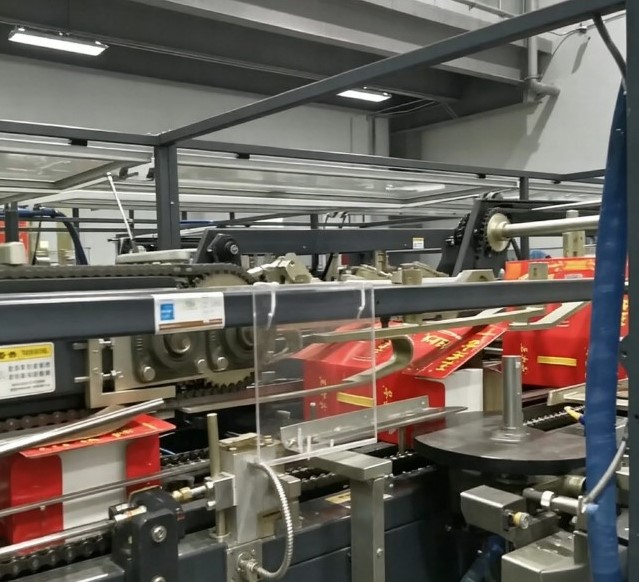
Case style plays an important role in product protection, stacking, shipping, and warehouse handling. Manufacturers often choose a case format based on product dimensions, distribution requirements, and how the finished package needs to perform throughout the supply chain.
A Wrap Around Case Packer can form corrugated cases around grouped products rather than relying on pre-erected boxes. This approach gives packaging operations flexibility when selecting case configurations that fit their products and production requirements.
What Is a Wrap Around Case?
A wrap around case starts as a flat corrugated blank. The packaging machine positions the product group on or against the blank and folds the cardboard around the products to create the finished case.
The final design depends on the blank dimensions, crease layout, product arrangement, and folding sequence. Different configurations can provide different levels of product visibility, accessibility, protection, and stacking strength.
Why Do Case Styles Matter?
A case does more than hold products together. Its design affects how products move through warehouses, distribution centers, trucks, and retail environments.
The right case style can help businesses:
- Keep products securely positioned
- Improve pallet stability
- Protect products during transportation
- Reduce unnecessary packaging material
- Support efficient warehouse handling
- Create a consistent package appearance
Manufacturers should therefore consider the entire distribution process when selecting a case configuration.
Common Case Styles for Wrap Around Packing
The exact styles supported depend on the machine design and application. Several common corrugated configurations work with wrap around packing technology.
Regular Slotted Case Style
The regular slotted case, often called an RSC, remains one of the most familiar corrugated box designs.
Its flaps meet at the center when the case closes. This configuration provides a straightforward structure for many shipping applications and works well when products require full corrugated protection.
A wrap around machine can form a similar enclosed case around a grouped set of products when the product and board specifications suit the application.
Tray-Style Cases
Tray-style packaging leaves the top of the product group partially or completely exposed.
This format can work well for products that need visibility during handling or display. It also allows manufacturers to combine packaging and merchandising requirements in a single case design.
The machine folds the corrugated blank around the lower and side portions of the product group while creating the required tray structure.
Open-Top Cases
Open-top configurations provide easy access to the products after packing.
These cases may suit applications where workers or customers need to see or retrieve the products without removing a fully closed top section.
The design also allows manufacturers to create packaging that functions as both a shipping container and a display-ready unit in suitable applications.
Half-Slotted or Partial-Height Cases
Some applications require corrugated protection without covering the entire height of the product.
Partial-height configurations can reduce the amount of cardboard used while still keeping products grouped and protected around their lower sections.
The suitability of this style depends heavily on product stability and the requirements of transportation and storage.
Display-Ready Cases
Display-ready packaging combines transportation needs with retail presentation.
Instead of removing products from a conventional shipping box and placing them on a shelf, workers may move the complete case into a retail environment and expose the products through a designed opening.
This approach can reduce handling steps and help retailers replenish products more efficiently.
How Product Arrangement Influences Case Style
Case style and product arrangement work together. A machine cannot simply use the same case design for every product group.
The number of products per case, their dimensions, orientation, and stability all influence the final packaging configuration.
For example, cylindrical containers may require a different arrangement from rectangular cartons. Product spacing also affects where the corrugated blank folds and how much pressure the machine can apply during case formation.
How Corrugated Blank Design Affects the Finished Case
The corrugated blank provides the foundation for the case style. Crease lines determine where the material folds, while panel dimensions determine the final case shape.
Board grade also matters. The corrugated material needs enough strength to support the product load and withstand handling during transportation.
Manufacturers should select blanks that match both the packaging machine and the required case performance. Inconsistent board dimensions can create feeding and folding problems.
Can One Machine Handle Multiple Case Styles?
Some automated case packers support multiple case formats, while others focus on a specific packaging configuration.
The ability to switch between styles depends on the machine’s mechanical design, tooling, control system, and product requirements.
Manufacturers that pack several products should discuss all required case formats before purchasing equipment. A machine designed around one case style may not provide the flexibility needed for frequent format changes.
What Determines the Best Case Style?
Several factors help determine which configuration makes sense for a particular product.
Product Characteristics
Product size, shape, weight, rigidity, and fragility all influence case selection.
A stable product group gives the machine more predictable conditions during folding and sealing.
Transportation Requirements
Cases need to withstand the conditions they encounter during distribution. Stacking, vibration, compression, and handling can all affect packaging performance.
A case style that works well on the production line may not provide adequate protection if it does not match transportation demands.
Warehouse Handling
Warehouse teams often move cases using conveyors, carts, forklifts, or pallet equipment.
A suitable case should maintain its shape during these handling processes and stack securely when required.
Retail Requirements
Products destined for retail environments may benefit from display-ready or open-top packaging.
The case can serve a dual purpose by protecting products during transportation and reducing handling when the shipment reaches the store.
How Case Style Affects Material Usage
Case design can influence the amount of corrugated material required for each package.
A fully enclosed case generally uses more material than a partial-height tray or similar open configuration. However, using less cardboard does not automatically make a case better.
Manufacturers must balance material consumption with product protection, stacking performance, transportation conditions, and retail requirements.
What About Case Sealing?
Sealing requirements vary according to the case style. Fully enclosed cases typically require secure closure of multiple flaps, while tray and display configurations may use different folding or adhesive arrangements.
The machine needs to apply adhesive accurately and at the correct point in the folding sequence. Poor sealing can weaken the finished case and create problems during transportation.
Automated control helps maintain consistent sealing across repeated production cycles.
How Automation Helps Maintain Consistent Case Styles
Manual case formation can produce variations in dimensions, folds, and product positioning. Automated equipment follows programmed sequences that help maintain repeatable results.
Sensors and control systems coordinate product movement, blank feeding, folding, and sealing. This synchronization helps the machine produce cases with consistent dimensions throughout production.
Automation also makes it easier to monitor production conditions and identify problems before they affect a large number of finished packages.
Choosing Case Styles for Different Applications
There is no single case style that works for every product. Manufacturers should start with the requirements of the product and distribution channel rather than selecting a format based solely on machine availability.
Consider these questions before finalizing a case design:
- Does the case provide enough protection for the product?
- How many products need to fit inside each case?
- Does the case need to remain fully enclosed?
- Will the case also serve as a retail display?
- How will cases stack on pallets?
- What type of corrugated board should the application use?
- Does the packaging line need multiple case formats?
- How frequently will operators change between products?
Answering these questions can narrow down the most practical case configuration.
Case Packing Solutions From Techflow Pack
Techflow Pack provides automated packaging equipment for manufacturers looking to improve their case packing operations. The appropriate system depends on the products, case dimensions, production speed, corrugated material, and required packaging format.
When reviewing equipment options, manufacturers should provide detailed information about their products and desired case styles. This allows the packaging system to align more closely with the actual production process.
Final Thoughts
Wrap around case packing can support several corrugated case configurations, including enclosed cases, trays, partial-height designs, open-top formats, and display-ready packaging. The available options depend on the machine configuration and the specific product application.
The best case style balances product protection, material usage, transportation requirements, warehouse handling, and retail needs. Understanding these factors before selecting equipment can help manufacturers create a packaging process that delivers consistent cases while supporting efficient production.
About Post Author



More Stories
The Role of Xprinter Thermal Printers in Improving Retail Checkout Efficiency
How to Identify High-Quality Tissue Culture Plants Before Purchasing
Understanding Acoustic Panel Specifications Before Placing a Bulk Order