

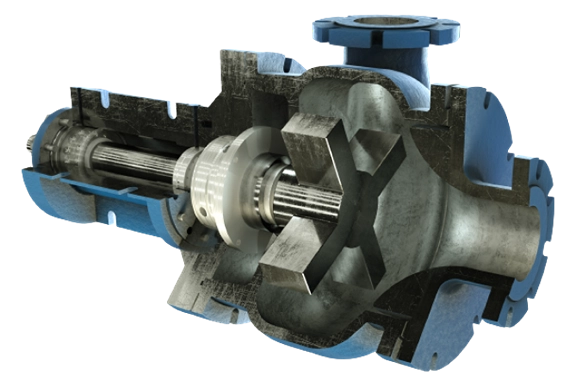
Slurry pumps are designed to handle challenging mixtures containing liquids and solid particles. Their performance depends not only on the basic pump design but also on the quality and precision of the manufacturing process. Small variations in materials, dimensions, assembly, or balancing can affect efficiency, reliability, and service life.
A capable Slurry Pump Manufacturer uses controlled production methods, appropriate materials, precision machining, and systematic testing to help ensure consistent pump performance. Understanding the connection between manufacturing quality and operation can help users make better equipment decisions.
Material Quality and Pump Performance
The materials used in slurry pump components must withstand the specific conditions of the application. Abrasive particles can cause wear, while corrosive slurry can attack exposed surfaces.
Consistent material properties help components maintain their intended strength and wear resistance. If unsuitable or inconsistent materials are used, components may deteriorate faster and require more frequent replacement.
Material selection should take into account:
- Particle size and hardness
- Solids concentration
- Slurry chemistry
- Operating temperature
- Flow velocity
- Expected operating conditions
Precision Manufacturing and Component Fit
Slurry pump components must be manufactured to appropriate dimensions and tolerances. Accurate machining ensures that shafts, bearings, casings, impellers, seals, and other parts fit together correctly.
Poor dimensional control can contribute to misalignment, vibration, leakage, and uneven wear. Precision manufacturing helps maintain the mechanical relationships required for stable pump operation.
Impeller Quality and Hydraulic Efficiency
The impeller plays a central role in transferring energy to the slurry. Its geometry directly influences flow, pressure, efficiency, and wear.
Manufacturing accuracy is particularly important for impeller vane geometry and overall dimensions. Variations from the intended design can alter hydraulic performance and create additional turbulence or imbalance.
A properly manufactured impeller can therefore contribute to more consistent flow and pressure while helping control unnecessary energy losses.
Importance of Proper Balancing
Rotating components must be appropriately balanced to reduce vibration during operation. Even a relatively small imbalance can create additional loads on bearings, shafts, seals, and other mechanical components.
Proper balancing helps the pump run more smoothly and can reduce mechanical stress. This is especially important for equipment operating continuously or at higher rotational speeds.
Casing and Wear Component Quality
The casing and internal wear components must withstand repeated exposure to abrasive slurry. Their material properties, thickness, geometry, and manufacturing accuracy can influence service life.
Replaceable liners and other wear components can protect structural parts from direct abrasion. Consistent manufacturing ensures that these components fit correctly and provide the intended protection.
Sealing and Alignment
Sealing systems help prevent slurry from entering areas where it could damage bearings, shafts, or other mechanical components. Manufacturing and assembly accuracy are important for maintaining proper sealing performance.
Correct shaft alignment is equally important. Misalignment can increase vibration and mechanical wear, potentially leading to premature component failure.
Quality Control During Manufacturing
Effective quality control should occur throughout the manufacturing process rather than only during final inspection.
Typical quality checks may include:
- Raw material verification
- Casting inspection
- Dimensional measurement
- Machined surface inspection
- Heat treatment verification
- Component balancing
- Assembly inspection
- Final performance testing
These controls help identify defects and inconsistencies before the pump is delivered to the customer.
Testing and Performance Verification
Testing provides an opportunity to confirm that the completed pump performs according to its intended specifications. Depending on the pump and project requirements, manufacturers may evaluate flow rate, head, vibration, power consumption, leakage, and mechanical operation.
Testing can reveal problems that may not be obvious during visual inspection. Identifying such issues before installation can reduce the risk of commissioning delays and unexpected operating problems.
Manufacturing Quality and Energy Efficiency
Manufacturing quality can also influence energy consumption. Poorly manufactured hydraulic components may create unnecessary turbulence or friction, requiring more power to achieve the desired operating conditions.
Accurate impeller geometry, smooth hydraulic passages, correct clearances, and proper component alignment can help the pump operate closer to its intended hydraulic performance.
Reducing Premature Wear
Abrasive slurry naturally causes wear, but manufacturing quality can influence how quickly that wear progresses. Accurate component geometry and suitable materials can help distribute wear more evenly.
Poor surface quality, incorrect clearances, or component misalignment may create localized wear. Over time, this can reduce performance and increase maintenance requirements.
Improving Reliability and Service Life
Reliable operation depends on many components working together correctly. Manufacturing inconsistencies in one area can affect the performance of the entire assembly.
For example, an improperly balanced impeller can increase vibration, which may place additional stress on bearings and seals. Consistent manufacturing and careful assembly help reduce these interconnected failure risks.
Manufacturing Quality and Maintenance
High manufacturing quality can also make maintenance more predictable. Components produced to consistent dimensions are easier to identify, install, and replace.
Clear component specifications and accurate documentation can further simplify maintenance planning. This can help operators reduce downtime and keep spare parts organized.
Why Quality Matters in Different Applications
The importance of manufacturing quality can vary depending on the operating environment. Mining and mineral processing applications may involve highly abrasive solids, while industrial processes may combine abrasion with corrosive chemicals.
Dredging and construction applications can also expose pumps to changing solids concentrations and particle sizes. In each case, the pump must be manufactured according to the expected operating conditions.
What Buyers Should Evaluate
When assessing slurry pump equipment, buyers should look beyond basic flow and head specifications. Manufacturing quality can be evaluated by asking about:
- Material standards and verification
- Production and machining controls
- Component inspection procedures
- Balancing practices
- Assembly procedures
- Performance testing
- Quality documentation
- Spare-parts consistency
These factors can provide a clearer picture of how reliably the equipment is likely to perform.
Conclusion
Manufacturing quality has a direct influence on slurry pump performance. Material selection, dimensional accuracy, impeller geometry, balancing, sealing, assembly, and testing all contribute to the pump’s ability to operate reliably under demanding conditions.
For industrial users, evaluating manufacturing practices alongside hydraulic specifications can lead to better equipment choices. A pump produced with consistent materials, precise processes, and thorough quality controls is better positioned to deliver stable performance, controlled wear, and dependable service over its operating life.
About Post Author



More Stories
Essential Mining Substation Equipment for Safe and Reliable Power Distribution
Wudu Basin Installation: Important Measurements and Plumbing Considerations
Enjoy Smooth, Creamy Coffee Creations with an Efficient Electric Milk Frother