

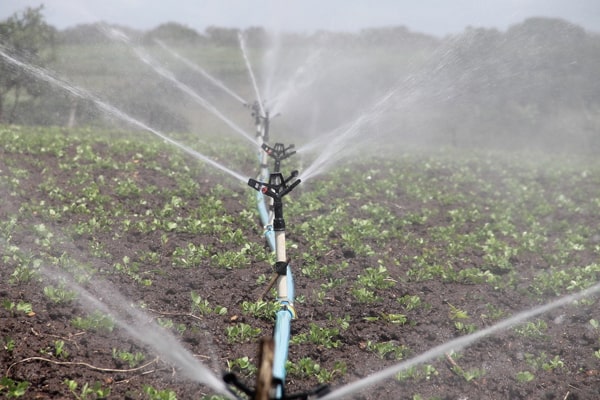
Planning the correct quantity of irrigation supplies is essential when preparing for a large agricultural, landscaping, greenhouse, or gardening project. Ordering too little can cause installation delays, while ordering too much can increase storage requirements and unnecessary expenses.
When estimating Wholesale Drip Irrigation Supplies, start with the irrigation layout, planting arrangement, water requirements, and system specifications. A step-by-step calculation can help create a more accurate materials list before placing a bulk order.
Start With the Irrigation Area
The first step is to measure the area that requires irrigation. For fields, record the length and width of each section. For greenhouses and garden beds, measure each growing area separately if their layouts differ.
If the project contains multiple zones, calculate each zone individually. This makes it easier to determine the required tubing and other components without mixing different irrigation requirements.
Calculate the Required Drip Line
Once the planting layout is known, determine how many drip lines are needed.
For evenly spaced rows, a basic calculation is:
Total drip line = Number of rows × Length of each row
For example, if a growing area has 20 rows and each row requires 100 feet of drip line, the total requirement is:
20 × 100 = 2,000 feet
Add a reasonable allowance for connections, routing, and installation adjustments rather than relying on the exact calculated length.
Determine Drip Line Spacing
Spacing between drip lines depends on the crop, soil type, and planting arrangement. The goal is to distribute moisture effectively throughout the root zone.
Narrow spacing may be appropriate for closely planted crops, while wider spacing can be suitable for larger plants or certain soil conditions.
Before calculating quantities, establish the recommended spacing for the specific application.
Calculate the Number of Emitters
The number of emitters depends on both drip line length and emitter spacing.
Use this basic formula:
Number of emitters = Total drip line length ÷ Emitter spacing
For example, if you have 2,000 feet of drip line and emitters are spaced every 2 feet:
2,000 ÷ 2 = 1,000 emitters
The actual requirement may vary depending on the type of drip line and whether emitters are built into the tubing.
Consider Emitter Flow Rate
Counting emitters is only part of the calculation. You also need to determine how much water the system will deliver.
A basic flow calculation is:
Total flow = Number of emitters × Emitter flow rate
For example, if 1,000 emitters each deliver 0.5 gallons per hour:
1,000 × 0.5 = 500 gallons per hour
This figure helps determine whether the available water source and distribution system can support the planned irrigation zone.
Calculate Main and Submain Lines
Large irrigation systems often use main and submain lines to transport water from the source to individual drip zones.
The required length depends on the distance between the water source and the irrigation areas. Measure these routes carefully and account for turns, connections, and zone layouts.
The diameter of the main and submain lines should also be selected according to the expected flow rate and pressure requirements.
Estimate Fittings and Connectors
Fittings are easy to overlook when preparing a bulk materials list. However, every branch, connection, turn, or transition may require a specific fitting.
Create a layout showing where lines begin, end, branch, and change direction. Then count the required components, such as:
- Couplers
- Tees
- Elbows
- Adapters
- Valves
- End closures
- Connection pieces
Adding a small reserve of frequently used fittings can be helpful for installation adjustments and future repairs.
Determine Filtration Requirements
Water filtration should be included in the supply calculation, particularly when the water source contains sediment or other particles.
The required filter capacity depends on the total flow rate of the irrigation system and the quality of the water. A filter that is too small may restrict flow or require frequent cleaning.
Consider the water source, expected contamination level, system flow, and maintenance schedule when selecting filtration equipment.
Calculate Pressure Control Needs
Pressure requirements should be reviewed before finalizing the materials list. Different irrigation components operate within specific pressure ranges.
Pressure regulators may be needed to maintain suitable conditions within individual zones. Large systems may require multiple pressure-control points depending on their layout.
Check the available water pressure and compare it with the requirements of the selected components.
Divide Large Systems Into Zones
Large irrigation installations are often divided into separate zones. This allows different sections to be irrigated according to their specific water requirements.
Zoning can also help manage available water flow and pressure. Instead of operating the entire system simultaneously, individual sections can be operated according to a planned schedule.
When calculating supplies, determine the tubing, emitters, valves, and other components required for each zone.
Account for Installation Waste
Exact calculations do not always reflect the amount of material required during actual installation. Tubing may need to be cut, repositioned, or routed around obstacles.
For this reason, it is practical to include a modest allowance for installation waste. The appropriate amount depends on the complexity of the project.
Avoid excessive over-ordering, especially when the materials require substantial storage space.
Create a Detailed Materials List
After completing the calculations, organize the results into a materials list. This makes it easier to review the order before purchasing.
A typical list may include:
- Main supply lines
- Submain lines
- Drip tubing or drip lines
- Emitters
- Filters
- Pressure regulators
- Valves
- Connectors and fittings
- End closures
- Replacement components
Review each quantity against the irrigation layout before finalizing the order.
Check Your Calculations
Before placing a wholesale order, verify the calculations from beginning to end. Compare the total tubing length with the number of rows, check emitter quantities against spacing, and confirm that the estimated flow is suitable for the water source.
It is also useful to review each irrigation zone separately. This can reveal missing fittings or inconsistencies that may not be obvious when looking only at the overall totals.
Consider Future Expansion
If the irrigation system may be expanded later, consider this during the initial planning stage. Additional capacity in certain parts of the system may make future modifications easier.
However, future expansion should not result in unnecessary purchases. Only include additional supplies when there is a realistic need or a clear system design that supports future development.
Final Thoughts
Calculating irrigation supply requirements accurately starts with a clear understanding of the project layout. Measuring the irrigation area, calculating drip line length, determining emitter quantities, estimating flow, and accounting for fittings and filtration can provide a reliable foundation for a bulk purchase.
The most important step is to connect every calculation to the actual irrigation design. By reviewing quantities, pressure requirements, water flow, installation conditions, and future maintenance needs, buyers can create a more accurate materials list and avoid unnecessary shortages or excess inventory.
About Post Author


More Stories
Essential Mining Substation Equipment for Safe and Reliable Power Distribution
Wudu Basin Installation: Important Measurements and Plumbing Considerations
Enjoy Smooth, Creamy Coffee Creations with an Efficient Electric Milk Frother