

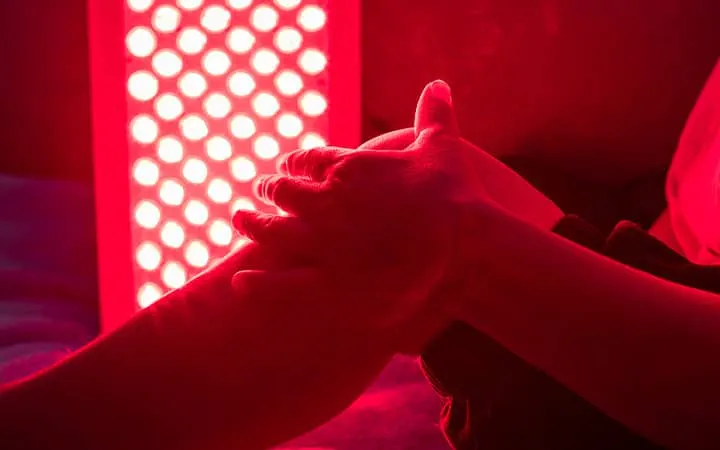
Red light therapy has gained attention in the wellness and biohacking space due to its non-invasive approach and potential support for skin health, recovery, and overall cellular function. As more people explore light-based wellness tools, understanding the underlying technology becomes increasingly important.
Modern devices such as a red light therapy panel are designed to deliver precise wavelengths of light that interact with the body in specific ways. These wavelengths are carefully selected to target different depths of tissue and support various biological responses.
Table of Contents
ToggleThe Science Behind Red Light Therapy
Red light therapy uses low-level wavelengths of visible red light and near-infrared light. Unlike ultraviolet light, which can damage skin cells, these wavelengths are generally considered safe and non-invasive when used correctly.
The key concept behind this therapy is light absorption by the mitochondria, the energy-producing structures inside cells. When exposed to specific wavelengths, mitochondria may produce more adenosine triphosphate (ATP), which is the primary energy source for cellular functions.
This process is often linked to improved cellular performance and recovery support.
Understanding Wavelengths in Red Light Therapy
Wavelength is one of the most important technical factors in any light therapy device. It determines how deeply the light penetrates the skin and tissues.
Commonly used wavelengths include:
Red Light (630–660 nm)
Red light is absorbed primarily by the upper layers of the skin. It is commonly associated with:
- Skin appearance and texture support
- Surface-level cellular activity
- General cosmetic wellness applications
This range is often used for facial treatments and skin-focused routines.
Near-Infrared Light (810–850 nm)
Near-infrared (NIR) light penetrates deeper into the body compared to visible red light. It is often used for:
- Muscle recovery support
- Joint and tissue applications
- Deeper cellular interaction
Because it is invisible to the human eye, NIR light works beneath the skin’s surface without visible brightness.
How a Red Light Therapy Panel Delivers Light
A red light therapy panel uses arrays of LED bulbs to emit controlled wavelengths across a targeted area. The design allows for even light distribution, making it suitable for both small and large treatment zones.
When the device is activated, LEDs emit red and near-infrared light simultaneously or separately depending on the model. The user positions themselves at a specific distance to ensure optimal light exposure.
This setup allows for hands-free use and consistent coverage, especially when treating larger areas of the body.
Power Output and Irradiance Explained
In addition to wavelength, irradiance is another important technical factor. It refers to the intensity of light energy delivered to the skin.
Higher irradiance levels generally mean:
- Shorter session durations
- More concentrated energy delivery
- Potentially more efficient treatments
However, balance is important. Excessively high output is not always better, and proper dosing is essential for safe and effective use.
Pulsing vs Continuous Light Modes
Some advanced panels offer pulsing modes, where light is turned on and off at specific frequencies. This feature is designed to potentially enhance cellular response by varying stimulation patterns.
Continuous mode, on the other hand, delivers a steady stream of light. Many users prefer continuous mode for simplicity and consistent exposure.
The choice between pulsing and continuous light often depends on personal preference and treatment goals.
Heat, EMF, and Safety Design
Modern red light therapy devices are engineered to minimize heat output and electromagnetic field exposure.
Key design considerations include:
- Efficient heat dissipation systems
- Low-EMF circuitry
- Flicker-free LED operation
These features improve comfort and allow for longer, safer sessions without overheating or discomfort.
Why Technology Matters in Red Light Therapy
Not all devices are built the same. Differences in wavelength accuracy, power density, and LED quality can significantly impact performance.
A well-designed device ensures:
- Consistent wavelength delivery
- Even light distribution
- Stable long-term output
- Reliable user experience
Understanding these factors helps users make more informed decisions when selecting a device.
Conclusion
Red light therapy technology is built around precise wavelengths, controlled light delivery, and cellular interaction. By combining red and near-infrared light, modern devices aim to support both surface-level and deeper tissue applications.
A high-quality red light therapy panel brings together accurate wavelengths, appropriate power output, and safe engineering design. As research and innovation continue, understanding the science behind these systems helps users choose and use them more effectively in their wellness routines.



More Stories
Semi Automatic Capsule Filling Machine: Key Features and Benefits Explained
Therapy for Postpartum Depression: Supporting Mental Health After Childbirth
Key Differences Between Medical Silicone Tube Types and Their Uses