

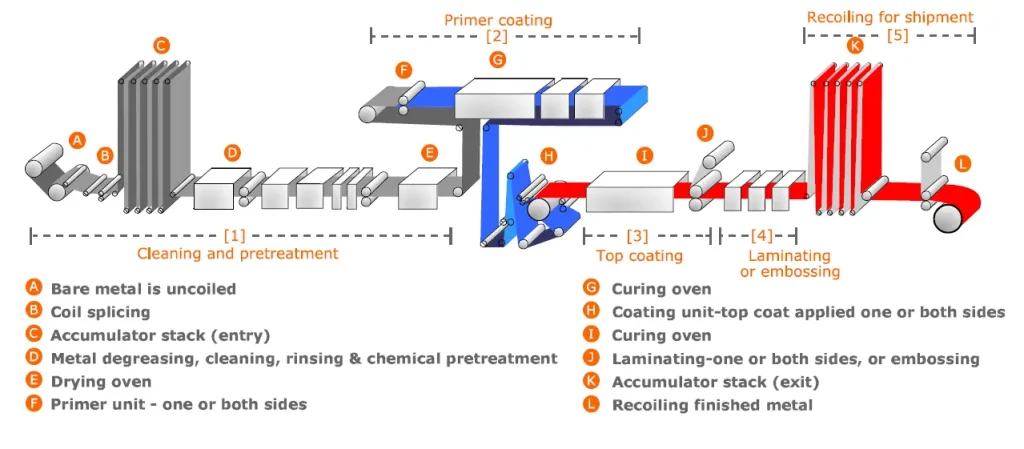
Production efficiency in industrial coating systems is not determined by a single element but by the combined performance of equipment, process control, material handling, and operational management. In modern metal finishing industries, achieving stable and high-output production requires a deep understanding of the factors that influence system performance.
A modern aluminum coil coating line is designed to operate as a fully integrated system where every stage directly affects overall efficiency. From entry section stability to curing precision and recoiling quality, each component contributes to throughput, product consistency, and operational cost control.
Table of Contents
ToggleUnderstanding Production Efficiency in Coil Coating
Production efficiency refers to how effectively a coil coating line converts raw aluminum coils into finished coated products with minimal waste, downtime, and energy consumption. It is typically measured through output rate, defect rate, and equipment utilization.
Key efficiency indicators include:
- Line utilization rate
- Material yield percentage
- Defect and rejection rate
- Energy consumption per ton
- Downtime frequency
Improving any of these indicators can significantly enhance overall productivity.
Line Speed Stability and Its Impact on Output
Line speed is one of the most direct contributors to production efficiency. However, stable speed is more important than maximum speed. Frequent fluctuations can lead to coating defects and system imbalance.
Factors affecting speed stability include:
- Coating viscosity consistency
- Tension control accuracy
- Oven temperature stability
- Mechanical synchronization between sections
A well-balanced system maintains consistent speed without compromising quality.
Coating Consistency and Material Utilization
Efficient production depends heavily on how effectively coating materials are applied and utilized. Poor coating control leads to waste, rework, and increased operational costs.
Key efficiency considerations include:
- Precise coating thickness control
- Reduced overspray or excess application
- Stable chemical formulation management
- Optimized roller performance
High material efficiency directly reduces production costs and improves sustainability.
Role of Pretreatment Efficiency in Overall Performance
Surface pretreatment is essential for coating adhesion and durability. However, inefficiencies in this stage can affect downstream processes and overall productivity.
Important pretreatment factors include:
- Cleaning system effectiveness
- Chemical reaction consistency
- Drying speed and uniformity
- Contaminant removal efficiency
A well-optimized pretreatment system reduces defects and improves coating success rates.
Energy Consumption and Operational Efficiency
Energy usage is one of the largest operational costs in coil coating production, especially in curing and drying systems. Efficient energy management directly improves production economics.
Key energy-related factors include:
- Oven heat efficiency
- Insulation performance
- Motor and drive energy optimization
- Heat recovery system effectiveness
Reducing unnecessary energy loss improves both cost efficiency and environmental performance.
Equipment Reliability and Downtime Reduction
Unplanned downtime has a significant negative impact on production efficiency. Reliable equipment ensures continuous operation and minimizes interruptions.
Critical reliability factors include:
- Preventive maintenance scheduling
- Component durability and wear resistance
- Real-time fault detection systems
- Spare part availability and management
A reliable system maintains consistent output with fewer production stops.
Automation and Process Optimization
Automation plays a major role in improving efficiency by reducing human error and optimizing process parameters in real time.
Automation benefits include:
- Automatic speed and tension adjustments
- Real-time quality monitoring
- Intelligent coating control systems
- Reduced manual intervention
These systems help maintain consistent performance across long production cycles.
Material Handling Efficiency
Efficient handling of aluminum coils throughout the line is essential for maintaining production flow and preventing damage or delays.
Key handling factors include:
- Smooth coil loading and unloading systems
- Stable tension control mechanisms
- Accurate guiding systems
- Reduced mechanical friction points
Proper handling improves both speed and product quality.
Quality Control and Defect Reduction
Defects directly reduce production efficiency by increasing scrap rates and rework requirements. Effective quality control ensures that issues are detected early.
Important quality control methods include:
- Inline inspection systems
- Coating thickness measurement tools
- Surface defect detection technology
- Color consistency monitoring
Early detection helps maintain high yield rates.
Synchronization of Production Stages
A coil coating line consists of multiple interconnected stages that must operate in harmony. Any mismatch can reduce efficiency and create bottlenecks.
Key synchronization areas include:
- Entry speed vs coating application
- Coating application vs curing capacity
- Cooling speed vs recoiling tension
- Overall line timing coordination
Balanced synchronization ensures smooth continuous production.
Operator Efficiency and System Management
Even with advanced automation, operator expertise remains important for maintaining efficiency and handling unexpected situations.
Operator responsibilities include:
- Monitoring system performance
- Adjusting production parameters
- Managing maintenance schedules
- Ensuring quality compliance
Well-trained operators contribute significantly to stable production output.
Conclusion
Production efficiency in coil coating operations is determined by a combination of mechanical performance, process stability, automation, and operational management. Each stage of the production line must work in coordination to achieve maximum output with minimal waste and downtime.
A modern aluminum coil coating line integrates advanced control systems, efficient energy usage, and high-precision equipment to optimize overall performance. By improving stability, reducing defects, and enhancing synchronization, manufacturers can achieve higher productivity and long-term operational success.


More Stories
How Modular Drawer Cabinet Manufacturers Ensure Product Quality
Electric Mini Excavator Maintenance Requirements Compared to Traditional Models
Electric Mini Excavator for Residential Construction and Renovation Projects