

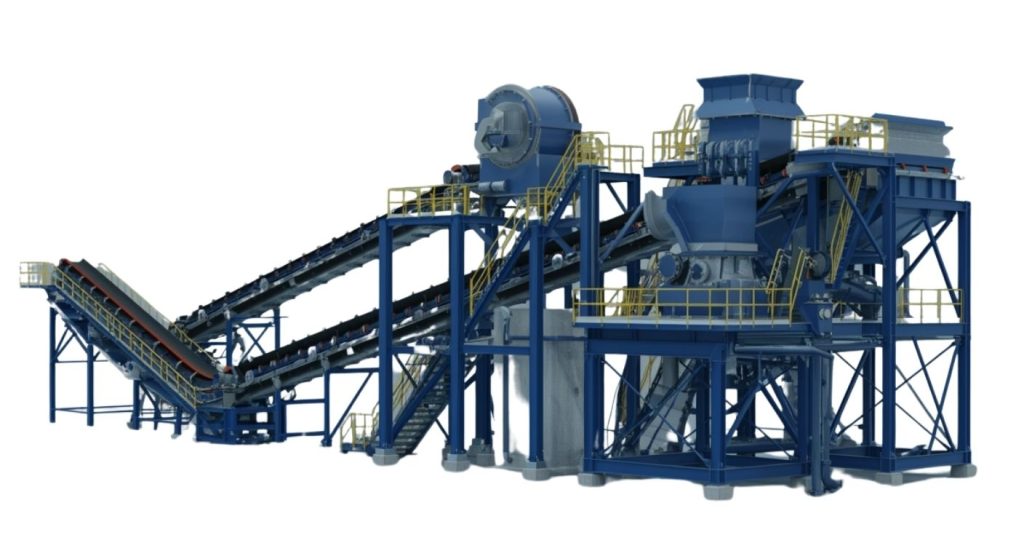
Loading and unloading are often among the most time-consuming activities in a warehouse, distribution center, factory, or bulk-material terminal. Products may need to travel between a storage area and a truck, railcar, container, or production line. When these transfers rely entirely on manual handling, the process can require considerable labor and may become difficult to coordinate during busy periods. A suitable conveyor can provide a more organized way to move materials into or out of transport equipment.
A Loading Conveyor is designed to transfer goods or bulk materials between a loading point and another location, such as a vehicle, container, storage area, or processing station. Depending on the application, it may use a belt, rollers, telescopic sections, or another conveying arrangement. Its design should reflect the type of goods, loading height, available space, required throughput, and the frequency of vehicle movements.
1. Shortens Repeated Transfer Tasks
A loading conveyor can move items along a defined route rather than requiring workers to carry each product individually. This is useful when cartons, bags, packages, or other goods must be loaded in large quantities.
In a distribution facility, for example, a conveyor may transfer packages from a sorting area toward a truck. In a manufacturing plant, it can carry finished products from a production line to a dispatch zone.
The reduction in manual transfer work can help employees focus on arranging, checking, and securing goods. The actual time saved depends on the layout, product type, and operating method.
2. Choose a Design for the Loading Environment
The best conveyor arrangement depends on where loading takes place. A fixed conveyor may suit a permanent production or dispatch station, while a mobile design can be useful where loading points change.
Telescopic conveyors are sometimes used in parcel and warehouse operations because their extendable sections can reach farther into a vehicle or container. Roller conveyors may be suitable for packages with stable bases, while belt conveyors can accommodate a wider range of product shapes.
The choice should account for available floor space, vehicle dimensions, and the need to move equipment when loading is complete.
3. Adjust to Different Vehicle Heights
Loading areas may serve trucks, trailers, shipping containers, or other transport equipment with different dimensions. A conveyor that cannot reach the required height or position may limit the loading process.
Some systems include adjustable legs, lifting mechanisms, or telescopic sections to accommodate different loading conditions. These features should be evaluated against the range of vehicles and the available dock arrangement.
Designers must also consider safe transitions between the conveyor and vehicle floor, including gaps, level differences, and potential product movement.
4. Improve the Organization of Loading Operations
A conveyor provides a consistent transfer route that can help organize goods before they enter a vehicle. Products may be grouped by destination, order, size, or delivery sequence.
This can reduce unnecessary movement around the loading area and make it easier to coordinate the work of several employees. Clear operating procedures are still necessary to prevent congestion and ensure that goods are placed in the correct order.
For mixed loads, scanning and identification systems may be integrated to support order verification and traceability.
5. Match Throughput to the Dispatch Schedule
Loading equipment should be sized according to the number of products or quantity of material that must be transferred within a given period.
Consider average loading demand, peak dispatch times, package dimensions, conveyor speed, and the time required for vehicle positioning. A system that moves products quickly may still fail to improve overall performance if vehicle access or order preparation becomes the limiting factor.
Coordination between warehouse management, conveyor controls, and dispatch staff helps maintain a realistic operating pace.
6. Prioritize Safe Access and Operation
Loading areas combine moving equipment, workers, vehicles, and sometimes elevated surfaces. The layout should separate pedestrian routes from vehicle movements where practical.
Conveyors need appropriate guarding, emergency stops, warning devices, and safe access points. Operators should understand how to stop the system and respond to jams or unstable loads.
Workers should not climb onto conveyor belts or reach into moving mechanisms. Cleaning and maintenance require suitable equipment isolation procedures.
7. Consider Maintenance and Flexibility
A loading conveyor may be exposed to frequent use, impact, dust, and changes in operating conditions. Routine checks should include belts, rollers, drive units, supports, adjustment mechanisms, electrical controls, and safety devices.
Mobile or telescopic designs may require particular attention to wheels, locking arrangements, and extension components. Replacement parts and service access should be considered before purchase.
Conclusion
Loading conveyors can make material transfer more organized by reducing repeated handling and connecting storage or production areas with transport equipment. The most suitable solution depends on vehicle access, product characteristics, loading height, throughput, and workplace safety. Careful planning and routine maintenance help ensure that the conveyor supports rather than complicates the dispatch process.
About Post Author





More Stories
Exploring Color, Texture, and Finish Options in KKR Solid Surface Materials
How KingKonree Supports Architects and Designers with Custom Bathroom Solutions
How Solid Surface Manufacturers Maintain Consistency in Large-Volume Orders