

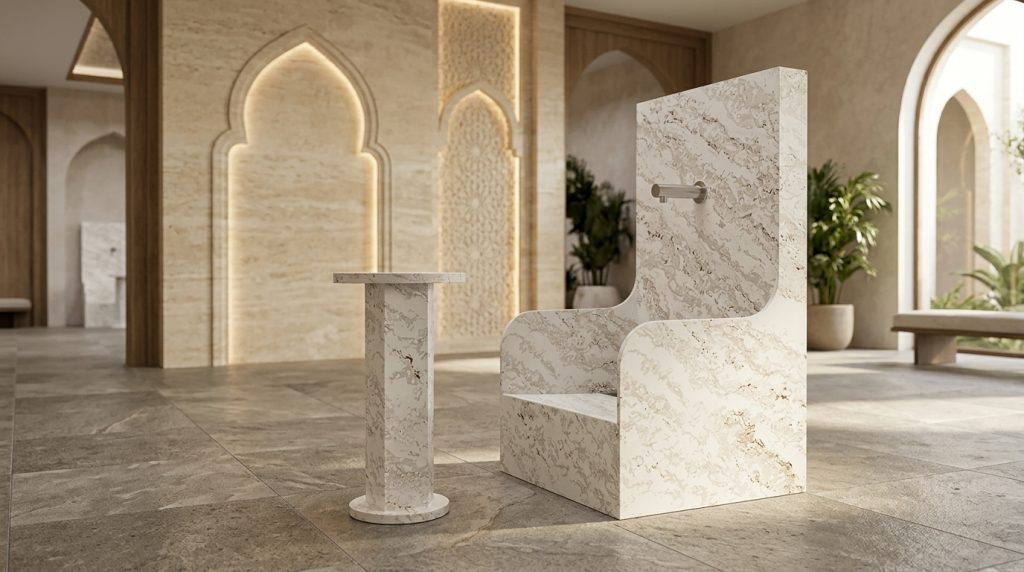
A wudu area needs more than a water outlet and a washing bowl. Its design should support comfortable ablution, control splashing, and fit naturally into the surrounding space. Modern designs bring these practical needs together with clean lines, suitable materials, and thoughtful details.
A well-planned Wudu basin also helps create a more organized washing area. From private bathrooms to mosques and Islamic centers, the right style can make daily ablution easier without making the space look crowded or overly traditional. The choice depends on available room, user needs, plumbing arrangements, and the overall interior design.
What Defines A Modern Wudu Basin Style?
Modern wudu basin designs focus on simplicity, comfort, and practical use. They often feature smooth surfaces, balanced proportions, and shapes that make washing easier. Instead of adding decorative details that serve little purpose, these designs use their form and finish to create visual appeal.
Several features commonly appear in contemporary styles:
- Clean shapes: Straight edges, gentle curves, and simple profiles give the washing area a neat appearance.
- Practical depth: A suitable bowl depth helps contain water during foot and hand washing.
- Easy-clean surfaces: Smooth, nonporous materials make routine cleaning more manageable.
- Integrated drainage: Well-positioned outlets help water flow away without collecting in the bowl.
- Comfortable access: The basin height and surrounding space should suit the people who use it.
These details help a wudu area look consistent with modern bathroom interiors while supporting its specific purpose.
Modern Wudu Basin Styles Worth Considering
Different styles suit different spaces. Some create a minimal appearance, while others add a more noticeable design feature.
Minimalist Rectangular Basins
Rectangular basins suit bathrooms with modern or geometric interiors. Their straight lines work well with rectangular tiles, floating vanities, and simple wall finishes. A broad washing surface can also provide enough room for hand and foot washing.
The design should include rounded internal corners or a gently sloped base. Sharp internal angles may collect dirt and make cleaning difficult. A practical rectangular basin balances its defined outer shape with a smooth and functional interior.
Curved And Rounded Basins
Rounded designs bring softer lines into a bathroom. Oval and curved bowls can reduce the rigid appearance of spaces that already contain many straight edges. Their smooth contours also create a simple visual transition between the basin and surrounding surfaces.
This style works well in residential bathrooms and smaller ablution areas. The bowl still needs enough depth and width to support comfortable washing. A compact rounded design may look attractive, yet its dimensions must match the intended use.
Wall-Mounted Wudu Basins
Wall-mounted basins create an open appearance by keeping the floor area underneath clear. This arrangement can make a small bathroom feel less crowded and simplify floor cleaning.
The wall structure must support the basin’s weight and the pressure created during regular use. Plumbing connections also need careful planning before installation. A concealed drain and supply arrangement can give the finished space a cleaner appearance.
Countertop Wudu Basins
Countertop designs sit on a supporting surface and often become a central feature of the washing area. They work well in larger bathrooms where the surrounding counter can provide space for towels, soap, and other essentials.
The counter material should resist moisture, and the basin height should allow comfortable use. Designers also need to check the faucet position to prevent water from splashing beyond the bowl.
Integrated Wudu Basin Designs
An integrated design combines the washing bowl with a countertop or supporting structure. This creates a continuous surface with fewer visible joints. It can also reduce the gaps where dirt and moisture may collect.
These designs suit modern residential projects, hotels, and commercial ablution spaces. The material and construction method matter because the complete unit needs to handle regular water exposure and cleaning.
Materials That Support Modern Appearance And Daily Use
Material selection affects the basin’s appearance, maintenance needs, and long-term performance. A suitable option should match the interior design and withstand frequent contact with water.
Solid Surface
Solid surface materials support smooth shapes and clean finishes. Manufacturers can form them into different bowl profiles, including integrated designs with fewer visible joints.
Many solid surface options also offer a nonporous finish that makes routine cleaning easier. Scratches may be repairable on some products, depending on the material and manufacturer’s instructions. This makes solid surface worth considering for projects that need both design flexibility and practical maintenance.
Ceramic
Ceramic remains a familiar choice for bathroom fixtures. Its glazed surface creates a clean finish and handles regular bathroom use. White ceramic also works with many interior styles, from simple contemporary spaces to more decorative designs.
However, ceramic offers fewer options for custom shapes than some other materials. Its glazed surface can also chip or crack after a strong impact. Buyers should check the finish and construction quality before making a selection.
Natural Stone
Natural stone adds texture and a distinctive appearance to an ablution area. Marble and granite can suit luxury interiors where the basin needs to complement stone flooring or wall finishes.
Stone requires more attention to maintenance than many manufactured surfaces. Some varieties need sealing to limit moisture absorption and staining. The basin design should also account for the material’s weight and the strength of its supporting structure.
Design Features That Improve Everyday Function
Appearance matters, yet the basin must work well during every use. A few practical details can make a noticeable difference in comfort and cleanliness.
A Suitable Bowl Depth
A shallow bowl may allow water to splash onto the floor during foot washing. An excessively deep bowl can make access uncomfortable for some users. The ideal depth depends on the basin’s width, shape, installation height, and intended users.
Effective Drainage
The drain should sit at a suitable low point so water moves towards the outlet. A properly sized drain and suitable basin slope help prevent standing water. Removable strainers also make it easier to clear hair and other debris.
Splash Control
The faucet position, water pressure, and bowl shape all affect splashing. A faucet that directs water towards the center of the bowl can help keep the surrounding counter and floor dry.
Raised edges and a suitable bowl profile can offer additional protection. However, these features should not make the basin difficult to reach or clean.
Comfortable Installation Height
The installation height should suit the main users. A basin that sits too high or too low may cause discomfort during repeated washing. Shared facilities need extra attention to accessibility and the different needs of their users.
How To Match A Wudu Basin With Interior Design
A modern basin should complement the bathroom rather than compete with other fixtures. The finish, shape, and installation style all contribute to the overall appearance.
Consider these combinations:
- Minimalist bathrooms: Pair a white rectangular basin with neutral tiles, simple faucets, and concealed plumbing.
- Warm contemporary interiors: Choose a rounded solid surface basin with wood-look cabinets and warm lighting.
- Luxury bathrooms: Use a stone or integrated basin with matching wall finishes and understated metal fixtures.
- Small bathrooms: Select a compact wall-mounted design to keep the floor area open.
- Shared ablution spaces: Choose durable surfaces, easy-to-clean shapes, and practical drainage arrangements.
Consistency between the basin, faucet, tiles, and storage helps create a more balanced interior.
Choosing The Right Style For Different Spaces
The best design depends on how many people use the facility and how much space the project allows.
Residential Bathrooms
Homeowners often need a basin that fits the existing bathroom layout and supports regular family use. A compact wall-mounted or countertop design may work well. The choice should also account for available storage and cleaning access.
Mosques And Islamic Centers
Shared ablution facilities need to support repeated use throughout the day. Multiple washing positions, durable materials, suitable drainage, and enough space between users matter more than decorative details.
A simple design can still look attractive through coordinated finishes and consistent basin shapes. The layout should allow people to move comfortably without blocking others.
Hotels And Commercial Buildings
Hotels and commercial properties often need a style that matches their interior standards. An integrated or countertop basin may suit a premium bathroom, while a durable and straightforward design may work better in a high-use shared facility.
Maintenance teams also need easy access to drains and plumbing connections. A visually appealing basin creates less long-term value when routine servicing becomes difficult.
Common Design Mistakes To Avoid
A modern appearance does not guarantee a practical washing area. Certain design choices can create problems after installation.
- Choosing appearance over dimensions: A stylish basin may offer too little room for comfortable washing.
- Ignoring drainage: Poor bowl slopes and unsuitable outlets can leave water standing after use.
- Placing the faucet incorrectly: A poorly positioned faucet may cause excessive splashing.
- Overlooking cleaning access: Complex corners and narrow gaps can make maintenance harder.
- Using unsuitable materials: Some finishes need more care than a busy ablution area can reasonably support.
- Forgetting accessibility: The basin height and surrounding clearance should match the needs of its users.
Planning these details before purchasing or installing the basin helps avoid unnecessary changes later.
Final Thoughts
Modern wudu basin styles bring together practical washing features and attractive bathroom design. Rectangular, rounded, wall-mounted, countertop, and integrated options each suit different layouts and preferences. Material quality, bowl depth, drainage, faucet position, and installation height all deserve attention during selection.
For residential and commercial projects, kingkonree is one option to explore when comparing modern basin designs and material choices. The most suitable design will support comfortable ablution, simplify cleaning, and fit naturally into the space without sacrificing everyday function.
About Post Author



More Stories
Exploring Color, Texture, and Finish Options in KKR Solid Surface Materials
How KingKonree Supports Architects and Designers with Custom Bathroom Solutions
How Solid Surface Manufacturers Maintain Consistency in Large-Volume Orders