

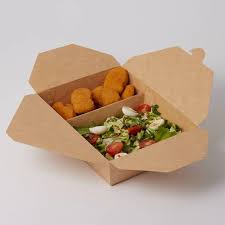
Selecting suitable food packaging is an important decision for restaurants, catering companies, takeaway businesses, and food delivery services. The right lunch boxes help protect meals, maintain food presentation, and make transportation more convenient. For businesses that handle large order volumes, purchasing packaging in bulk can also support better cost management and consistent supply.
However, choosing a wholesale packaging option requires more than comparing prices. Businesses need to consider material quality, container size, durability, food compatibility, supplier reliability, and other practical factors. Understanding what to look for when purchasing Paper Lunch Boxes Wholesale can help businesses select packaging that meets their operational needs.
1. Material Quality and Construction
The quality of the paper material directly affects the performance of a lunch box. Packaging should be strong enough to hold the intended food portion without bending, tearing, or losing its shape during handling.
Businesses should examine the paper thickness, overall construction, and quality of the folding and joining areas. A well-constructed container can maintain its structure during filling, stacking, and transportation.
It is also important to consider whether the material is suitable for direct food contact. Suppliers should provide relevant product specifications and documentation to help buyers evaluate material safety.
2. Box Size and Capacity
Choosing the correct size is essential for practical food packaging. A container that is too small may not hold the meal comfortably, while an oversized box can increase packaging costs and create unnecessary movement during delivery.
Restaurants should consider their standard portion sizes and the types of meals they serve. Smaller containers may suit snacks, sandwiches, and side dishes, whereas larger boxes are more appropriate for complete meals.
Catering companies should also consider whether they need several sizes for different event packages. A consistent range of container dimensions can simplify food preparation and inventory management.
3. Resistance to Grease and Moisture
Food packaging frequently comes into contact with oils, sauces, dressings, and moisture. If a paper lunch box cannot handle these conditions, it may become soft, stained, or damaged before reaching the customer.
Businesses should check whether the packaging includes a suitable barrier or coating for the intended food applications. The level of resistance needed depends on the menu, since dry foods generally require different packaging performance from oily or saucy meals.
Testing samples with actual food items is a practical way to evaluate performance. Buyers should also confirm whether any coating affects recycling or composting options.
4. Temperature Compatibility
Temperature is another important consideration when selecting lunch boxes. Restaurants may package freshly prepared meals, warm side dishes, chilled salads, or room-temperature snacks.
Not all paper containers are designed for the same temperature conditions. Businesses should review supplier guidelines regarding heat resistance and suitability for hot or cold foods.
For takeaway and delivery operations, it is also useful to test how containers perform after being filled and closed for the expected holding period. This helps identify problems such as softening, deformation, or reduced closure strength.
5. Compartment Design and Food Separation
Some meals contain several components that should remain separate during transportation. Rice, vegetables, meat, sauces, and side dishes may benefit from a compartment-style lunch box.
Divided containers can help preserve food presentation and prevent different ingredients from mixing. They are particularly useful for catering services, meal-preparation companies, and businesses offering combination meals.
However, compartment designs should match actual menu requirements. Businesses should check the size and depth of each section to ensure that portions fit comfortably without overcrowding.
6. Durability During Storage and Transportation
Paper lunch boxes need to withstand more than the weight of the food they contain. They may be stacked, carried, placed inside delivery bags, or transported over different distances.
Weak construction can result in damaged packaging, spills, and customer complaints. Buyers should therefore examine the strength of the base, corners, side panels, and closing mechanism.
For delivery-focused businesses, sample testing should include realistic transportation conditions. Checking whether containers remain stable when stacked can also help improve storage and delivery efficiency.
7. Ease of Assembly and Closure
Packaging should be convenient for employees who prepare large numbers of meals. Complicated folding systems or difficult closures can slow down food preparation, particularly during busy service periods.
Lunch boxes with simple assembly structures can reduce handling time and make packaging tasks easier to standardize. Secure lids or locking tabs are also important because they help keep meals enclosed during movement.
Before placing a bulk order, staff should assemble several samples and evaluate how quickly they can prepare them. This provides a practical understanding of whether the design suits the business’s workflow.
8. Environmental Considerations
Many food businesses are looking for packaging options that support their sustainability goals. Paper-based lunch boxes may offer an alternative to certain plastic containers, but their environmental performance depends on the materials and manufacturing process.
Buyers should ask suppliers whether the packaging uses recycled or responsibly sourced paper and whether it contains plastic coatings or other barrier materials. They should also check for relevant certifications and disposal instructions.
Recyclability and compostability should never be assumed based on appearance alone. Local waste-management facilities and food contamination can influence how packaging can be processed after use.
9. Customization and Branding Options
Packaging can contribute to a restaurant’s visual identity. Custom printing allows businesses to display logos, brand colors, product information, or other design elements on their lunch boxes.
Branded containers can create a consistent appearance across takeaway orders, food delivery, and catering services. They may also improve brand recognition when customers carry meals to workplaces, schools, or public events.
Before choosing customized packaging, businesses should review available printing methods, design requirements, color options, and additional costs. It is also important to confirm whether customized orders have different minimum quantities or production timelines.
10. Wholesale Pricing and Minimum Order Quantities
Price is a major factor when purchasing packaging in bulk, but the lowest quoted price does not always represent the best value. Businesses should compare the cost per usable container alongside product quality, shipping charges, and other order expenses.
Minimum order quantities also deserve attention. A large order may offer a lower unit price, but it can create storage challenges or leave a business with unused packaging if demand changes.
A practical purchasing decision should balance expected consumption, available storage, cash flow, and supplier pricing. Restaurants with predictable demand may benefit from larger orders, while smaller businesses may prefer more flexible quantities.
11. Supplier Reliability and Product Consistency
A dependable supplier is essential for maintaining a steady packaging supply. Late deliveries or inconsistent product quality can disrupt restaurant operations and affect customer satisfaction.
Before choosing a wholesale provider, businesses should evaluate the supplier’s production capacity, communication, delivery arrangements, and quality-control procedures. It is also useful to ask whether the same specifications can be maintained across repeat orders.
Requesting product samples and reviewing detailed specifications can reduce uncertainty. Businesses should also clarify how damaged goods, quality concerns, and order discrepancies are handled.
12. Food Safety and Compliance Requirements
Food packaging must be appropriate for its intended use. Businesses should verify that paper lunch boxes meet applicable food-contact requirements in the markets where they operate.
Supplier documentation can help confirm the suitability of materials, coatings, adhesives, and printing inks. This is particularly important for containers that come into direct contact with hot, oily, or acidic foods.
Restaurants and catering companies should also consider hygiene during packaging storage and handling. Keeping containers protected from dust, moisture, and other contaminants helps maintain their condition before use.
13. Sample Testing Before Bulk Purchasing
Even when a supplier provides detailed specifications, practical testing remains valuable. A sample order allows businesses to evaluate how the containers perform with their actual menu items and operating procedures.
A useful testing process may include:
- Checking the dimensions and usable capacity of each box.
- Filling containers with hot, cold, oily, and moist foods where relevant.
- Evaluating the strength of the base and side panels.
- Testing the lid or closure during handling and transportation.
- Observing how the packaging performs after the expected holding period.
- Reviewing the appearance and ease of assembly.
These checks can help businesses identify unsuitable designs before committing to a large purchase.
Conclusion
Choosing the right wholesale paper lunch boxes involves evaluating several factors, including material quality, size, moisture resistance, durability, compartment design, environmental characteristics, and supplier reliability. Businesses should also consider customization, order quantities, food safety requirements, and the practical needs of their employees.
Working with an experienced packaging provider such as Uchampak can help buyers explore available designs and compare packaging options for different food applications. By requesting samples and assessing products under realistic conditions, restaurants and catering companies can make more informed purchasing decisions and establish a reliable packaging strategy.
About Post Author



More Stories
Understanding Sand Aluminium Casting and Its Role in Custom Metal Component Production
Why Tissue Culture Philodendron Is a Popular Choice for Commercial Plant Nurseries
Understanding the Working Process and Industrial Applications of a Vacuum Drum Filter