

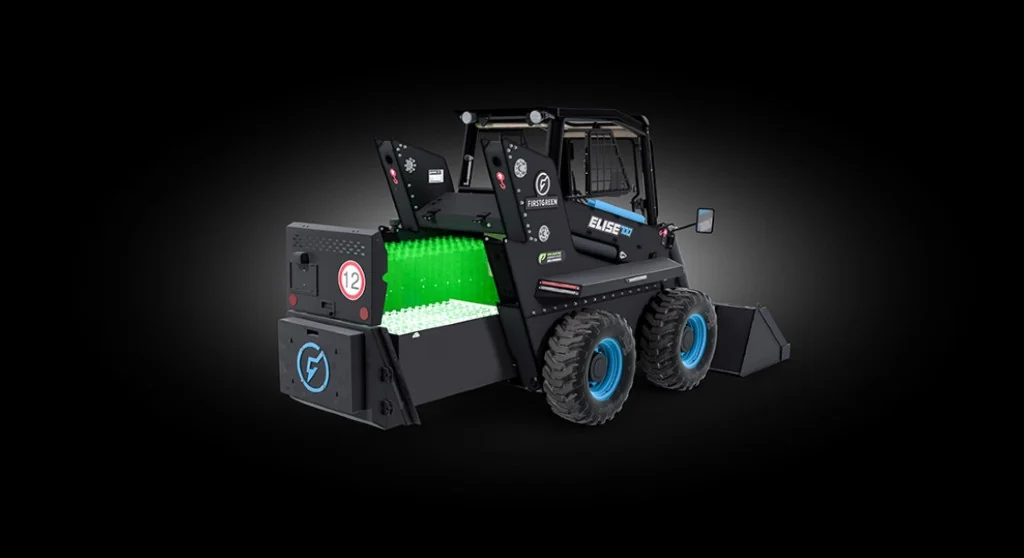
Choosing the right skid steer loader can significantly affect productivity, operating expenses, and environmental performance across construction, landscaping, agriculture, and industrial applications. While diesel-powered machines have long been used for demanding outdoor work, battery-powered alternatives are gaining attention as businesses look for efficient equipment that can operate in noise-sensitive areas and suitable indoor environments.
An Electric Skid Steer uses rechargeable batteries and electric drive systems instead of a conventional diesel engine. Depending on the model, it can offer reduced operating noise, no tailpipe exhaust during operation, and fewer engine-related maintenance requirements. However, diesel and electric machines each have advantages that depend on workload, charging access, operating conditions, and total cost of ownership. Understanding these differences helps buyers choose the right equipment for their needs.
1. Electric Skid Steer vs. Diesel: Understanding the Main Differences
Electric and diesel skid steer loaders perform many of the same core tasks, including material handling, site preparation, debris removal, and attachment-based work. Their main differences involve how they generate power, how they are maintained, and how they fit into different working environments.
Electric models use stored battery energy to power electric motors and, depending on the design, hydraulic systems. Diesel models rely on combustion engines that burn fuel to produce mechanical power.
The most suitable option depends on the conditions in which the machine will operate. Electric loaders can be particularly attractive for predictable work cycles, suitable indoor applications, and sites where noise or direct exhaust emissions are concerns. Diesel models may remain practical for remote locations, long shifts, and applications where rapid refueling is more convenient than charging.
2. Performance Comparison
Performance is one of the most important factors when comparing electric and diesel skid steers. Buyers should consider not only lifting capacity and power but also runtime, responsiveness, terrain, and the type of work performed.
Power and Operating Response
Electric motors can deliver responsive power and precise control, depending on the machine’s drive system and control configuration. This can be beneficial during repetitive maneuvering, material handling, and work in restricted areas.
Diesel machines provide established performance for a wide range of construction and industrial tasks. Their capabilities vary by engine size, hydraulic configuration, machine weight, and design.
Neither power source automatically guarantees superior performance. Buyers should compare rated operating capacity, travel speed, hydraulic flow and pressure, lifting height, and other specifications relevant to their applications.
Runtime and Work Scheduling
Diesel skid steers can often return to work quickly after refueling, provided fuel is available. This can be advantageous on remote sites or during operations requiring extended, continuous use.
Electric machines depend on battery capacity, workload, and charging arrangements. Heavy lifting, frequent travel, and power-intensive hydraulic attachments can reduce runtime. Charging may be scheduled overnight or during breaks, but the plan must match the site’s operating hours.
For electric equipment, ask for runtime estimates based on realistic working conditions rather than relying solely on best-case figures. For diesel equipment, evaluate fuel consumption under comparable workloads.
Maneuverability and Working Space
Both electric and diesel skid steers are designed for compact maneuvering. Their dimensions, turning characteristics, tires or tracks, and weight distribution determine how effectively they operate in confined spaces.
Electric models may have an advantage in suitable indoor environments because they produce no tailpipe exhaust and generally create less engine-related noise. Diesel models may be better suited to some outdoor operations where ventilation is unrestricted and charging infrastructure is limited.
Before selecting either type, verify entrance dimensions, floor load limits, ground conditions, turning clearance, and the machine’s operating weight.
3. Maintenance Requirements: Electric vs. Diesel
Maintenance affects equipment availability, operating expenses, and service life. Electric and diesel skid steers require regular inspections, but their maintenance needs differ.
Electric Skid Steer Maintenance
Battery-powered machines do not require conventional engine oil changes, fuel filter replacements, or exhaust-system servicing. Depending on their design, they may also have fewer moving parts in the drivetrain.
Routine maintenance may include:
- Inspecting hydraulic hoses, fittings, and fluid levels.
- Checking tires or tracks for wear and damage.
- Examining electrical connections and charging components.
- Monitoring battery condition according to manufacturer guidance.
- Inspecting attachments, safety systems, and structural components.
- Keeping cooling systems and designated components clean.
Electric machines still require qualified servicing. Battery health, electrical system integrity, and charging safety should be managed according to the manufacturer’s instructions.
Diesel Skid Steer Maintenance
Diesel loaders require routine servicing of engine-related components, which commonly includes oil changes, fuel filters, air filters, and fuel-system inspections. Depending on the model, exhaust after-treatment systems may also require specific maintenance.
Other requirements include hydraulic system servicing, tire or track inspections, attachment checks, and general safety inspections.
Diesel equipment has a well-established maintenance ecosystem in many regions, but servicing frequency and costs vary with operating conditions, machine design, and workload.
Which Is More Cost-Effective to Maintain?
Electric models can reduce certain routine maintenance tasks by eliminating conventional engine systems. However, battery servicing and potential replacement costs must be considered.
Diesel models require more engine-related maintenance but may be easier to service in locations with established diesel equipment support.
The most reliable comparison includes scheduled maintenance, replacement parts, technician availability, warranty coverage, expected downtime, and the equipment’s anticipated service life.
4. Environmental Benefits and Considerations
Environmental performance is another major difference between electric and diesel skid steers. The benefits depend on where the equipment operates and how its energy is produced.
No Tailpipe Exhaust During Electric Operation
Battery-powered skid steers produce no tailpipe exhaust while operating. This can be valuable in warehouses, workshops, indoor renovation projects, and other suitable enclosed or partially enclosed environments.
Diesel machines release combustion-related exhaust emissions during operation. These emissions require appropriate ventilation and exposure controls, especially when equipment is used near workers or inside buildings.
Electric equipment does not eliminate all workplace pollutants. Dust from materials, tire particles, and other construction contaminants may still be generated, so ventilation and dust management remain important.
Lower Operating Noise
Electric motors generally produce less engine-related noise than comparable diesel engines. This can help reduce disruption near residential neighborhoods, commercial facilities, schools, hospitals, and other noise-sensitive locations.
Actual noise levels depend on the machine, hydraulic systems, tires or tracks, attachments, and work activity. Electric equipment does not make a construction site silent, but it may help reduce one source of operating noise.
Lifecycle Emissions
Although electric skid steers have no tailpipe emissions during operation, their overall environmental impact includes electricity generation, battery production, equipment manufacturing, and battery disposal or recycling.
Charging with electricity from lower-carbon sources can improve the potential emissions benefits. The actual result depends on the local electricity mix and the machine’s lifetime usage.
Diesel equipment has direct fuel-related emissions, while electric equipment shifts much of its operating energy demand to the electricity supply. Buyers should consider the full lifecycle when comparing environmental performance.
5. Operating Costs and Total Cost of Ownership
The initial purchase price does not tell the whole story. Businesses should compare the total cost of owning and operating each machine over its expected service life.
| Cost factor | Electric skid steer | Diesel skid steer |
|---|---|---|
| Energy source | Electricity | Diesel fuel |
| Routine engine servicing | No conventional engine oil or fuel-filter servicing | Requires engine and fuel-system maintenance |
| Energy infrastructure | Charger and suitable electrical supply | Fuel storage or reliable refueling access |
| Battery-related costs | Battery warranty and potential replacement | No traction battery replacement requirement of the same type |
| Exhaust-related maintenance | No combustion-engine exhaust system | May require exhaust-system servicing, depending on the model |
| Operating downtime | Can include charging and battery-related service | Can include refueling, engine servicing, and repairs |
| Cost variability | Electricity rates, charging efficiency, and battery condition | Fuel prices, consumption, and engine maintenance |
Electric machines may offer lower energy and routine maintenance costs in some applications, but savings are not guaranteed. The result depends on local electricity and diesel prices, utilization, charging infrastructure, battery costs, and service requirements.
A complete calculation should include the purchase price, financing, energy, maintenance, parts, downtime, and resale value. For electric machines, include charging equipment and potential battery replacement. For diesel models, include fuel consumption and engine-related servicing.
Comparing both machines under the same expected workload provides a more meaningful result than comparing individual cost categories.
6. Which Model Is Better for Indoor Construction?
Indoor construction and renovation projects often require careful management of air quality, noise, and access.
Electric skid steers can be suitable for selected indoor applications because they produce no tailpipe exhaust and generally operate with less engine-related noise. These characteristics can be useful in warehouses, commercial buildings, and enclosed renovation areas when the machine is approved for the environment.
Diesel machines may be less suitable for enclosed spaces unless the operating environment has appropriate ventilation and meets all relevant safety requirements.
Before using any loader indoors, contractors should assess floor strength, access routes, ceiling clearance, ventilation, dust exposure, and emergency procedures. Battery-powered equipment does not remove the need for safe operation or environmental controls.
7. Which Model Is Better for Outdoor Construction and Landscaping?
Outdoor applications can favor either power source, depending on the task and site infrastructure.
Diesel skid steers can be practical for remote construction sites, demanding workloads, and extended operations where fuel is readily available but electrical charging is limited.
Electric machines may be attractive for urban construction, landscaping near occupied properties, and projects with noise or emissions requirements. Their suitability depends on battery runtime, ground conditions, load capacity, and the availability of charging facilities.
Landscaping contractors should also consider surface sensitivity, traction, tire or track options, and the effects of machine weight on soil. Construction contractors should prioritize lifting capacity, hydraulic performance, and compatibility with the attachments required for their work.
The best option is the one that meets the project’s performance requirements without introducing unnecessary downtime or operating costs.
8. Attachment Compatibility and Versatility
Both electric and diesel skid steers can support a variety of compatible attachments, allowing one machine to handle different tasks.
Common options include:
- Buckets: For moving soil, gravel, sand, and other loose materials.
- Pallet forks: For handling approved palletized loads.
- Grapples: For collecting certain bulky or irregular materials.
- Sweepers: For cleaning suitable surfaces.
- Augers: For drilling holes when compatible with the machine’s hydraulic system.
- Specialized attachments: For specific construction, landscaping, or industrial operations.
When comparing models, check the mounting system, hydraulic flow and pressure, electrical connections, rated operating capacity, and attachment weight.
Some hydraulic attachments place significant demands on the machine’s power system. For electric loaders, this may affect battery runtime. Buyers should confirm that the selected model can operate the required attachment effectively within its approved limits.
9. Battery Technology and Charging Considerations
Battery technology is a key factor in the performance and long-term value of an electric skid steer.
Lithium-ion batteries are used in many electric equipment applications because they offer relatively high energy density and can support repeated charging cycles. However, battery chemistry, capacity, thermal management, and system design vary between models.
When evaluating an electric skid steer, ask about:
- Usable battery capacity in kilowatt-hours.
- Expected runtime under representative workloads.
- Charging time and charger compatibility.
- Battery warranty and expected service life.
- Performance across expected operating temperatures.
- Recommended storage and charging procedures.
- Availability of replacement batteries and qualified service.
A suitable charging strategy is particularly important for businesses operating multiple shifts. Contractors should determine whether charging can be scheduled during breaks or overnight and whether the site’s electrical infrastructure can support the required equipment.
10. How to Choose the Right Skid Steer for Your Business
A structured evaluation helps businesses avoid choosing equipment based on a single specification or an attractive purchase price.
First, identify the primary tasks the machine must perform and estimate typical load weights. Next, compare rated operating capacity, hydraulic performance, lifting height, and attachment compatibility.
Then assess the working environment. Indoor sites may prioritize emissions and noise, while remote outdoor sites may place greater importance on continuous availability and access to energy.
Finally, evaluate charging or refueling arrangements, maintenance support, warranty coverage, and total cost of ownership. If possible, arrange a demonstration under realistic operating conditions to assess performance before purchasing.
Conclusion
Electric and diesel skid steer loaders each offer practical advantages, and the right choice depends on the work being performed. Electric models can provide no tailpipe exhaust during operation, reduced engine-related noise, and potentially fewer routine maintenance tasks. Diesel machines can offer convenient refueling and established performance for applications where charging access is limited or long operating periods are essential.
Performance, maintenance, environmental impact, and total cost of ownership should all be considered together. By comparing machine specifications, site conditions, energy requirements, and service support, businesses can select a skid steer loader that meets their operational needs while supporting productivity and long-term cost control.
About Post Author




More Stories
Essential Mining Substation Equipment for Safe and Reliable Power Distribution
How TikTok Creator Tools Help Creators Analyze Performance and Increase Engagement
Wudu Basin Installation: Important Measurements and Plumbing Considerations