

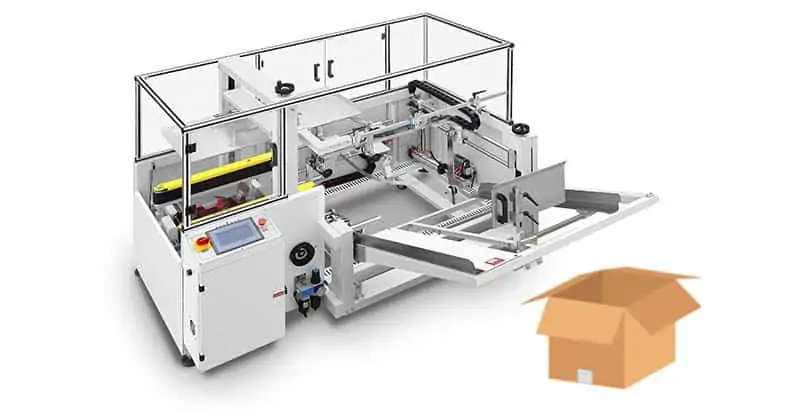
Upgrading an established packaging line does not always require replacing the entire system. In many facilities, individual processes can be automated gradually to improve efficiency while keeping existing equipment in service. Case preparation is one area where automation can be introduced without necessarily redesigning the complete packaging operation.
A Case Erector Machine can be incorporated into an existing line to automate the opening and forming of corrugated cases before they move to subsequent packaging stages. Successful integration depends on understanding the current line layout, carton requirements, conveyor flow, machine controls, and available floor space.
Start With an Assessment of the Existing Line
Before adding new equipment, the existing packaging process should be reviewed from beginning to end. This helps identify where case erection currently takes place and how the new machine can fit into that workflow.
The assessment should consider the current case supply method, manual workstations, conveyors, packing equipment, sealing equipment, and material-handling areas. Production rates and common sources of downtime should also be documented.
This information provides a practical foundation for determining the appropriate location and configuration of the new equipment.
Identify Where Case Erection Fits
The ideal installation point is usually before cartons are needed for product loading or packing. Cases can be automatically erected and then transferred toward the next stage of the packaging process.
In a manually operated line, employees may currently open and prepare boxes before placing them at a packing station. Installing an erector can automate this repetitive activity while allowing operators to focus on tasks that require greater flexibility.
The exact position will depend on the layout and the direction in which cases need to travel.
Check Available Floor Space
Existing facilities may have limited room for additional equipment. Before installation, the available floor area should be measured carefully.
Consider not only the machine’s physical dimensions but also the space required for:
- Carton storage and replenishment
- Operator access
- Maintenance activities
- Conveyor connections
- Safety zones
- Electrical and utility connections
- Movement of personnel and materials
Adequate clearance can make operation and maintenance easier while helping prevent the new machine from interfering with nearby equipment.
Review Conveyor Compatibility
Conveyors are often the connection point between different packaging machines. When adding a case erector, the discharge height and orientation should match the existing conveyor system.
The transfer from the erector to the conveyor should allow cases to move smoothly without unnecessary accumulation or gaps. Conveyor speed should also be considered in relation to the output of the new machine.
If the erector produces cases faster than the next process can accept them, accumulation may occur. If it operates too slowly, the downstream station may experience shortages.
Match the Machine to Existing Production Rates
The new equipment should be selected according to the actual production requirements of the existing line.
For example, if the packaging line consistently processes a certain number of cases per minute, the erector should provide sufficient capacity to maintain that flow. Some additional capacity may be useful for future production increases, but excessive speed may not provide a practical benefit if other equipment limits overall output.
The goal is to create balanced throughput rather than simply adding the fastest available machine.
Confirm Carton Compatibility
Existing packaging lines may use several carton sizes and styles. Before installation, all commonly used cases should be compared with the machine’s operating specifications.
Important considerations include carton length, width, height, board grade, flap design, and overall construction. The machine should be able to handle the required formats without creating frequent manual adjustments or interruptions.
If carton sizes are expected to change in the future, that should also be considered during equipment selection.
Plan for Carton Supply
Automatic case erection requires a reliable supply of flat cartons. Adding the machine therefore involves more than connecting it to the existing production line.
The carton loading area should provide operators with convenient access for replenishment. Sufficient storage should also be available to reduce unnecessary interruptions during production.
Where the packaging line already has a carton storage process, that system may need to be reorganized to support the automated erector.
Integrate Machine Controls
Modern packaging lines often contain several machines that need to operate in coordination. The new case erector should communicate appropriately with connected equipment where required.
Control integration can help coordinate starts, stops, product flow, and fault conditions. Sensors may also be used to monitor case presence and prevent cases from entering a downstream process when the line is not ready.
The exact control architecture depends on the existing equipment and the level of automation required.
Consider Accumulation and Buffering
Production processes do not always operate at exactly the same speed. A small buffer between the case erector and the next machine can help absorb short variations in production flow.
For example, if the packing machine temporarily pauses, an accumulation area may allow the erector to continue producing cases for a limited period.
However, buffering should be designed carefully. Excessive accumulation can consume valuable floor space and may conceal problems elsewhere in the line.
Plan the Installation Process
Installing new equipment in an operating facility requires careful planning. The installation team may need access to electrical connections, compressed air, conveyors, controls, and other utilities.
Businesses should determine whether installation can occur during scheduled downtime or whether a temporary production interruption will be necessary.
Preparing the installation area in advance can help reduce the amount of time the existing packaging line remains unavailable.
Address Safety Integration
Adding equipment changes the overall work environment. Safety considerations should therefore cover the complete integrated line rather than the new machine alone.
Guarding, emergency stops, access points, operator walkways, and interaction between adjacent machines should be reviewed. Emergency-stop systems may also need to be coordinated so that stopping one section does not create an unexpected hazard elsewhere.
The final installation should follow applicable workplace safety requirements and the equipment manufacturer’s instructions.
Train Operators and Maintenance Personnel
Even when a new machine is highly automated, employees need to understand how it operates within the larger line.
Operators should receive training on startup, shutdown, carton replenishment, format changes, fault handling, and basic inspection. Maintenance personnel should understand routine service requirements and the procedures for safely accessing machine components.
Training should also explain how problems with the erector can affect downstream processes.
Test the Complete Packaging Workflow
A successful installation should be evaluated as part of the entire packaging system. Testing only the case erector may not reveal problems that occur when it is connected to existing equipment.
During commissioning, the line can be monitored for case flow, timing, carton handling, accumulation, changeovers, and downstream compatibility.
Representative cartons should be tested under realistic production conditions. This provides a better indication of how the integrated system will perform during normal operation.
Consider Future Expansion
When modifying an existing line, it is useful to consider possible future changes. Production volumes may increase, new carton sizes may be introduced, or additional automation may be added later.
Leaving reasonable room for expansion can make future upgrades easier. Control architecture and conveyor layouts should also be considered with potential additions in mind.
Planning for future requirements does not mean overbuilding the current system. Instead, it involves avoiding unnecessary restrictions that could make later improvements more difficult.
Evaluate the Overall Investment
Adding a case erector should be evaluated according to its effect on the entire packaging operation. The investment may involve more than the machine itself.
Costs can include installation, conveyors, controls, utilities, floor modifications, training, maintenance, and potential production downtime during installation.
At the same time, automation may reduce repetitive manual case preparation and improve the consistency of case supply to downstream processes. A complete evaluation should consider both the investment and the operational improvements that may result.
Conclusion
Adding a case erector to an existing packaging line can be an effective way to introduce automation without replacing the entire production system. The process requires careful planning around floor space, carton compatibility, conveyor flow, machine speed, controls, safety, installation, and operator training.
The most successful integration is one that treats the new equipment as part of the complete packaging workflow. Techflow Pack provides packaging automation solutions that can be considered according to existing line configurations and specific production requirements.
About Post Author




More Stories
Essential Mining Substation Equipment for Safe and Reliable Power Distribution
How TikTok Creator Tools Help Creators Analyze Performance and Increase Engagement
Wudu Basin Installation: Important Measurements and Plumbing Considerations