

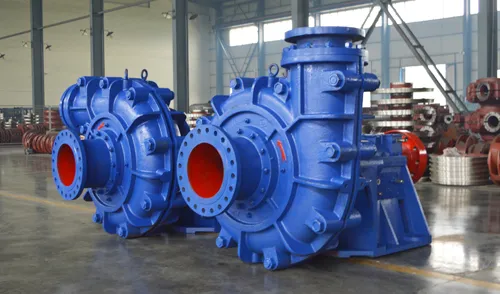
The service life of slurry pumping equipment depends on more than the pump’s construction quality. Operating conditions, slurry characteristics, maintenance practices, material selection, and system design can all influence how long components remain reliable.
A centrifugal slurry pump works continuously with a mixture that may contain abrasive or corrosive solids, so gradual wear is expected. Understanding the factors that accelerate deterioration can help operators extend component life and reduce unplanned downtime.
Slurry Characteristics
The properties of the pumped slurry are among the most important factors affecting service life. Different materials create very different wear conditions.
Important characteristics include:
- Particle size
- Particle hardness
- Particle shape
- Solids concentration
- Slurry density
- Chemical composition
- Temperature
- Viscosity
Hard, sharp, and highly concentrated particles generally create more demanding wear conditions than fine and less abrasive solids.
Abrasive Wear
Abrasive particles continuously contact internal pump surfaces as they move through the hydraulic passages. Over time, this can erode impellers, liners, casings, and other wetted components.
The rate of wear depends on particle characteristics and flow velocity. Higher particle velocity can increase the frequency and force of contact with internal surfaces.
Corrosion
Some slurries contain chemicals that can attack metallic or elastomeric components. Corrosion can weaken surfaces and make them more vulnerable to mechanical wear.
When abrasion and corrosion occur simultaneously, component deterioration may be significantly faster. Materials should therefore be selected according to both the physical and chemical properties of the slurry.
Pump Material Selection
Construction materials have a direct effect on service life. High-chrome alloys, rubber, stainless steels, and other materials may be used for different slurry conditions.
For example, hard metallic materials can be suitable for highly abrasive mineral slurries, while certain rubber formulations may perform well with fine particles under appropriate temperature and chemical conditions.
The best material is determined by the actual application rather than by a single general rule.
Operating Speed
Pump speed affects flow velocity, pressure, power consumption, and wear. Increasing speed can increase pumping capacity, but it may also accelerate particle movement through the pump.
Operating at an appropriate speed helps balance production requirements with energy consumption and component life.
Operating Point
A pump operating significantly away from its suitable performance range may experience additional hydraulic and mechanical stress.
Very low flow can create internal recirculation and unstable hydraulic conditions, while excessively high flow can increase velocity, power consumption, and abrasive wear.
Maintaining a suitable operating point can therefore contribute to longer service life.
Slurry Concentration
Higher solids concentration generally increases slurry density and can increase the amount of abrasive material passing through the pump.
Changes in concentration may also affect viscosity and system resistance. If the actual slurry differs substantially from the conditions used for pump selection, component life may be reduced.
Particle Size and Shape
Particle size has a major influence on wear and solids handling. Large particles can create impact loads and may damage components if passages are not appropriately sized.
Sharp particles can be particularly aggressive because they can cut or erode exposed surfaces more quickly than rounded particles.
Temperature
Operating temperature affects both slurry properties and pump materials. Higher temperatures can change viscosity and density while also affecting seals, liners, lubricants, and other components.
Elastomeric materials may have specific temperature limitations, while metallic components can also experience changes in corrosion or mechanical behavior at elevated temperatures.
Pump and Pipeline Design
The pump does not operate independently from the pipeline system. Pipe diameter, length, elevation, bends, valves, and other restrictions influence the required head and flow.
An inefficient pipeline can force the pump to operate under higher resistance, potentially increasing energy consumption and mechanical stress.
Proper system design helps the pump operate under more suitable conditions.
Suction Conditions
Stable suction conditions are important for reliable pump operation. Restrictions in the suction line can reduce flow and create unfavorable hydraulic conditions.
Air entering the suction system can also cause unstable operation. Inadequate suction conditions may contribute to vibration, noise, and cavitation, all of which can accelerate component deterioration.
Cavitation
Cavitation occurs when local pressure falls sufficiently for vapor bubbles to form and subsequently collapse. The resulting shock can damage internal surfaces and produce significant vibration and noise.
Maintaining adequate suction pressure and appropriate net positive suction head helps reduce cavitation risk.
Maintenance Practices
Regular maintenance is one of the most effective ways to extend service life. Inspections can identify wear before it develops into a major failure.
Maintenance activities may include:
- Inspecting impellers and liners
- Checking seals for leakage
- Monitoring bearing condition
- Checking shaft alignment
- Inspecting couplings
- Measuring vibration
- Checking lubrication
- Monitoring operating temperature
The inspection frequency should reflect operating hours and slurry severity.
Wear Part Replacement
Slurry pump wear parts eventually reach a point where replacement becomes necessary. Waiting too long can reduce efficiency and allow damaged components to affect other parts.
Replacing worn impellers, liners, wear plates, seals, or other components at appropriate intervals can help restore performance and prevent secondary damage.
Preventive Performance Monitoring
Monitoring pump performance provides useful information about component condition. Changes in flow, pressure, power consumption, vibration, and temperature can indicate developing problems.
Keeping historical operating records makes it easier to identify gradual changes and establish realistic maintenance intervals based on actual wear rates.
Installation and Alignment
Correct installation can have a significant effect on service life. Shaft alignment, coupling condition, foundation stability, and piping support should all be checked during installation.
Pipe loads should not place unnecessary stress on pump connections. Proper alignment also helps reduce bearing and mechanical seal wear.
Lubrication and Bearing Care
Bearings support the rotating assembly and must operate under the expected mechanical loads. Insufficient or unsuitable lubrication can increase friction and temperature.
Following the appropriate lubrication schedule and monitoring bearing condition can help prevent premature mechanical failure.
How to Extend Service Life
A practical approach to extending pump life includes:
- Select materials based on actual slurry properties.
- Operate within the appropriate flow and speed range.
- Maintain suitable suction conditions.
- Keep pipelines free from unnecessary restrictions.
- Monitor slurry concentration and temperature.
- Inspect wear components regularly.
- Replace damaged parts before secondary failures occur.
- Maintain bearings, seals, shafts, and couplings.
- Record operating and maintenance data.
- Investigate unusual vibration, noise, or performance changes promptly.
Conclusion
The service life of a centrifugal slurry pump is determined by the interaction of slurry characteristics, material selection, operating conditions, system design, and maintenance practices. Abrasive particles, corrosion, high solids concentration, excessive velocity, cavitation, and poor maintenance can all shorten component life.
A well-matched pump operated within suitable conditions and supported by regular inspection can provide more predictable service. Monitoring performance and responding to wear early are essential for maintaining reliability and controlling long-term maintenance costs.
About Post Author



More Stories
Essential Mining Substation Equipment for Safe and Reliable Power Distribution
How TikTok Creator Tools Help Creators Analyze Performance and Increase Engagement
Wudu Basin Installation: Important Measurements and Plumbing Considerations