

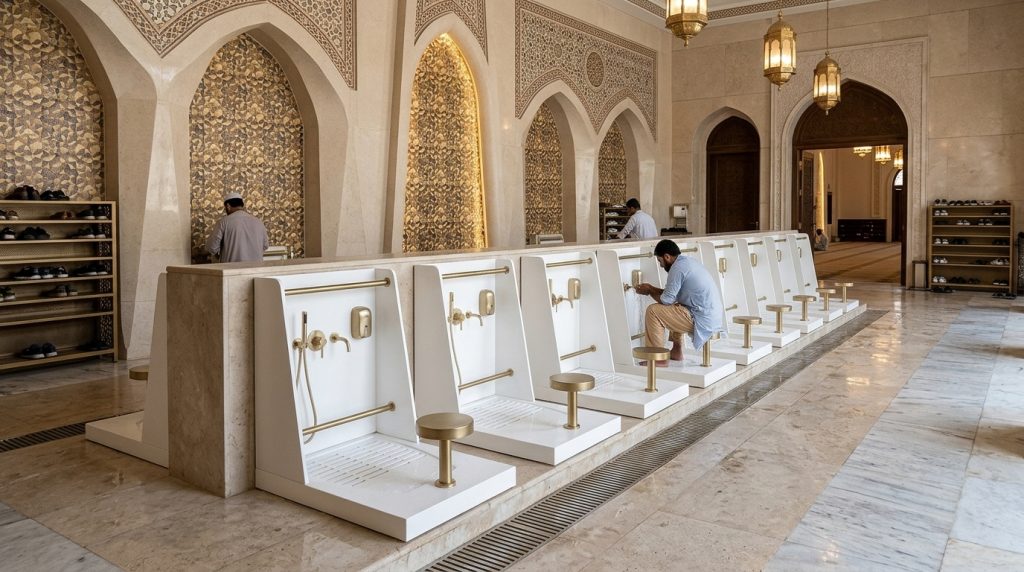
Daily routines are easier to maintain when the spaces used for them are designed with their purpose in mind. In a Muslim household, ablution takes place regularly before prayer, yet many bathrooms are planned primarily around bathing and ordinary handwashing. This can leave users adapting a standard basin to tasks for which it was not designed. A dedicated washing point can make the process more convenient by providing an arrangement better suited to the movements involved.
A Wudu sink is a fixture intended to support the practical needs of ablution. Depending on the model, it may provide a lower washing area, a basin shaped to contain water, or a tap position that makes rinsing more manageable. The purpose is to improve the physical setting for wudu, not to alter its religious requirements. Choosing a suitable model involves considering the people who will use it and the space available for installation.
It Accommodates More Than Handwashing
A conventional basin is usually positioned at a height that works for washing hands and face. Washing the feet at the same fixture can be less convenient, particularly for people who find bending difficult. The bowl may also be too small to contain splashes when users adjust their position.
A purpose-designed ablution fixture may address these limitations through a lower section, a wider basin, or a layout that provides room for foot washing. Not every model uses the same approach, so buyers should check product dimensions and illustrations. The most useful design is one that supports the way household members actually perform their washing routine.
It Can Make Repeated Use More Comfortable
Ablution is a regular activity, which makes small ergonomic details important. A suitable basin height can reduce awkward reaching, while accessible tap controls can make water easier to manage. Enough space around the fixture allows users to stand naturally and change position without feeling confined.
Comfort should be considered for everyone in the household. Children may need assistance reaching the tap, while older family members may prefer a clear approach and a stable floor. Where mobility needs are present, it may be worth seeking professional advice on basin height, support arrangements, and circulation space.
It Helps Define a Clear Washing Zone
A dedicated station can give wet activities a defined location within the bathroom. This can make the room easier to organize, especially when the main vanity is also used for grooming and storing toiletries. Keeping the ablution area separate may reduce congestion when several people share the bathroom.
The floor around the fixture should be selected for regular contact with water. Water-resistant finishes and suitable slip-resistant flooring can help reduce the risk of accidents. A well-positioned drain and effective basin waste also help manage splashes and rinse water. These features are useful, but users should still wipe up standing water when necessary.
It Can Support a Cleaner Bathroom
When washing takes place at a fixture designed for the task, water may be easier to contain than when users improvise with an unsuitable basin. The result depends on the bowl shape, tap position, water pressure, and user habits. A thoughtfully planned station can nevertheless make cleaning more straightforward.
Choose a surface that can be wiped down easily and follow the manufacturer’s care instructions. Remove soap residue, clean around the tap base, and check the drain periodically. Avoid harsh or abrasive cleaners unless the supplier confirms that they are compatible with the basin finish.
It Can Fit Different Property Types
A dedicated ablution station is not limited to large homes. Compact wall-mounted designs may suit smaller bathrooms, while more substantial floor-supported units can work in rooms with greater space. A separate prayer area may also benefit from a nearby wash point, provided that the room has appropriate waterproofing and drainage.
In mosques or shared facilities, the priorities include capacity, durability, and ease of maintenance. Multiple stations may be needed to serve worshippers efficiently. Their spacing should allow comfortable use and clear movement, while the plumbing system must be capable of handling demand during busy periods.
Consider Installation Before Making a Purchase
Measure the available space and identify existing water supply and waste connections before selecting a fixture. Check the required mounting method, tap compatibility, and installation clearances. Include plumbing work, waterproofing, and fitting costs in the project budget rather than comparing product prices alone.
A Purposeful Improvement to Everyday Living
A dedicated ablution area can make a familiar routine more comfortable, organized, and manageable. Its value comes from practical design choices: appropriate dimensions, accessible fittings, reliable drainage, and surfaces that are easy to maintain. When these elements reflect the household’s needs, the fixture becomes a useful part of the bathroom rather than an unnecessary addition.
About Post Author



More Stories
Understanding Receipt Printer Connectivity Options and Compatibility
Why Thermal Receipt Printers Are Popular in Small and Medium-Sized Businesses
Cowboy Hat Plush Designs for Unique and Playful Fashion Looks