

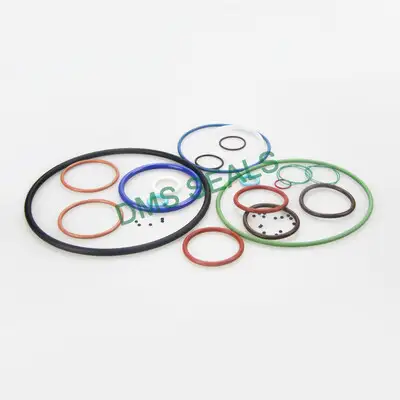
High-performance industrial applications place demanding requirements on sealing components. Equipment operating under high pressure, extreme temperatures, chemical exposure, vibration, or continuous mechanical stress needs O-rings that can maintain reliable sealing performance over time. Even a small weakness in material selection or dimensional accuracy can lead to leakage, equipment downtime, and costly maintenance.
Choosing the right O Ring Seal Supplier is therefore an important part of maintaining equipment reliability. A capable supplier should offer more than standard sealing products. Technical knowledge, suitable material options, precise manufacturing, and dependable quality control all contribute to finding O-rings that meet demanding operating conditions.
Understanding the Requirements of High-Performance Sealing
High-performance applications often involve operating conditions that exceed the demands of general-purpose sealing systems. O-rings may need to maintain their shape and sealing force while exposed to changing temperatures, pressure fluctuations, aggressive fluids, or repeated movement.
The most important operating factors include:
- Temperature: The seal must remain functional within the application’s minimum and maximum temperatures.
- Pressure: The O-ring must resist deformation, extrusion, and loss of sealing contact.
- Chemical exposure: The elastomer must be compatible with the fluids or gases it contacts.
- Mechanical movement: Dynamic applications require suitable resistance to friction and wear.
- Operating duration: Long service intervals require materials with appropriate aging and compression-set properties.
A supplier that understands these conditions can help identify suitable sealing solutions instead of recommending products based only on dimensions.
Extensive Knowledge of Elastomer Materials
Material selection is one of the most important factors affecting O-ring performance. Different elastomers have different levels of resistance to heat, chemicals, oils, water, and mechanical stress.
A knowledgeable supplier should understand these differences and explain which compounds are appropriate for a particular application.
Nitrile Rubber (NBR)
NBR is commonly used in hydraulic systems, pneumatic equipment, automotive components, and general industrial machinery. It offers useful resistance to many petroleum-based oils and fuels.
Its suitability depends on the operating temperature, fluid composition, and required mechanical properties.
Fluorocarbon Rubber (FKM)
FKM is frequently selected for applications involving elevated temperatures, oils, fuels, and various industrial chemicals. It is used in demanding automotive, processing, and industrial environments.
However, compatibility varies between formulations, so the exact chemical exposure should be reviewed before selection.
Ethylene Propylene Diene Monomer (EPDM)
EPDM is suitable for many water-based applications, outdoor environments, and systems exposed to ozone and weathering. It is often used in water treatment, heating systems, and selected chemical-processing applications.
It is generally not suitable for many petroleum-based oils and fuels.
Silicone Rubber
Silicone offers flexibility across a broad temperature range and is used in applications where temperature stability and specific material characteristics are important.
Its mechanical strength and abrasion resistance should be considered when evaluating it for demanding dynamic applications.
Other Specialized Compounds
Depending on operating conditions, manufacturers may also offer neoprene, polyurethane, and specialized elastomer formulations. The right option depends on the combination of chemical, thermal, and mechanical requirements.
Precision Manufacturing and Dimensional Accuracy
Even a high-quality elastomer cannot provide reliable sealing if the O-ring dimensions are incorrect. Inside diameter, cross-sectional thickness, and dimensional tolerances all influence how the seal fits into its groove.
A good supplier should have manufacturing processes capable of producing consistent dimensions across individual products and production batches.
Accurate Mold Design
Mold quality directly affects the shape and consistency of finished O-rings. Proper tooling helps control dimensions and reduce defects such as uneven surfaces, excessive flash, and incomplete molding.
Controlled Production Processes
Compression, injection, and transfer molding are commonly used in O-ring production. Each method has different characteristics, and the appropriate process depends on the compound, design, and production quantity.
Suppliers should be able to explain their manufacturing capabilities and how production parameters are controlled.
Support for Custom Specifications
High-performance equipment may require non-standard dimensions, particular hardness levels, or specialized compounds. A supplier should be able to review technical drawings, samples, and application requirements before confirming production.
Strong Quality Control and Product Testing
Quality assurance is essential when O-rings are used in critical equipment. A supplier should have inspection procedures that verify whether products meet agreed specifications.
Important quality checks may include:
- Dimensional inspection: Confirms inside diameter and cross-sectional thickness.
- Hardness testing: Checks whether the elastomer meets the specified hardness range.
- Visual inspection: Identifies cracks, surface defects, molding irregularities, and contamination.
- Compression set testing: Evaluates how well the material recovers after prolonged compression.
- Tensile and elongation testing: Measures important mechanical properties.
- Aging tests: Help assess how the material responds to heat or other environmental exposure.
Not every application requires every test. The supplier should recommend inspection methods based on the product specification and operating environment.
Ability to Support High Pressure and Temperature Conditions
High pressure and temperature can significantly affect O-ring behavior. Selecting an unsuitable seal may result in permanent deformation, extrusion, hardening, softening, or loss of sealing force.
A reliable supplier should consider the complete operating range rather than focusing on a single performance rating.
Pressure Resistance
Under high pressure, elastomeric seals may deform into the clearance gap between mating components. This phenomenon, known as extrusion, can damage the O-ring and lead to leakage.
Groove design, clearance dimensions, material hardness, and pressure conditions all influence extrusion resistance. In some applications, backup rings may be recommended to provide additional support.
Temperature Stability
Temperature changes can affect elastomer flexibility and compression behavior. Excessive heat may accelerate aging, while very low temperatures can make some materials less flexible.
The selected compound should be suitable for both normal operating temperatures and expected temperature fluctuations.
Technical Guidance and Application Knowledge
A strong supplier should be able to discuss the engineering factors that influence sealing performance. This is particularly valuable when equipment operates under unusual conditions or requires specialized components.
Before recommending an O-ring, the supplier should seek information about:
- The equipment type and sealing location.
- Static or dynamic operating conditions.
- Working pressure and temperature.
- Fluids, gases, or chemicals in contact with the seal.
- Required dimensions and tolerances.
- Expected service life and maintenance intervals.
- Applicable industry or customer specifications.
This technical discussion helps reduce the risk of choosing a material or design that performs well in theory but fails under actual operating conditions.
Consistency Across Production Batches
High-performance applications often depend on repeatable product characteristics. Even small differences in dimensions, hardness, or material formulation can affect installation and sealing performance.
A dependable supplier should maintain controlled production records and inspection procedures. Approved drawings, material specifications, batch identification, and quality documentation can help ensure that repeat orders match the original requirements.
This consistency is especially important for manufacturers and maintenance teams that use the same O-ring design across multiple machines or production facilities.
Compliance with Relevant Industry Standards
Industry standards provide useful guidelines for O-ring dimensions, tolerances, and quality requirements. Suppliers should understand which standards apply to the products they manufacture.
For example, ISO 3601 covers important requirements for O-rings used in fluid power systems and other applications. ISO 9001 provides a framework for quality management systems.
Buyers should confirm whether the supplier’s processes and documentation meet the requirements relevant to their industry. Additional customer-specific testing or certification may also be necessary for specialized equipment.
Reliable Supply and Production Capacity
Product quality is only one part of supplier performance. Businesses also need a dependable supply arrangement that supports maintenance schedules and production requirements.
When evaluating a supplier, consider:
- Availability of commonly used materials and sizes
- Ability to manufacture custom products
- Minimum order quantities
- Sample development timelines
- Bulk production capacity
- Delivery planning and communication
- Support for repeat orders
A supplier with suitable production capacity can help reduce procurement delays and maintain continuity in industrial operations.
How to Evaluate an O-Ring Supplier Before Placing an Order
A structured evaluation process makes it easier to compare potential suppliers. Buyers should request technical information and clarify important details before committing to a purchase.
Useful questions include:
- Which elastomer compounds are available?
- Can the supplier manufacture custom dimensions?
- What dimensional tolerances can be maintained?
- Which inspection and testing procedures are performed?
- Can material specifications or test reports be provided?
- Are samples available for application testing?
- How are product changes and repeat orders controlled?
- What production and delivery timelines should be expected?
Clear answers help establish whether the supplier can support both the immediate order and future requirements.
Common Mistakes When Selecting a Supplier
Businesses sometimes focus too heavily on price or product availability when sourcing O-rings for demanding applications. This can create problems if the selected seal does not match the operating environment.
Common mistakes include:
- Choosing material based only on its general temperature rating.
- Ignoring chemical compatibility.
- Assuming all O-rings with the same dimensions perform identically.
- Overlooking hardness and compression-set requirements.
- Failing to verify dimensional tolerances.
- Skipping sample evaluation for specialized designs.
- Not documenting approved specifications for repeat purchases.
Considering these factors before ordering can help prevent premature seal failure and unnecessary equipment maintenance.
Conclusion
A good O-ring seal supplier for high-performance applications combines material expertise, precise manufacturing, effective quality control, and practical technical support. The ability to understand operating conditions and recommend suitable compounds is just as important as producing accurate dimensions.
By evaluating manufacturing capabilities, testing procedures, standards, and supply reliability, businesses can make better sourcing decisions. Working with a supplier that prioritizes consistent specifications and application suitability helps support dependable sealing performance, reduce maintenance concerns, and improve the reliability of industrial equipment.
About Post Author




More Stories
Why Regular Audit Services Are Essential for Effective Risk Management
Key Benefits of Wind Power Oil Immersed Transformers in Renewable Energy Systems
How Personalised Notebooks Make Practical and Memorable Promotional Gifts