

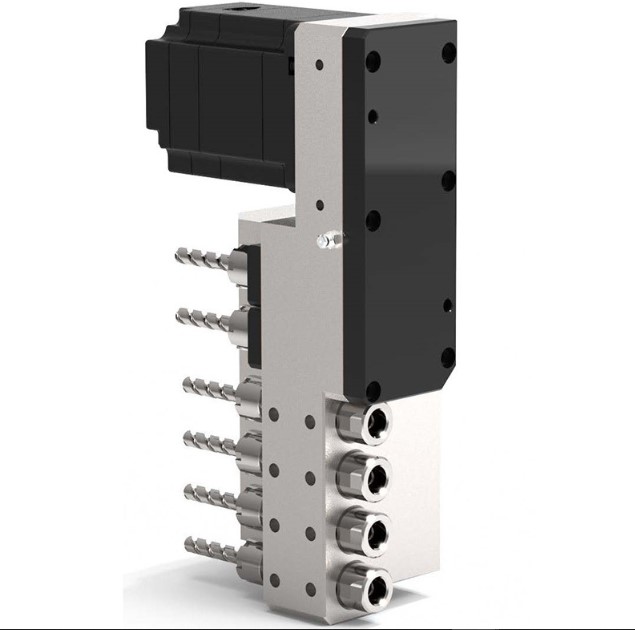
Modern precision manufacturing often demands more than basic turning capabilities. Manufacturers need equipment that handles complex geometries, multiple operations, tight tolerances, and demanding production schedules without creating unnecessary secondary processes.
An 8-axis swiss lathe machine combines Swiss-type workpiece support with advanced multi-axis machining capabilities. This configuration allows manufacturers to perform several operations within a single setup, making it particularly useful for small and intricate components that require efficient, repeatable production.
What Makes An 8-Axis Configuration Different?
The main distinction comes from the number of coordinated machining movements available. An 8-axis configuration gives the machine greater flexibility when approaching different features on a component.
Instead of relying on separate machines for turning, drilling, milling, and other operations, manufacturers can often combine these processes within one machining cycle.
This capability becomes especially valuable when a component contains several features that require different cutting directions.
Reduced Number Of Setups
Every time a workpiece moves between machines or setups, operators face another opportunity for positioning errors. Multiple setups also consume additional production time.
An 8-axis Swiss-type machine can complete more operations without removing the workpiece from its original position. This approach helps maintain the relationship between critical features.
Fewer setups may also simplify production planning and reduce handling requirements.
Efficient Machining Of Complex Components
Some precision components feature holes, slots, grooves, threads, flats, and other details across different surfaces. Conventional turning equipment may require additional machining stages to complete these features.
An 8-axis configuration provides greater freedom to approach complex features. Live tooling and multi-axis movement can expand the range of operations performed during a single cycle.
This makes the technology suitable for components that combine turning with secondary machining processes.
Better Positional Consistency
Keeping a component within one machining setup can help maintain positional relationships between its features. This advantage matters when several dimensions must align precisely.
The machine still requires suitable tooling, programming, workholding, and cutting conditions to achieve the required results. However, reducing unnecessary transfers removes some sources of variation from the manufacturing process.
For precision components, this consistency can contribute to more predictable production results.
Improved Production Efficiency
An 8-axis Swiss-type machine can combine multiple operations into a streamlined workflow. This may reduce the amount of time required for transferring components between different machines.
Manufacturers may also reduce intermediate inspection and handling steps when the complete part comes out of one machining process.
Production efficiency depends on the specific component, tooling strategy, material, and programming approach, but multi-axis machining provides more opportunities to optimize the process.
Strong Support For Small-Diameter Parts
Swiss-type machining has long suited small-diameter and slender components because the guide bushing supports the material close to the cutting area.
This support helps control workpiece deflection during machining. An 8-axis configuration adds greater machining flexibility to this established Swiss-type approach.
Applications may include precision shafts, pins, connectors, fittings, medical components, and other small parts with detailed geometries.
Greater Tooling Flexibility
An advanced axis configuration can work alongside a broader range of tooling options. Depending on the machine design, manufacturers may use fixed tools and driven tools for different machining requirements.
Driven tooling can support operations such as:
- Cross drilling
- Milling
- Tapping
- Slotting
- End drilling
- Thread milling
Combining these capabilities with turning operations can reduce the need for additional equipment.
Faster Response To Complex Production Requirements
Manufacturing requirements can change as product designs evolve. A machine with broader machining capabilities gives manufacturers more flexibility when new components require different operations.
An 8-axis configuration may allow the same machine to handle a wider range of part geometries without major changes to the overall production setup.
This flexibility can prove useful for manufacturers that produce several related components rather than one standardized part.
Potential Reduction In Secondary Operations
Secondary machining creates additional handling, programming, inspection, and scheduling requirements. It may also increase production time.
When an 8-axis Swiss-type machine performs several required operations in one cycle, manufacturers may reduce some of these secondary processes.
The actual benefit depends on the component design. Simple turned parts may not require the full capabilities of an eight-axis machine, while complex components can gain much more from the additional flexibility.
Suitable For High-Volume Production
Repeat production benefits from processes that remain stable and predictable. Once a suitable program and tooling strategy have been established, an automated Swiss-type machine can produce large quantities with limited manual intervention.
An 8-axis configuration can further streamline production when components require multiple machining operations.
Manufacturers should evaluate cycle time, tool life, material consumption, and setup requirements to determine the actual productivity advantage for their parts.
How To Decide If Eight Axes Make Sense
More axes do not automatically mean better results for every application. The machine should match the complexity of the parts you intend to produce.
Consider the following factors:
- Number of machining operations required
- Component diameter and length
- Required tolerances
- Material type
- Need for live tooling
- Expected production volume
- Required cycle time
- Frequency of part changes
A manufacturer should compare these requirements against the machine’s actual capabilities before making a purchasing decision.
Why Machine Configuration Matters
Two machines may both carry an eight-axis designation yet offer different spindle arrangements, tooling capacities, control systems, and automation features.
Buyers should therefore examine the complete machine configuration instead of comparing axis counts alone.
Pay attention to spindle capacity, tool stations, live tooling, guide bushing options, bar feeding, control capabilities, and the manufacturer’s application support.
JSWAY And 8-Axis Swiss-Type Technology
JSWAY provides CNC machining solutions for manufacturers working with precision components and demanding production requirements. Its 8-axis Swiss-type equipment offers a combination of multi-axis machining and Swiss-style workpiece support.
JSWAY buyers can evaluate the machine configuration according to their specific part drawings, materials, tolerances, and production targets. This application-based approach helps manufacturers select capabilities that provide practical value.
Final Thoughts
An 8-axis Swiss-type CNC lathe offers several advantages for manufacturers producing small, detailed, and complex components. Its multi-axis capabilities can combine turning with drilling, milling, tapping, and other operations within a streamlined machining process.
Reduced setups, improved positional consistency, greater tooling flexibility, and efficient production make this configuration worth considering for demanding applications. The best choice ultimately depends on the parts, materials, tolerances, production volume, and machining operations involved.
About Post Author



More Stories
The Role of Xprinter Thermal Printers in Improving Retail Checkout Efficiency
How to Identify High-Quality Tissue Culture Plants Before Purchasing
Understanding Acoustic Panel Specifications Before Placing a Bulk Order