

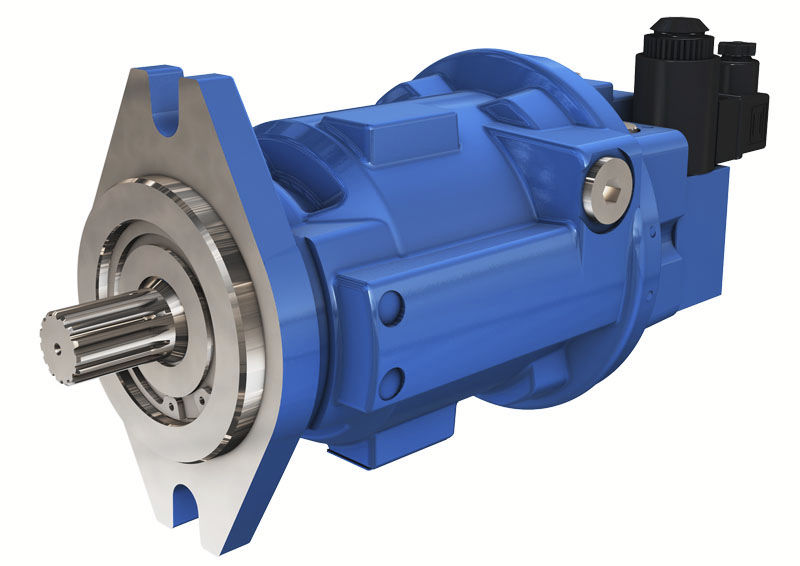
Selecting the right hydraulic motor supplier can have a direct impact on equipment performance, reliability, maintenance requirements, and long-term operating costs. For industrial buyers, the decision should involve more than comparing product catalogs or quoted prices.
A dependable hydraulic motor manufacturer should be able to provide products that match the application’s pressure, flow, torque, speed, and environmental requirements. Buyers should also evaluate manufacturing capabilities, technical support, quality standards, and after-sales service before making a final decision.
Understand Your Hydraulic Motor Requirements
Before comparing manufacturers, clearly define the requirements of the hydraulic system. A supplier can only recommend an appropriate motor when the operating conditions are understood.
Key specifications may include:
- Required torque and rotational speed
- Continuous and peak operating pressure
- Hydraulic flow rate
- Motor displacement
- Duty cycle and expected operating hours
- Mounting dimensions and shaft configuration
- Hydraulic fluid type
- Operating temperature and environmental conditions
Having these details available makes it easier to compare products on an equivalent basis.
Evaluate Product Range and Motor Types
Different applications require different hydraulic motor designs. Common options include gear, vane, and piston motors, with each offering different performance characteristics.
A manufacturer with a broad product range may be better positioned to provide an appropriate solution for different equipment requirements. However, a large catalog alone does not guarantee quality, so buyers should examine the technical specifications of the relevant models.
Gear Motors
Gear motors are known for relatively simple construction and practical operation. They can be suitable for applications where durability, compactness, and cost are important considerations.
Vane Motors
Vane motors can provide smooth rotational performance and are often considered for applications requiring consistent operation and speed control.
Piston Motors
Piston motors are commonly used in demanding applications involving high pressure, high torque, or high efficiency. Their more complex construction can make product quality and engineering support especially important.
Check Manufacturing Quality
Manufacturing quality is one of the most important factors when choosing a supplier. Hydraulic motors operate under pressure and may be exposed to significant mechanical and thermal loads.
Buyers should investigate how components are machined, assembled, inspected, and tested. Consistent manufacturing processes can help reduce variations in performance between individual units.
It is also useful to ask whether the manufacturer conducts performance testing before products leave the factory.
Review Technical Specifications Carefully
Catalog ratings should be examined in the context of the intended application. Maximum pressure, for example, does not necessarily represent the pressure at which a motor should operate continuously.
Pay attention to continuous ratings, peak ratings, recommended flow ranges, allowable speed ranges, starting torque, and efficiency. These details provide a more accurate picture of whether a motor is suitable for the equipment.
Consider Customization Capabilities
Standard hydraulic motors may not always fit specialized industrial machinery. In some cases, buyers may need modifications to mounting dimensions, shaft configurations, displacement, connections, or other components.
A manufacturer with engineering and customization capabilities can be valuable when standard models do not meet the application’s requirements.
However, customization should be supported by proper engineering documentation and testing rather than informal modifications.
Assess Technical Support
Technical support becomes particularly important when hydraulic motors are integrated into complex machinery.
A capable supplier should be able to provide useful information about installation, operating conditions, troubleshooting, maintenance, and compatibility. Access to technical drawings, product manuals, performance data, and application guidance can also simplify system design.
For large industrial projects, responsive communication can help reduce delays during product selection and commissioning.
Examine Quality Control and Testing
Quality control should cover the complete manufacturing process, not just final inspection. Buyers can ask manufacturers about incoming material inspection, dimensional checks, assembly procedures, pressure testing, and performance testing.
Documentation related to quality systems can also help buyers assess how consistently the manufacturer controls production.
For critical applications, testing procedures should be appropriate to the pressure, speed, and load conditions expected during operation.
Compare Total Cost Rather Than Purchase Price
The lowest initial price does not always represent the lowest overall cost. A less suitable motor may consume more energy, require more frequent maintenance, or have a shorter service life.
A better purchasing assessment considers the total cost of ownership, including:
- Initial purchase cost
- Installation expenses
- Energy efficiency
- Maintenance requirements
- Replacement-part costs
- Expected service life
- Downtime risks
This approach can provide a more realistic comparison between manufacturers.
Consider Delivery and Production Capacity
Lead times can be critical for industrial projects and replacement requirements. Before ordering, buyers should confirm standard production times, availability of commonly used models, and the manufacturer’s ability to handle repeat orders.
For large-volume applications, production capacity is particularly important. A supplier that can maintain consistent output may be preferable to one that struggles to meet changing demand.
Check Spare Parts and After-Sales Support
Hydraulic motors can eventually require seals, bearings, shafts, or other replacement components. Availability of compatible spare parts can reduce downtime and simplify maintenance.
Buyers should therefore understand the manufacturer’s approach to replacement parts, technical assistance, warranty coverage, and troubleshooting support.
A clear after-sales process can be especially valuable for equipment operating continuously or in difficult-to-access locations.
Evaluate Industry Experience
Experience with similar applications can help a manufacturer understand common operating challenges. Buyers should consider whether the supplier has experience with the type of machinery, pressure range, duty cycle, and environmental conditions involved.
Relevant experience does not necessarily mean choosing the largest manufacturer. What matters is whether the supplier can demonstrate technical understanding and consistent performance in comparable applications.
Look at Documentation and Communication
Professional documentation is an often-overlooked factor in supplier selection. Accurate product drawings, specifications, installation instructions, maintenance recommendations, and performance information make integration easier.
Communication quality also matters. A manufacturer that responds clearly and provides complete technical information can reduce misunderstandings during procurement and installation.
Avoid Common Selection Mistakes
Several mistakes can lead to poor hydraulic motor selection. One is focusing entirely on price without evaluating performance and service life.
Another is choosing a motor based only on maximum pressure or horsepower. Hydraulic motors must be matched to the complete system, including flow, displacement, torque, speed, load characteristics, and operating environment.
Failing to verify mounting dimensions and shaft specifications can also create unnecessary installation problems.
Create a Supplier Evaluation Checklist
A structured evaluation can make the purchasing process more consistent. Buyers can score potential manufacturers according to factors such as:
- Product suitability
- Manufacturing quality
- Technical specifications
- Customization capabilities
- Testing and quality control
- Technical support
- Delivery capability
- Spare-parts availability
- Warranty and after-sales service
- Total cost of ownership
Using the same criteria for each supplier makes it easier to identify strengths and weaknesses objectively.
Final Thoughts
Choosing a hydraulic motor manufacturer requires a balanced assessment of product performance, manufacturing quality, technical expertise, service capabilities, and long-term value. The right supplier should be able to meet the application’s technical requirements while providing dependable support throughout the product’s service life.
By defining system requirements first and then comparing manufacturers against consistent criteria, industrial buyers can make more informed purchasing decisions and reduce the risks associated with unsuitable hydraulic motor selection.
About Post Author




More Stories
How to Identify High-Quality Tissue Culture Plants Before Purchasing
Factors to Consider When Choosing Paper Lunch Boxes Wholesale
Understanding Sand Aluminium Casting and Its Role in Custom Metal Component Production