

A utility pole carrying several power lines or a communication tower supporting antennas must remain stable despite forces that are not always visible. Wind pushes against the structure, cables create uneven tension, and changing weather can gradually affect exposed materials. On tall or slender structures, these forces can produce significant sideways movement if the support arrangement is inadequate.
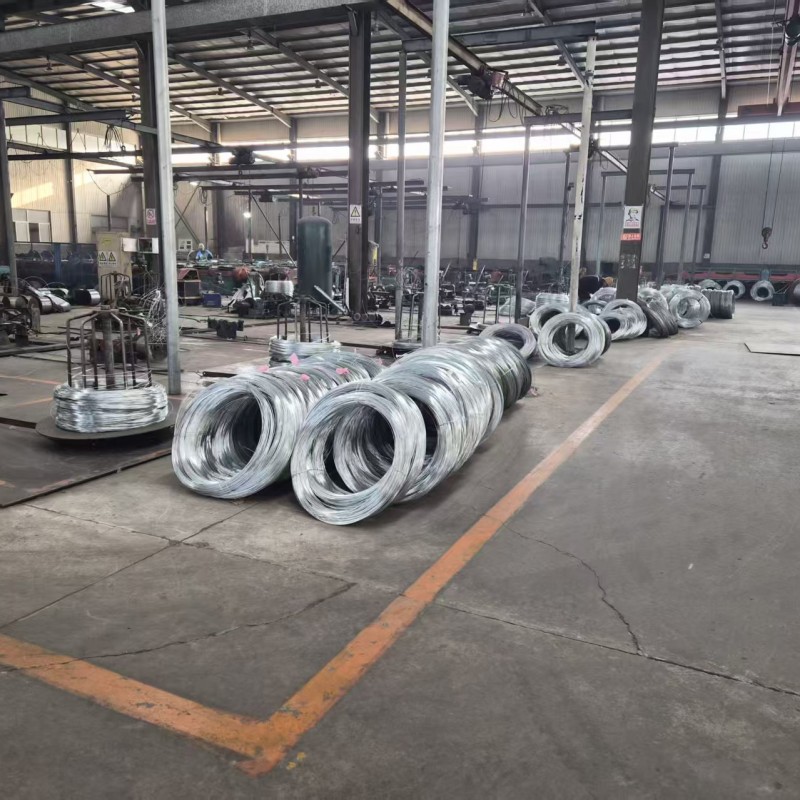
Guying systems help address this challenge. They use tensioned wires connected between a structure and ground anchors to provide additional stability. Galvanized Guy Wire is commonly used for this purpose because it combines the tensile properties of steel with a zinc coating that helps resist corrosion. When correctly selected and installed, it can help utility poles and communication towers maintain their intended position under demanding outdoor conditions.
The Principle Behind a Guying System
A guy wire works by resisting movement through tension. One end connects to a designated point on a pole or tower, while the other is secured to an anchor installed in the ground. The wire creates a stabilizing force that helps counteract lateral loads.
Rather than allowing the entire structure to resist every force through its own stiffness and foundation, the guying arrangement transfers part of the load to the anchors. The number of wires, their attachment heights, angles, and tension levels depend on the structure’s design.
A typical installation includes several coordinated components:
- Guy strand: The tension-bearing steel wire assembly.
- Attachment hardware: Connects the strand to the pole or tower.
- Ground anchor: Transfers the tension force into the soil.
- Guy grips or termination fittings: Secure the strand ends.
- Protective accessories: May include guards, markers, or coverings where required.
Each component contributes to the performance of the arrangement. A strong wire cannot compensate for an unsuitable anchor or an incorrectly designed attachment.
Why Galvanized Steel Is Used for Guy Wires
Guy wires remain outdoors throughout their service life. Rain, humidity, airborne contaminants, and temperature changes can gradually affect exposed steel. Corrosion is particularly concerning because a reduction in the wire’s effective cross-section can compromise its ability to carry tension.
Galvanizing adds a zinc coating to the steel surface. This coating provides protection through two mechanisms: it forms a barrier against the environment, and zinc can corrode preferentially to steel if small areas of the underlying metal become exposed.
For utility and telecommunications infrastructure, this protection can be valuable because guy wires are often difficult or expensive to replace once structures are in operation.
The coating does not make the wire immune to deterioration. Its expected performance depends on zinc coating quality, atmospheric conditions, physical wear, and maintenance.
What Makes Guy Wire Construction Important?
The mechanical behavior of a guy wire depends on more than the fact that it is made from steel. Its construction determines how forces are distributed and how it behaves during installation.
Many guying products use stranded steel rather than a single solid rod. Several individual wires are laid together to form a strand, providing a combination of tensile capacity and practical flexibility.
Important construction characteristics include:
Number of wires: The strand arrangement influences its overall mechanical properties and dimensions.
Individual wire diameter: This contributes to the strand’s cross-sectional area and strength.
Stranding pattern: The arrangement of wires affects handling, flexibility, and compatibility with termination fittings.
Tensile rating: The specified strength must meet the structural design requirements.
Galvanizing specification: The zinc coating must be appropriate for the expected environmental exposure.
These details should be confirmed through technical documentation rather than estimated from the strand’s external appearance.
How Guy Wires Stabilize Utility Poles
<AsyncImage query=”electric distribution wooden utility pole guy wire diagonal support cable” aspectRatio=”16:9″ width=”100%”/>
Distribution poles may support conductors, transformers, switches, and other electrical equipment. The weight and tension of these components can create unbalanced forces, particularly where a line changes direction or terminates.
Wind can add further lateral loading. A guying arrangement helps counter these forces by transferring tension to ground anchors.
Common situations where utility poles may require guy wires include:
- Line-angle locations: Where overhead conductors change direction and create sideways loading.
- Dead-end poles: Where conductor tension is not balanced by another span.
- Long or exposed spans: Where wind and conductor loading may require additional support.
- Equipment installations: Where attached equipment contributes to the structural load.
- Steep or unusual terrain: Where the pole arrangement requires additional stabilization.
The actual need for guying is determined through engineering assessment. Soil conditions, pole strength, conductor tension, wind exposure, and anchor capacity all influence the design.
Supporting Communication Towers in Exposed Locations
Communication towers often carry antennas, microwave dishes, cables, and other equipment at considerable heights. Wind pressure on both the tower structure and its attached equipment can create substantial lateral forces.
Guyed towers use tensioned support wires arranged around the structure to maintain stability. These wires transfer forces to ground anchors positioned at calculated distances and directions.
Galvanized steel strands are suitable for specified guying applications because of their mechanical strength and corrosion protection. Their performance is especially relevant at remote sites, where access for repairs may be limited.
The arrangement must be designed as a complete system. Tower geometry, guy attachment elevations, wire angles, pretension, anchor capacity, and foundation conditions all affect structural behavior.
The Practical Advantages of Galvanized Guy Wire
The popularity of galvanized guy wire is linked to several practical characteristics rather than a single feature.
Resistance to Outdoor Corrosion
The zinc coating helps protect the steel from moisture and atmospheric exposure. This is important for support wires that remain exposed throughout the year.
Ability to Carry Tensile Loads
Steel offers the mechanical strength required for many guying applications. Products are available in specified strength grades, allowing designers to select a suitable strand for calculated loads.
Useful Handling Characteristics
Stranded construction is generally easier to handle and route than a solid steel member of similar overall dimensions. This can make installation more manageable, provided the strand is not bent or twisted beyond its permitted limits.
Compatibility With Established Guying Hardware
Suitable steel strands can be used with purpose-designed grips, clamps, connectors, and anchor fittings. Compatibility must be checked because hardware intended for one strand size or construction may not be suitable for another.
Long-Term Infrastructure Support
When correctly specified and maintained, galvanized guy wires can provide ongoing support for structures that are expected to remain in service for many years. Their durability depends on the coating, loading conditions, installation quality, and environmental exposure.
Choosing the Correct Guy Wire for a Project
Selecting a guy wire is a structural decision. A product that looks sufficiently thick may still have an unsuitable tensile rating or coating specification.
Engineers and procurement teams should review the following factors before approving a product.
| Selection factor | Why it matters |
|---|---|
| Strand diameter | Determines dimensional compatibility with fittings and contributes to mechanical capacity |
| Minimum breaking strength | Indicates the specified tensile capacity of the product |
| Wire construction | Influences strand behavior, handling, and termination requirements |
| Zinc coating | Provides information about corrosion protection |
| Installation environment | Determines the level of environmental protection needed |
| Connection hardware | Must be compatible with the strand and design loads |
| Applicable standards | Establish required product and performance criteria |
The design should also account for the required safety factors. Minimum breaking strength is not the same as an allowable working load, and the two should never be treated as interchangeable.
Installation: Getting the Tension and Geometry Right
Guy wire performance depends heavily on installation. Incorrect positioning or tensioning can leave a pole or tower inadequately supported, even when high-quality materials have been supplied.
The installation process normally begins with a review of engineering drawings and site conditions. Ground anchors must be positioned at the specified locations, and their suitability should be confirmed based on soil characteristics and expected loads.
The strand is then connected using approved fittings and tensioned according to the design requirements. Excessive tension can place unnecessary stress on the structure and anchor, while insufficient tension may fail to provide the intended support.
Several details deserve particular attention:
- Use fittings specifically designed for the strand construction and diameter.
- Follow approved procedures for forming terminations and securing connections.
- Avoid sharp bends, kinks, and damage caused by dragging the wire over rough surfaces.
- Confirm anchor alignment and installation depth.
- Apply the specified tension using suitable equipment.
- Check the completed arrangement for correct geometry and secure connections.
- Install required guards or visibility markers where people or vehicles could encounter the guy wires.
Guying work around energized utility infrastructure requires appropriate safety procedures, qualified personnel, and compliance with relevant utility requirements.
Environmental Conditions and Corrosion Management
Although galvanizing provides a useful protective barrier, the environment determines how quickly the zinc coating is consumed.
A guy wire installed in a mild inland climate may experience different corrosion conditions from one located near the coast. Salt deposits, industrial pollutants, persistent moisture, and chemical exposure can all influence coating life.
The zinc coating specification should therefore reflect the installation location. Where exposure is severe, a heavier coating or another approved protection approach may be necessary.
The points where the wire meets fittings deserve special attention. Movement, friction, trapped moisture, and damaged coatings can create localized deterioration. Inspection should include these areas rather than focusing only on the visible length of the strand.
Inspection and Maintenance of Guy Wire Systems
Guy wires should be treated as structural components, not as maintenance-free accessories. Periodic checks help identify problems before they threaten the stability of the supported structure.
A useful inspection may include:
- Looking for broken or displaced individual wires.
- Checking for rust, zinc coating loss, or unusual discoloration.
- Examining grips, clamps, and other termination hardware.
- Checking anchor areas for movement or signs of soil disturbance.
- Looking for changes in wire tension or visible sagging.
- Confirming that protective guards and markers remain in place.
- Recording defects and arranging a qualified assessment where necessary.
Inspection frequency should be based on the structure’s importance, environmental exposure, manufacturer guidance, and applicable utility or infrastructure standards. Severe weather or an impact event may justify an additional inspection.
Common Problems That Can Reduce Guy Wire Reliability
Some failures result from incorrect product selection, while others develop after installation.
Undersized strand: A wire with insufficient tensile capacity may not safely resist the loads expected in service.
Incompatible fittings: Incorrect grips or clamps can damage the strand or create a weak termination.
Poor anchor installation: The ground connection may fail to transfer the intended force if the anchor is unsuitable for the soil or installed incorrectly.
Incorrect tension: Excessive or inadequate tension can affect the structural behavior of the complete system.
Corrosion damage: Deterioration can reduce the effective steel section and compromise strength.
Neglected inspections: Small defects may remain unnoticed until they become more serious.
Preventing these problems requires coordination between designers, material suppliers, installers, and maintenance teams.
A Reliable Support System Starts With the Complete Design
Galvanized guy wire plays an important role in stabilizing utility poles and communication towers by transferring lateral forces through tensioned connections to ground anchors. Its steel construction provides the mechanical capacity needed for suitable applications, while galvanizing helps protect against the corrosion associated with prolonged outdoor exposure.
However, dependable support never comes from the wire alone. Correct strand specifications, anchor design, compatible fittings, accurate tensioning, and regular inspection all contribute to the performance of a guying system. When these elements are properly coordinated, galvanized guy wire can help maintain the stability of essential power and communication infrastructure over its intended service life.
About Post Author



More Stories
How Personalised Notebooks Make Practical and Memorable Promotional Gifts
Why Stainless Steel Valves Are a Reliable Choice for Industrial Applications
What Makes Raptor Dinosaur Costumes a Popular Choice for Interactive Performances?