

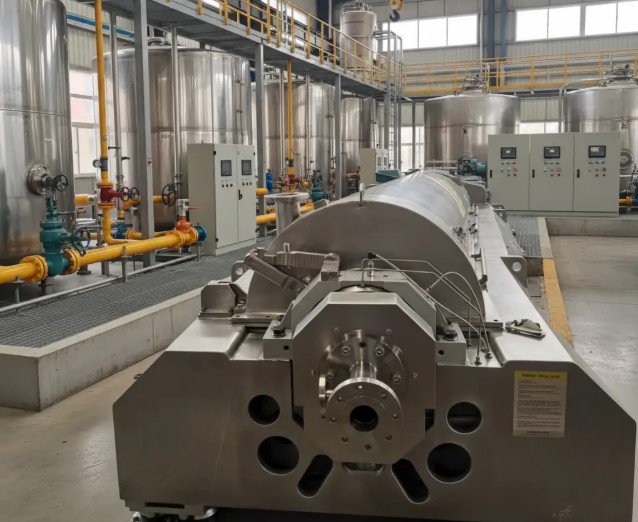
Food processing plants often need reliable equipment to separate solids, liquids, and suspended particles during production. The right separation system can improve product consistency, reduce processing time, and support efficient use of raw materials.
Choosing the right centrifuge separator requires more than checking the machine’s capacity. Food manufacturers should consider the type of product, particle characteristics, hygiene requirements, processing temperature, throughput, and desired separation results before making a decision.
Understand the Separation Requirement
Start by identifying exactly what the equipment needs to separate. Different food products contain different combinations of solids and liquids, so one machine configuration may not suit every application.
For example, a plant processing starch slurry may have different requirements from a facility handling vegetable juice or dairy-related streams. Understanding the material helps narrow down suitable equipment options.
Determine whether the main objective involves:
- Clarifying a liquid
- Concentrating suspended solids
- Recovering valuable solids
- Reducing liquid content in solids
- Separating fine particles from a product stream
A clear separation objective makes equipment selection much easier.
Consider the Food Product Characteristics
The physical properties of the feed material directly affect centrifugal separation performance. Manufacturers should examine the density, viscosity, particle size, and solids concentration of the product.
Products with very fine particles may require different operating conditions from mixtures containing larger or heavier solids.
Viscosity also deserves attention. A thicker feed may behave differently inside the separation chamber and could require an appropriate machine configuration to maintain effective processing.
Evaluate Required Processing Capacity
Processing capacity should match the plant’s actual production requirements. Choosing equipment with insufficient capacity may create a bottleneck, while excessive capacity can increase investment and operating costs unnecessarily.
Estimate the expected feed flow rate under normal production conditions. Also consider potential increases in production volume when selecting the equipment.
A suitable capacity provides enough processing capability without forcing the machine to operate continuously at its maximum limits.
Check Separation Efficiency
Separation efficiency represents one of the most important selection criteria. The equipment should achieve the required level of liquid clarification, solids concentration, or product recovery.
Ask equipment suppliers about expected separation results for materials similar to your own process. Laboratory or pilot testing can also provide useful information when the feed characteristics create uncertainty.
The target should focus on actual process requirements rather than simply choosing the machine with the highest rotational speed.
Examine Hygiene and Food-Safety Requirements
Food processing equipment must support strict hygiene practices. Product-contact components should suit the processing environment and allow effective cleaning.
The equipment design should minimize areas where food residues could accumulate. Smooth surfaces, suitable materials, and accessible components can simplify cleaning and routine sanitation.
Manufacturers should also review applicable food-processing standards and plant-specific hygiene procedures before installation.
Consider Construction Materials
Material selection matters because food-processing equipment encounters moisture, cleaning chemicals, temperature changes, and different product compositions.
Stainless steel often plays an important role in food-processing equipment because it offers durability and resistance to corrosion under appropriate operating conditions.
The exact material specification should depend on the product, cleaning process, temperature, and applicable industry requirements.
Review Operating Temperature
Temperature can affect viscosity, density, and overall separation behavior. Some food products require processing within a specific temperature range to protect quality.
Before selecting a centrifuge, identify the normal feed temperature and any expected variations.
The equipment should accommodate the operating conditions without creating unnecessary stress on the product or machine components.
Look at Energy Consumption
Energy efficiency can influence long-term operating costs, particularly in plants that run separation equipment for many hours each day.
Motor power, bowl speed, feed conditions, and overall machine design can affect energy consumption.
Rather than focusing only on the initial purchase price, compare expected operating requirements over the equipment’s working life.
Assess Maintenance Requirements
Food-processing equipment needs regular inspection and maintenance to support dependable production. A machine that requires excessive downtime may affect plant productivity.
Review how easily operators can inspect wear components, access important parts, and perform routine servicing.
Ask the supplier about recommended maintenance intervals and the availability of replacement components. Clear maintenance requirements help plants plan servicing without disrupting production unnecessarily.
Consider Continuous Operation
Many food-processing facilities operate on demanding production schedules. Continuous separation can help maintain a steady material flow and reduce interruptions associated with batch processing.
When comparing machines, examine how the feed system, solids discharge system, and liquid outlets support continuous operation.
The best choice depends on the plant’s process rather than simply selecting the most advanced configuration.
Evaluate Solids Discharge
The way separated solids leave the equipment can affect overall production efficiency. Some applications require frequent solids removal, while others produce relatively small quantities of concentrated material.
A suitable discharge mechanism should match the solids concentration and expected production rate.
Operators should also consider whether the separated solids need further processing, storage, or transport after discharge.
Compare Installation Requirements
Available floor space, equipment height, feed connections, discharge arrangements, and service access can influence installation decisions.
Before purchasing, measure the proposed installation area and review the plant’s existing utility connections.
A detailed site assessment can prevent problems during installation and make future maintenance easier.
Consider Supplier Experience
Equipment quality matters, but supplier support also plays an important role. A knowledgeable manufacturer should understand the application and help match equipment specifications with actual processing requirements.
Shenzhou Machinery provides separation equipment for industrial applications and can help manufacturers assess equipment requirements based on process conditions.
When comparing suppliers, review technical documentation, equipment specifications, customization capabilities, service support, and spare-parts availability.
Think About Product Recovery
Food manufacturers often want to recover as much valuable material as possible. Effective separation can help reduce product losses while producing a cleaner liquid or more concentrated solid fraction.
Consider the economic value of the recovered material when evaluating equipment performance.
Even a small improvement in recovery efficiency may have a meaningful impact on operating costs when the plant processes large quantities of product.
Ask the Right Questions Before Buying
A detailed discussion with the equipment supplier can reveal whether a particular machine suits the application.
Important questions include:
- What feed characteristics can the machine handle?
- What processing capacity does the equipment provide?
- What separation results can operators expect?
- Which materials contact the food product?
- How does the machine handle solids discharge?
- What maintenance does the equipment require?
- What cleaning procedures does the manufacturer recommend?
- Can the configuration accommodate future production changes?
Clear answers to these questions make the purchasing decision more practical and informed.
Why Proper Equipment Selection Matters
Selecting a centrifuge based only on price or capacity can create performance problems later. Food processing involves different materials, production conditions, hygiene requirements, and quality targets.
A properly matched machine can support stable separation, consistent product quality, efficient material recovery, and manageable maintenance.
The selection process should therefore begin with the application and work toward the equipment specifications rather than choosing a machine first and adapting the process afterward.
Conclusion
Choosing a centrifuge separator for food processing requires careful consideration of the product, separation objective, throughput, hygiene requirements, temperature, material construction, energy use, maintenance, and installation conditions.
Food manufacturers should evaluate the complete processing environment before making a purchase. Testing the feed material and discussing application requirements with an experienced supplier can also reduce selection risks.
Shenzhou Machinery offers industrial separation solutions designed for different processing requirements. By matching equipment characteristics with the specific food-processing application, manufacturers can build a more reliable and efficient separation process.
About Post Author



More Stories
The Role of Xprinter Thermal Printers in Improving Retail Checkout Efficiency
How to Identify High-Quality Tissue Culture Plants Before Purchasing
Understanding Acoustic Panel Specifications Before Placing a Bulk Order