

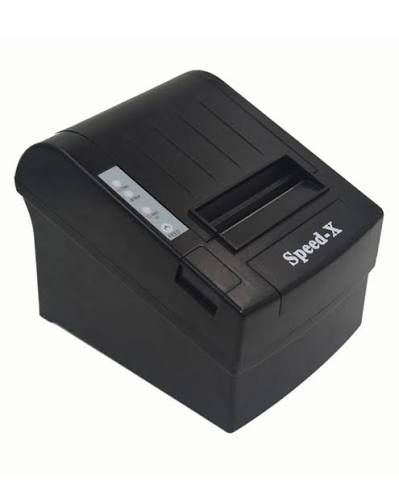
The thermal printer manufacturing industry is evolving as businesses adopt more advanced digital systems and demand greater efficiency from their printing equipment. Retailers, logistics providers, healthcare facilities, manufacturers, and other organizations rely on thermal printers for receipts, labels, barcodes, and product identification. As these applications become more connected and automated, manufacturers must continue improving their products to meet changing operational requirements.
A forward-looking Thermal Printer Manufacturer needs to consider technological innovation, product reliability, software compatibility, and customer expectations when planning future developments. Emerging trends such as wireless connectivity, cloud-based management, artificial intelligence, energy efficiency, and advanced manufacturing technologies are likely to influence how thermal printers are designed and produced. Understanding these developments helps businesses prepare for changes in the printing equipment market.
1. Increasing Demand for Wireless Thermal Printing
Wireless connectivity is becoming an important feature in modern thermal printing applications. Businesses increasingly want printers that can operate without being permanently connected to a computer or POS terminal through physical cables.
Technologies such as Bluetooth and Wi-Fi support flexible printer placement and communication with compatible devices. This is particularly useful in restaurants, warehouses, retail stores, and mobile service environments.
Future printer designs may focus on improving wireless stability, simplifying device pairing, and supporting multiple connected devices. Manufacturers will also need to address security and compatibility to ensure that wireless printing works reliably within business networks.
2. Growth of Cloud-Based Printing Solutions
Cloud technology is changing how businesses manage connected devices and information systems. Thermal printers are gradually becoming part of broader digital environments that allow organizations to coordinate printing operations across different locations.
Cloud-connected printing solutions may support remote configuration, centralized printer management, and communication with online business platforms.
For example, a retail company operating multiple stores may benefit from centralized management tools that help administrators monitor printer settings and coordinate updates.
Manufacturers are likely to place greater emphasis on network compatibility, secure communication, and software integration as cloud-based business systems become more common.
3. Integration of Artificial Intelligence and Predictive Maintenance
Artificial intelligence and data analysis may create new opportunities for improving printer maintenance and operational reliability.
Connected printers can potentially provide information about usage patterns, error conditions, and component performance. When this information is collected and analyzed, software systems may help identify conditions that indicate a possible equipment problem.
Predictive maintenance aims to identify potential failures before they interrupt normal operations.
In the future, intelligent monitoring tools may help businesses recognize paper-feeding problems, unusual operating behavior, or maintenance requirements earlier. These systems could reduce unexpected downtime when supported by reliable data and appropriate diagnostic methods.
4. Development of Faster and More Accurate Printing Systems
Printing speed and accuracy remain important performance factors across many industries.
Retail businesses need quick receipt production, while logistics companies require clear labels and readable barcodes. Industrial applications may also involve high-volume printing under demanding working conditions.
Manufacturers continue to investigate improvements in printhead technology, processing systems, paper-feeding mechanisms, and firmware.
Future developments may combine faster printing with more consistent output quality. However, manufacturers will need to balance speed with resolution, media compatibility, and component durability.
The most useful improvements will be those that address the actual requirements of different printing applications.
5. Advancements in Thermal Printhead Technology
The printhead is a central component of thermal printing equipment. Its heating elements produce the patterns needed to create text, images, and barcodes on compatible media.
Improvements in printhead materials, manufacturing precision, and temperature control can influence print quality, energy consumption, and operational life.
Future research may focus on improving heating consistency, reducing unnecessary power consumption, and increasing resistance to wear.
Manufacturers may also explore better ways to coordinate printhead performance with different paper and label materials.
These developments can help support more reliable printing across both standard receipt applications and specialized labeling environments.
6. Greater Focus on Energy Efficiency
Energy efficiency is becoming a more important consideration in electronic product development.
Thermal printers use electrical power to operate their printheads, motors, control systems, and communication components. Manufacturers are therefore exploring ways to improve power management without reducing printing performance.
Potential development areas include:
- More efficient electronic components
- Improved printhead temperature control
- Reduced standby power consumption
- Better power supply designs
- Optimized firmware operation
Energy-efficient designs may be particularly valuable for businesses operating large numbers of printers or using battery-powered mobile devices.
Manufacturers will need to evaluate these improvements under realistic workloads to ensure that efficiency gains do not affect print quality or reliability.
7. Expansion of Mobile Thermal Printing
Mobile thermal printers are useful for businesses that need to produce receipts, tickets, or labels away from fixed workstations.
Delivery personnel, field service workers, transportation providers, and mobile retailers may use compact devices that connect to smartphones or tablets.
Future mobile printers may offer improvements in battery performance, wireless communication, portability, and device management.
Manufacturers may also focus on developing more durable designs that can withstand regular handling and changing operating conditions.
As mobile business applications expand, demand for convenient and reliable portable printing equipment may continue to grow.
8. Growth of Industry-Specific Printer Designs
Different industries require different printing functions, and demand for specialized solutions is encouraging manufacturers to develop more application-focused products.
For example, retail businesses commonly need receipt printers, while logistics providers rely on label printers with dependable barcode output. Healthcare facilities may require equipment that supports specific identification and information systems.
Industry-specific development may involve:
- Specialized media compatibility
- Different printing resolutions
- Customized interfaces
- Application-specific firmware
- Compact or industrial housing designs
- Integration with industry software
Manufacturers that understand these requirements can develop product ranges that address practical customer needs more effectively than a single general-purpose design.
9. Increasing Use of Automation in Manufacturing
Automation is influencing how electronic products are assembled, inspected, and tested.
In thermal printer manufacturing, automated systems may support circuit board production, component placement, mechanical assembly, and product inspection.
Automation can improve production consistency and reduce certain manual errors. It may also help manufacturers manage larger production volumes with more predictable processes.
Future manufacturing facilities may combine automated equipment with digital production monitoring and real-time quality data.
However, automation still requires skilled employees, equipment maintenance, and careful process management. Manufacturers must evaluate where automated systems provide genuine improvements in productivity and product quality.
10. Adoption of Smart Factory Technologies
Smart manufacturing connects production equipment, digital monitoring systems, and operational data to improve factory management.
In thermal printer production, smart factory technologies may help manufacturers monitor machine performance, track production progress, and identify quality problems.
Sensors and connected equipment can provide information about machine conditions and production activities.
This information can support better scheduling, equipment maintenance, and resource planning.
As digital manufacturing systems become more accessible, manufacturers may increasingly use connected production environments to improve operational visibility and consistency.
11. Greater Emphasis on Sustainable Product Development
Environmental responsibility is becoming an important factor in electronics manufacturing.
Thermal printer manufacturers may focus more on reducing production waste, improving energy efficiency, using recyclable materials, and extending product life cycles.
Sustainable product development can include:
- Designing durable components
- Reducing unnecessary material use
- Improving repairability
- Using recyclable packaging
- Optimizing factory energy consumption
- Supporting responsible electronic waste management
These initiatives can help reduce environmental impacts while supporting more efficient manufacturing operations.
However, sustainability claims should be supported by measurable practices and reliable documentation.
12. Development of More Compact and Space-Saving Printers
Many businesses operate in environments where available workspace is limited.
Retail checkout counters, kiosks, mobile service stations, and compact offices may require printers that occupy less space without sacrificing essential functions.
Manufacturers are exploring more efficient internal layouts, smaller electronic components, and practical housing designs.
Future compact printers may combine improved connectivity and printing performance with easier installation and maintenance.
Designers must still account for heat management, paper access, mechanical strength, and component protection when reducing product size.
13. Improved Software Compatibility and Integration
Thermal printers increasingly operate as part of larger digital business systems.
Retail applications may involve POS software, warehouses use inventory management platforms, and logistics providers depend on shipping and tracking applications.
As software environments evolve, manufacturers must maintain compatibility with different operating systems, communication protocols, and application requirements.
Future developments may include:
- Improved printer drivers
- More flexible SDKs
- Better firmware management
- Expanded command language support
- Easier device configuration
- Enhanced integration documentation
Better software support can simplify installation and reduce the technical effort required to introduce printers into existing business environments.
14. Growth of Customization and OEM Manufacturing
Businesses increasingly seek products that match their brand identities and operational requirements.
OEM and private label arrangements allow companies to sell thermal printers under their own brands while relying on established manufacturing capabilities.
Customization may involve logos, housing colors, packaging, interfaces, firmware, and selected hardware configurations.
Future OEM development may become more flexible as manufacturers improve product platforms and engineering processes.
However, customization still requires careful planning. Changes to hardware or firmware may affect cost, compatibility, testing, and production lead times.
Manufacturers will need efficient development processes to support customized products without creating unnecessary production complexity.
15. Advancements in Barcode and Label Printing
Barcode and label printing remain important applications in logistics, warehousing, retail, healthcare, and manufacturing.
The growth of e-commerce and automated inventory systems has increased the importance of accurate product identification and tracking.
Manufacturers may continue improving print resolution, media handling, barcode reproduction, and compatibility with different label formats.
Support for specialized labels and more advanced printing configurations may also become increasingly important.
As automated scanning and tracking systems develop, thermal printers will need to produce consistent output that meets the requirements of connected identification systems.
16. Better Device Security and Data Protection
Connected thermal printers can communicate with business networks, computers, mobile devices, and cloud platforms.
These connections create potential security considerations, particularly in organizations handling sensitive business or customer information.
Future printer development may place greater emphasis on secure communication, access controls, firmware updates, and network configuration.
Manufacturers may also improve documentation to help businesses configure devices securely.
Security requirements will vary according to the printer’s connectivity features and intended application. Companies should evaluate network security as part of their overall device deployment strategy.
17. Improvements in Product Testing and Quality Assurance
As thermal printers become more advanced, quality assurance processes must account for increasingly complex hardware and software configurations.
Manufacturers may use automated inspection equipment, digital test records, and more detailed performance evaluations to identify defects.
Testing can include print quality, paper feeding, cutter operation, communication stability, firmware behavior, and component durability.
For customized models, additional testing may be required to verify that modified hardware and software work correctly together.
More advanced testing systems can help manufacturers detect problems earlier and maintain consistent production standards.
18. Greater Attention to Repairability and Product Life Cycles
Businesses are increasingly interested in equipment that can be maintained and repaired rather than replaced after every significant failure.
Manufacturers may respond by improving component accessibility, providing replacement parts, and preparing clearer maintenance documentation.
For example, making commonly serviced components easier to access can simplify maintenance procedures and reduce repair time.
Future product designs may also consider modular components and longer-term spare parts availability.
These developments can benefit businesses by helping them manage equipment costs and reduce unnecessary electronic waste.
19. How Businesses Can Prepare for Changes in Thermal Printing
Businesses purchasing thermal printers should consider both current operating requirements and potential future developments.
A printer that meets today’s needs may become less suitable if the business adopts new software, expands its operations, or introduces more automated processes.
Buyers can prepare by evaluating:
- Current and expected printing volumes.
- Required receipt or label formats.
- Connectivity and network requirements.
- Compatibility with existing and planned software.
- Maintenance and replacement part availability.
- Support for future firmware updates.
- Opportunities for customized configurations.
- Energy consumption and product durability.
Discussing these requirements with suppliers before purchasing can help businesses choose equipment that remains practical as their operations develop.
20. The Long-Term Outlook for Thermal Printer Manufacturing
The future of thermal printer manufacturing will likely be shaped by the combination of hardware innovation, software development, digital connectivity, and more efficient production methods.
Wireless and cloud-based printing may become more common, while automation and data analysis could improve device management and factory operations.
At the same time, manufacturers will continue to address established priorities such as print quality, reliability, affordability, and compatibility.
Sustainability, security, and repairability may also become more important factors in product development and purchasing decisions.
The pace of adoption will depend on customer demand, technical feasibility, industry standards, and manufacturing costs.
Conclusion
Emerging trends are creating new opportunities and challenges for the global thermal printer manufacturing industry. Wireless connectivity, cloud integration, artificial intelligence, advanced printhead technology, automation, and sustainable product development are influencing how manufacturers design and produce modern printing equipment.
For businesses, understanding these developments can support better equipment selection and long-term purchasing decisions. Manufacturers that combine technological innovation with reliable quality control, software compatibility, and practical customer support will be better positioned to respond to changing market requirements. As business operations become increasingly digital and connected, thermal printing technology is likely to remain an important part of transaction processing, product identification, and information management.
About Post Author


More Stories
Emerging Trends Shaping the Future of the Global Receipt Printer Manufacturing Industry
Common Thermal Printer Problems and How to Troubleshoot Them
Understanding Receipt Printer Connectivity Options and Compatibility