

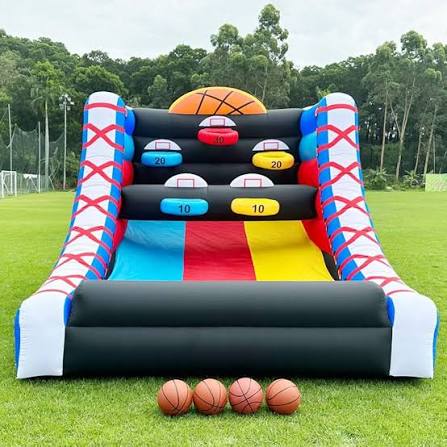
How to Choose Inflatable Interactive Games for Commercial Entertainment Venues
Commercial entertainment venues need attractions that capture visitors’ attention, encourage participation, and provide value over time. Whether operating a family entertainment center, amusement facility, indoor play area, resort, or event rental business, choosing the right equipment can influence customer satisfaction and operating efficiency. Inflatable attractions are popular options because they offer different styles of play, from sports challenges and target games to obstacle courses and team competitions.
When evaluating Inflatable Interactive Games for commercial use, buyers should look beyond appearance and initial purchase price. Material quality, safety requirements, installation space, target audience, maintenance needs, and expected customer demand all affect whether an attraction is a practical investment. By assessing these factors before purchasing, venue operators can select equipment that fits their business model and creates an enjoyable experience for visitors.
1. Identify Your Venue Type and Business Goals
The first step is to understand how the inflatable games will fit into your entertainment business. Different venues have different operational requirements, customer expectations, and space limitations.
Family Entertainment Centers
Family entertainment centers often serve children, teenagers, parents, and groups of friends. A combination of skill-based challenges and physical activities can help appeal to visitors with different interests.
Basketball shooting games, soccer target attractions, and suitable obstacle courses may provide variety. When selecting equipment, consider age restrictions, participant capacity, supervision requirements, and how easily the attraction can be integrated into the existing floor plan.
Indoor Play Centers
Indoor facilities must pay particular attention to ceiling height, access routes, floor suitability, and available electrical capacity. The equipment must fit the venue while leaving sufficient room for safe entry, exit, and movement around the attraction.
Smaller interactive games may be easier to accommodate in limited spaces, but their complete installation requirements should always be checked before purchase.
Outdoor Amusement and Recreation Venues
Outdoor venues may have more room for large inflatables, including obstacle courses and multi-sport attractions. However, ground conditions, anchoring arrangements, weather restrictions, and access to suitable power supplies remain important considerations.
The attraction should be selected according to the site’s conditions and the manufacturer’s approved installation requirements.
Event Rental Businesses
Rental companies need equipment that can be transported, installed, removed, cleaned, and stored efficiently. A product that performs well at a permanent venue may be less practical for a business serving multiple locations each week.
Consider packed dimensions, total weight, setup time, handling requirements, and the availability of replacement parts when evaluating potential purchases.
2. Choose Games That Match Your Target Audience
An attractive game is only commercially useful if it appeals to the customers your venue intends to serve.
Children’s Entertainment
For venues serving younger visitors, prioritize attractions designed for the relevant age groups. Simple target games and appropriately sized sports challenges may offer accessible ways to participate.
Review age recommendations, participant limits, supervision requirements, and any restrictions on physical activity. Avoid assuming that a game is suitable for all children simply because its appearance is colorful or playful.
Teenagers and Adults
Older participants may prefer competitive activities that involve accuracy, speed, or more complex challenges. Basketball shooting games, soccer target attractions, and certain obstacle courses can offer opportunities for friendly competition.
The selected format should still match the equipment’s approved use and the physical abilities of the intended audience.
Families and Mixed-Age Groups
Family-focused venues often benefit from offering different activity styles rather than relying on a single challenging attraction. Target games, sports challenges, and other suitable interactive experiences can give visitors more options.
Where permitted by the equipment guidelines, organizers can use different scoring formats or activity rotations to accommodate different experience levels.
Corporate and Group Customers
Some commercial venues host company gatherings, birthday celebrations, school groups, or private parties. Team-based interactive games can be useful for these bookings because they encourage cooperation and shared participation.
If group events are an important part of your business, consider attractions that can accommodate organized rounds without creating excessive queues.
3. Evaluate Material Quality and Construction
Commercial inflatables may experience repeated use, frequent setup, and regular transportation. Construction quality therefore plays an important role in the purchasing decision.
Examine the Materials
Ask the manufacturer about the materials used, including their thickness, coating, abrasion resistance, and suitability for the intended application.
Material quality should be evaluated alongside the product’s overall design, reinforcement, seams, and manufacturing process. No single material specification guarantees long-term durability under every operating condition.
Check Seams and Reinforced Areas
Seams and high-stress sections should be constructed appropriately for the attraction’s intended use. Request details about seam construction, reinforcement points, and the manufacturer’s quality-control procedures.
For a significant commercial purchase, consider requesting detailed product photographs, documentation, or an inspection opportunity before shipment.
Understand Durability Expectations
The service life of an inflatable depends on its construction, frequency of use, participant behavior, environmental exposure, and maintenance.
Ask the supplier how the product is designed for commercial operation and what procedures are recommended for cleaning, inspection, drying, and storage. Treat broad durability claims cautiously unless they are supported by relevant product information.
4. Review Safety Features and Applicable Standards
Safety should be a primary selection criterion for any inflatable attraction used by paying customers.
Verify Relevant Compliance Documentation
Ask which safety standards and regulations apply to the specific equipment and the market where it will be operated. Request relevant documentation and confirm that it covers the model being purchased.
Requirements may differ by country, venue type, and attraction design. A general certificate should not automatically be treated as proof of compliance with every applicable requirement.
Check Anchoring and Stability Requirements
Every inflatable must be installed using the anchoring arrangements and procedures specified by its manufacturer. Buyers should understand the required ground conditions, anchoring points, and installation clearances.
If the venue operates on multiple surfaces, confirm whether the equipment can be installed safely at those locations using approved methods.
Understand Participant Limits
Review restrictions relating to the number of users, age, height, weight, and permitted activities. These limits should be practical for staff to enforce during busy periods.
Select equipment that can be supervised effectively and avoid attractions whose operating requirements exceed the venue’s staffing capabilities.
Establish an Inspection Routine
Ask the supplier for written inspection and maintenance guidance. Staff should know how to check the equipment before opening, recognize visible damage, and respond when a safety concern arises.
An attraction should not remain in service when a problem has been identified until it has been appropriately assessed and resolved.
5. Select the Right Type of Inflatable Interactive Game
Different game formats offer different customer experiences and operational requirements. The best choice depends on the available space, visitor demand, and business objectives.
Inflatable Basketball Shooting Games
Basketball attractions challenge participants to shoot balls toward designated hoops. They can work well for short competitions and may suit venues that want a simple game with a clear scoring objective.
Before purchasing, check the dimensions, ball requirements, participant limits, and whether the product is approved for indoor or outdoor use.
Inflatable Soccer Target Games
Soccer target games involve kicking a ball toward marked openings or scoring zones. They can appeal to visitors who enjoy football-inspired activities without requiring a full-size playing field.
These attractions may also be useful for corporate events, sports-themed parties, and school group bookings.
Inflatable Obstacle Courses
Obstacle courses provide a more physically active experience. Depending on the model, participants may navigate tunnels, climb designated sections, and complete a sequence of challenges.
They can become prominent attractions at larger venues, but their installation footprint, supervision requirements, and participant flow need careful assessment.
Inflatable Target Challenges
Target games focus on accuracy and coordination. Their relatively straightforward rules can make them useful for venues with visitors of different ages and sporting experience.
Review the designated throwing or kicking methods and confirm that the game provides enough room for safe participation and waiting areas.
Multi-Sport Inflatable Attractions
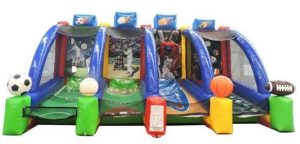
Multi-sport products combine several sports-inspired activities in one attraction or coordinated setup. They can help venues provide more variety without purchasing a separate large structure for every activity.
Check exactly which activities are included, whether different sections can operate at the same time, and how the design affects participant movement and supervision.
6. Measure the Available Installation Space
Space planning affects safety, visitor flow, and the number of attractions a venue can operate.
Calculate the Full Footprint
Do not rely solely on the main dimensions listed in a product description. Include required safety clearances, anchoring points, entrances, exits, blower locations, and queue areas.
For indoor venues, confirm ceiling height and access through doors, corridors, and loading areas. For outdoor venues, evaluate ground conditions, overhead obstructions, and suitable anchoring arrangements.
Plan Customer Movement
Visitors should be able to approach the attraction, wait for their turn, participate, and leave without obstructing other activities.
Place entrances and exits where they are easy to identify. Keep emergency routes clear and avoid positioning queues where they interfere with nearby attractions or public walkways.
Consider Future Expansion
If the business expects to add more attractions later, leave sufficient flexibility in the layout where possible. A modular arrangement may make it easier to introduce additional activities without redesigning the entire venue.
However, future expansion should never reduce the required clearances or compromise safe operating conditions.
7. Compare Setup, Portability, and Operating Requirements
Commercial equipment needs to fit the venue’s daily workflow as well as its physical space.
Evaluate Setup and Takedown Time
Ask the supplier how the inflatable is installed and removed, which tools are required, and how many trained staff members are recommended.
Setup times vary with the equipment, anchoring method, and site conditions. If your business operates multiple events each day, the installation workflow may have a significant effect on productivity.
Check Transportation and Storage
Rental operators should review the packed dimensions, total weight, handling instructions, and transportation requirements.
Storage areas should be suitable for the equipment’s size and should allow the inflatable to be cleaned and dried according to the manufacturer’s instructions before it is packed away.
Confirm Blower and Electrical Requirements
Check the recommended blower specifications, power consumption, electrical connections, and compatibility with the venue’s available supply.
Determine whether the blower and other required accessories are included in the purchase price. Electrical equipment should be installed and operated according to the manufacturer’s instructions and applicable requirements.
8. Consider Customization and Branding
Customization may help a commercial venue create a distinctive attraction or support branded events.
Match the Venue’s Theme
Some manufacturers offer different colors, graphics, layouts, or activity configurations. These options can help the attraction complement a family entertainment center, resort, festival, or sports-themed venue.
Confirm whether customization affects production time, minimum order quantities, pricing, or maintenance requirements.
Explore Branding Options
Businesses may want to display their logo or provide branded entertainment for corporate customers. Ask where graphics can be placed without interfering with safety information or the equipment’s intended operation.
Ensure that you have permission to use any third-party logos, trademarks, or licensed artwork.
Approve the Final Specifications
Before production begins, review the written specifications for dimensions, materials, graphics, accessories, and operating requirements.
Confirm the final artwork and design details to reduce the risk of receiving equipment that does not match your expectations.
9. Evaluate Supplier Reliability and After-Sales Support
A dependable supplier can help commercial operators manage installation, maintenance, and future repairs.
Review Manufacturing and Quality Control
Ask about the manufacturer’s production process, inspection procedures, and product testing. For larger orders, request relevant quality documentation and clarify how the delivered equipment will be checked against the agreed specifications.
Confirm Technical Assistance
Find out whether the supplier provides installation instructions, operating guidance, maintenance information, and technical support.
Clear documentation can help staff operate the equipment consistently and identify issues that require professional attention.
Check Warranty Coverage
Read the warranty carefully and confirm its duration, covered components, exclusions, and claim process. Ask specifically whether the terms cover commercial use, rental operations, and frequent installation.
Also determine whether replacement parts and repair materials are available when needed.
Review Delivery and Payment Terms
Request a written quotation that specifies production time, shipping arrangements, delivery estimates, packaging, payment conditions, and any applicable import charges.
If the equipment is needed for a scheduled opening or event, allow time for transportation, inspection, installation planning, and staff training.
10. Calculate the Total Cost of Ownership
The initial purchase price does not represent the full financial commitment. Commercial operators should consider the costs of running and maintaining the attraction throughout its expected service life.
| Cost factor | What to evaluate |
|---|---|
| Purchase price | Base equipment cost and customization fees |
| Shipping | Transportation, delivery, and handling |
| Installation | Labor, tools, and staff training |
| Operating costs | Electricity and other approved operating requirements |
| Maintenance | Cleaning, inspections, and routine care |
| Repairs | Replacement parts, repair materials, and service |
| Storage | Space, handling, and protection between uses |
| Compliance | Applicable inspections, insurance, and regulatory costs |
For rental businesses, compare these costs with realistic booking estimates and expected rental prices. For permanent venues, consider the attraction’s contribution to customer experience, capacity, and the overall entertainment offering.
Avoid assuming that high visitor numbers will automatically generate a profit. Demand, seasonality, competition, staffing, and maintenance can all influence the financial result.
11. Assess Maintenance and Long-Term Usability
Regular maintenance can help commercial operators identify problems early and keep equipment in suitable condition.
Follow Cleaning and Storage Instructions
Use the manufacturer’s recommended cleaning methods and allow the inflatable to dry as instructed before storage. Incorrect cleaning or packing a damp inflatable can contribute to material deterioration.
Store the equipment in appropriate conditions and protect it from unnecessary moisture, excessive heat, and physical damage.
Schedule Inspections
Inspect the structure, seams, anchoring components, blower, and associated accessories according to the manufacturer’s guidance.
Maintain records of inspections, repairs, and any incidents that affect operation. These records can help staff track recurring issues and support more consistent maintenance.
Plan for Downtime
Repairs and inspections may require an attraction to be temporarily unavailable. If the game is important to your venue’s business, consider whether alternative activities can be offered while maintenance takes place.
Access to replacement parts and reliable technical support can help make downtime easier to manage.
12. Common Mistakes to Avoid
Commercial buyers can reduce purchasing risks by avoiding several common mistakes:
- Choosing only by appearance: Attractive graphics cannot compensate for unsuitable specifications or poor construction.
- Ignoring the full installation area: The inflatable must fit with its required clearances, anchoring, and access routes.
- Overlooking operating costs: Power, maintenance, storage, repairs, and staffing should be included in the budget.
- Failing to verify safety requirements: Request documentation that applies to the specific product and intended market.
- Underestimating customer demand: Choose attractions based on realistic audience needs rather than assumptions about popularity.
- Ignoring supplier support: Confirm warranty terms, replacement-part availability, and technical assistance before ordering.
- Neglecting staff training: Employees need clear operating procedures and appropriate supervision arrangements.
- Relying on verbal agreements: Document product specifications, delivery terms, customization, and warranty conditions in writing.
A structured purchasing process helps buyers compare products fairly and make decisions based on practical requirements rather than marketing claims alone.
Conclusion
Choosing inflatable interactive games for a commercial entertainment venue involves balancing customer appeal with safety, durability, space, and operating costs. Basketball shooting games, soccer target attractions, obstacle courses, and multi-sport inflatables can all provide engaging experiences when matched to the venue’s audience and business model.
Before purchasing, evaluate material quality, applicable safety requirements, installation needs, portability, customization, supplier reliability, and the total cost of ownership. It is equally important to plan for regular inspections, staff training, and long-term maintenance.
By making an informed choice and establishing responsible operating procedures, entertainment businesses can build a suitable range of interactive attractions that support visitor engagement and contribute to a positive customer experience.
About Post Author

More Stories
Wudu Basin Installation: Important Measurements and Plumbing Considerations
Enjoy Smooth, Creamy Coffee Creations with an Efficient Electric Milk Frother
China B87 Air Pick: Specifications, Heavy-Duty Applications, and Performance Advantages