

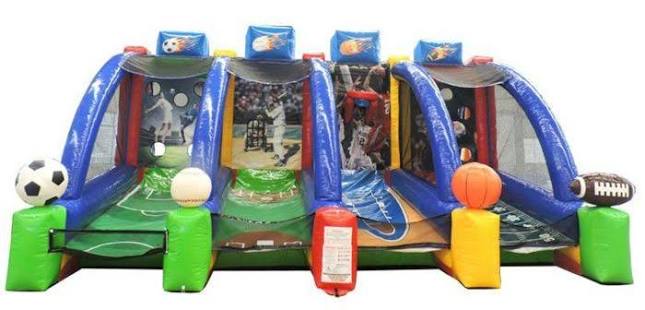
How to Choose Inflatable Sports Games for Indoor and Outdoor Events
Inflatable sports games are popular attractions for school activities, corporate gatherings, birthday parties, community festivals, and entertainment venues. They combine physical activity with friendly competition, giving participants opportunities to test their skills, interact with others, and enjoy memorable experiences. However, choosing the right equipment requires careful consideration of the event location, available space, audience, budget, and safety requirements.
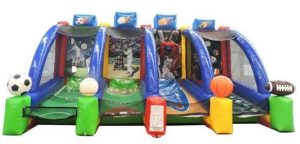
When exploring Inflatable Sports Games, event organizers should first decide whether the attractions will be used indoors or outdoors. Indoor venues often have restrictions involving ceiling height, access, and floor space, while outdoor locations require additional planning for weather, ground conditions, and anchoring.
Understanding these differences makes it easier to select suitable games and create an enjoyable event for participants. This guide explains how to choose inflatable sports games for indoor and outdoor events and what to consider before renting or purchasing equipment.
Why the Event Location Matters When Choosing Inflatable Sports Games
The location influences almost every aspect of inflatable game selection, from the size of the equipment to its installation requirements and operating conditions.
An indoor sports hall may provide a controlled environment with protection from rain and wind, but its ceiling height, entrances, and floor capacity can limit the available options. An outdoor field may accommodate larger attractions, although organizers must account for weather, ground conditions, and suitable anchoring arrangements.
Before selecting a game, evaluate the venue and identify any restrictions that could affect installation or participant movement.
Benefits of Indoor Inflatable Sports Games
Indoor inflatable games can be useful for events held in sports halls, exhibition centers, community buildings, and large event spaces.
Their main advantages include:
- Reduced exposure to rain and wind.
- Greater control over the event environment.
- Opportunities to organize activities throughout the year.
- Easier integration with indoor entertainment and catering areas.
However, indoor installations still require appropriate ventilation, safe electrical arrangements, suitable flooring, and sufficient clearance. The attraction must fit the venue’s actual dimensions, not just its advertised footprint.
Benefits of Outdoor Inflatable Sports Games
Outdoor locations offer more flexibility for large attractions and high-energy activities. School fields, parks, resorts, and festival grounds may accommodate obstacle courses, interactive sports games, and multiple inflatable activity stations.
Outdoor events can also make it easier to separate play areas, waiting zones, and spectator spaces.
The main challenges involve changing weather, ground conditions, anchoring, access to electricity, and the need to protect equipment from unsuitable operating conditions.
1. Measure the Available Space Carefully
One of the most important steps in selecting inflatable sports games is measuring the installation area before booking or purchasing equipment.
A game that looks compact in a photograph may require considerably more space once its access points, anchoring arrangements, and surrounding clearance are considered.
Check the Full Installation Footprint
Ask the supplier for the product’s exact dimensions and required operating area. Confirm the height, length, width, and any additional space needed around the structure.
For indoor events, measure the ceiling height and check for lighting fixtures, beams, sprinklers, ventilation equipment, and other overhead obstructions.
Also verify that the equipment can pass through the venue’s entrances, corridors, loading areas, and doorways.
For outdoor events, assess the entire proposed installation zone and make sure there is enough room for participants to enter, exit, and move between activities safely.
Plan for Queues and Spectators
The inflatable structure is only one part of the required space. Organizers should also allocate room for queues, supervisors, spectators, and equipment access.
For larger events, separating the active play area from the waiting zone can help reduce congestion and make supervision easier.
2. Choose Games That Match Your Audience
Different inflatable sports games appeal to different participants. The best choice depends on age, interests, physical abilities, and the type of event being organized.
For Children and School Events
Schools often benefit from colorful, easy-to-understand activities that encourage participation and friendly competition.
Suitable options may include:
- Inflatable obstacle courses designed for the intended age group.
- Football target challenges.
- Inflatable basketball shootouts.
- Simple throwing and accuracy games.
- Multi-activity stations with supervised rotations.
Choose products with clear operating instructions and appropriate age and participant limits. Teachers and organizers should ensure that children are supervised according to the equipment requirements.
For Corporate Events
Corporate events often focus on teamwork, communication, and employee engagement. Games that encourage collaboration can help employees interact outside their usual work routines.
Consider human foosball, team obstacle challenges, basketball competitions, and inflatable target games.
For mixed groups, offer a combination of energetic activities and lower-intensity options so employees can choose games that suit their comfort levels.
For Festivals and Public Events
Community festivals and large gatherings may benefit from attractions that are visually engaging and can accommodate organized groups throughout the day.
Larger obstacle courses and multi-sport activity zones can become focal points, while smaller games can help distribute visitors across the venue.
When planning for public use, carefully assess participant flow, supervision, capacity, and the operating requirements of every attraction.
3. Consider the Best Inflatable Sports Games for Indoor Events
Indoor events require equipment that fits the venue and can be operated under controlled conditions.
The following game types may be suitable, provided the specific products are designed for the intended location and activity.
Inflatable Basketball Shootout
An inflatable basketball shootout offers a compact, skill-based challenge compared with many large inflatable attractions. Participants take turns shooting toward designated hoops and collecting points.
It can work well at indoor corporate gatherings, school activity days, and community events where organizers want a simple competition that does not require a full sports court.
Before selecting the game, check its dimensions, ceiling clearance, and the manufacturer’s requirements for surrounding space.
Inflatable Football Target Game
Football target games allow participants to kick balls toward scoring zones or designated targets.
They can be a practical choice for indoor venues that have sufficient space and suitable overhead clearance. The attraction should be positioned so that balls cannot travel into walkways, spectator areas, or other activities.
Choose a product designed for the intended installation environment and use only the recommended equipment.
Compact Inflatable Obstacle Course
Some inflatable obstacle courses are designed for smaller spaces than large outdoor versions. They may provide tunnels, barriers, and other movement challenges in a more compact layout.
However, not every obstacle course is suitable for indoor use. Check the product’s dimensions, height, installation instructions, and operating restrictions before making a decision.
Indoor Multi-Sport Challenge Stations
Smaller activity stations can be useful when an event needs several attractions without dedicating the entire venue to one large structure.
For example, organizers may combine a target game with a basketball shootout and another suitable skill-based challenge. Participants can rotate between stations, helping to maintain engagement throughout the event.
Ensure each station has enough space for safe operation and does not obstruct emergency exits or essential access routes.
4. Select Games That Work Well Outdoors
Outdoor venues usually provide greater flexibility for larger inflatable attractions, although weather and ground conditions must be carefully managed.
Inflatable Obstacle Courses
Obstacle courses are popular for outdoor sports days, festivals, and corporate competitions. Their tunnels, barriers, and climbing sections can create an engaging activity for individuals or teams.
Organizers can arrange timed races, relay challenges, or team-based competitions according to the equipment’s intended use.
Check the required footprint, anchoring system, participant capacity, and environmental limits before installing the course.
Inflatable Human Foosball
Human foosball provides a life-sized version of the familiar tabletop game. Participants work together inside a designated arena to move the ball and score against the opposing team.
It is suitable for some company picnics, school events, and community festivals where the venue has sufficient space.
Confirm that the installation surface, weather conditions, and available clearance meet the manufacturer’s requirements.
Inflatable Soccer Goal Challenge
A soccer goal challenge is a useful outdoor attraction for football-themed events. Participants kick balls toward a target goal and earn points based on their accuracy.
The game can be organized as an individual contest or a team competition. It is also easy to incorporate into a sports-day rotation alongside running races and other activities.
Position the attraction so the kicking area is separated from spectators and other participants.
Large Inflatable Multi-Sport Arenas
Large multi-sport arenas can accommodate several activities or create a dedicated competition zone.
Depending on the design, they may include football targets, basketball challenges, or other interactive sports features. These products can be suitable for resorts, festivals, and larger corporate events.
Because the equipment may require a significant installation area, confirm the complete footprint and anchoring requirements well before the event.
5. Evaluate Ceiling Height and Ground Conditions
The installation surface is just as important as the size of the inflatable game.
Indoor Floor Requirements
Indoor venues may have polished floors, sports flooring, concrete surfaces, or temporary event flooring. Ask the manufacturer how the attraction should be installed on the specific surface.
Confirm the approved anchoring or stabilization method. Do not assume that an inflatable can be installed safely on any floor simply because it is indoors.
The venue must also be able to accommodate the equipment’s weight, electrical requirements, ventilation needs, and operating clearances.
Outdoor Ground Conditions
Outdoor surfaces can include grass, soil, asphalt, concrete, and artificial turf. Each surface presents different installation considerations.
Ask the supplier which surfaces are suitable and what anchoring arrangements are required. If the equipment needs ground stakes, confirm that the site permits their use and that underground utilities or other hazards have been considered.
If the surface does not support the specified anchoring method, obtain an approved alternative from the manufacturer rather than improvising.
Weather and Environmental Limits
Outdoor inflatable games may be affected by wind, rain, wet surfaces, and changing ground conditions.
Follow the manufacturer’s specified weather limits and shutdown instructions. Assign a responsible person to monitor conditions during the event, and stop operation when required.
An outdoor activity should never continue beyond its permitted operating conditions simply to keep the event schedule on track.
6. Prioritize Safety Standards and Documentation
Safety should be a central consideration when comparing Inflatable Sports Games, regardless of whether they will be installed indoors or outdoors.
The applicable requirements depend on the product category, destination market, and intended use. Certain inflatable play equipment in Europe may fall within the scope of EN 14960, while relevant ASTM standards and other requirements may apply to particular products in the United States.
Buyers should verify which standards apply to the specific attraction rather than assuming that one certification covers all inflatable sports games.
Request Product Documentation
Before confirming an order or rental, ask for relevant documents, including:
- Product specifications and technical drawings.
- Installation and operating instructions.
- Applicable test reports or conformity documentation.
- Participant limits and age recommendations.
- Anchoring requirements and environmental restrictions.
- Inspection and maintenance procedures.
Check that the documents correspond to the exact product being supplied.
Confirm Supervision Requirements
Some attractions require continuous supervision, specific participant arrangements, or trained operators.
Ask the supplier to explain the requirements and make sure the event team can meet them. Establish clear rules for entry, exit, participant behavior, and emergency response before activities begin.
7. Compare Rental and Purchase Options
The best way to obtain inflatable sports games depends on how frequently they will be used and who will manage the equipment.
When Renting Makes Sense
Renting is often practical for one-time events, seasonal festivals, and occasional company gatherings.
It may provide access to a wider selection of attractions without requiring the organizer to manage long-term storage, maintenance, and transportation.
Before booking, confirm the delivery schedule, setup responsibilities, supervision arrangements, cancellation terms, and what happens if weather conditions prevent outdoor operation.
When Purchasing Is Worth Considering
Purchasing may be more suitable for schools, resorts, rental businesses, and entertainment venues that use inflatable games regularly.
Ownership gives organizations greater control over scheduling and availability, but it also creates ongoing responsibilities for inspections, cleaning, repairs, storage, and safe operation.
When comparing Inflatable Sports Games, request detailed product specifications, warranty terms, and after-sales support information.
Evaluate the total cost of ownership rather than considering the initial price alone.
8. Assess the Supplier’s Quality and Support
A dependable supplier should provide accurate product information and help buyers understand the equipment’s intended use.
Look for suppliers that can explain material specifications, construction quality, installation requirements, and applicable safety documentation.
Ask About Quality Control
Find out how products are checked before shipment. Depending on the design, quality-control procedures may include material verification, seam inspections, dimensional checks, and inflation testing.
For customized products, confirm that the finished equipment will match the approved design and specifications.
Check Warranty and Maintenance Support
Ask what the warranty covers, how defects are reported, and whether replacement components or repair guidance are available.
For commercial installations, access to technical support can help reduce downtime and simplify equipment management.
Written quotations and clear purchase terms can also help prevent misunderstandings about included accessories, shipping, and delivery timelines.
9. Match the Game Selection to Your Budget
Budget planning should account for more than the rental fee or purchase price.
For indoor events, additional costs may include venue hire, installation labor, electrical arrangements, and floor protection where required. Outdoor events may involve site preparation, anchoring equipment, transportation, and weather contingency planning.
Request itemized quotations so you can compare similar products and services.
If your budget is limited, consider using a combination of one main attraction and several smaller activities. This can create variety without requiring numerous large inflatable structures.
For recurring events, compare the costs of renting each time with the expenses associated with purchasing and maintaining equipment.
10. Organize Activities for Smooth Participant Flow
Even suitable equipment can become difficult to manage if the event layout is poorly planned.
A clear activity schedule helps participants understand where to go and when to take part.
Use Activity Stations
For events with several games, divide the venue into designated stations. Each station should have clear instructions, a waiting area, and an appropriate supervisor.
Small groups can rotate between activities at scheduled intervals. This approach helps reduce long queues and gives more participants a chance to take part.
Balance Activity Intensity
Combine high-energy games, such as obstacle courses, with lower-intensity activities, such as target challenges.
This creates a more varied experience and gives participants opportunities to rest between demanding activities.
Prepare an Alternative Plan
For outdoor events, establish a backup arrangement if the weather becomes unsuitable. This may involve moving to an appropriate indoor venue, postponing activities, or replacing inflatable attractions with alternative games.
Any indoor alternative must also be checked for dimensions, installation requirements, and safe operation.
Indoor vs. Outdoor Inflatable Sports Games: A Quick Comparison
| Consideration | Indoor events | Outdoor events |
|---|---|---|
| Available space | Often restricted by walls, ceilings, and access points | May accommodate larger attractions |
| Weather exposure | Generally protected from direct weather | Requires weather monitoring and shutdown planning |
| Installation surface | Flooring and stabilization method must be suitable | Ground conditions and approved anchoring are critical |
| Game selection | Compact games and suitable indoor structures | Larger obstacle courses and multi-sport attractions |
| Electrical arrangements | Check indoor power supply and cable routing | Check weather suitability and electrical protection |
| Event planning | Focus on room layout and emergency access | Include weather contingencies and outdoor site preparation |
The most suitable option is the one that fits the venue, audience, budget, and operating requirements. Neither indoor nor outdoor installation automatically makes a particular attraction safe; correct setup and operation remain essential.
Conclusion
Choosing inflatable sports games for indoor and outdoor events requires careful planning. Organizers should evaluate the venue’s dimensions, the participants’ ages and interests, the available budget, the installation surface, and the equipment’s operating requirements before selecting attractions.
Indoor venues may be better suited to compact games and controlled environments, while outdoor spaces can accommodate larger obstacle courses and multi-sport activities when weather and anchoring conditions are appropriate.
By comparing Inflatable Sports Games based on suitability, safety documentation, construction quality, supplier support, and total cost, event organizers can make informed decisions and create engaging experiences for schools, businesses, families, and community groups. Careful preparation helps ensure that the selected games support the event’s goals while providing an enjoyable environment for everyone involved.
About Post Author

More Stories
Wudu Basin Installation: Important Measurements and Plumbing Considerations
Enjoy Smooth, Creamy Coffee Creations with an Efficient Electric Milk Frother
China B87 Air Pick: Specifications, Heavy-Duty Applications, and Performance Advantages