

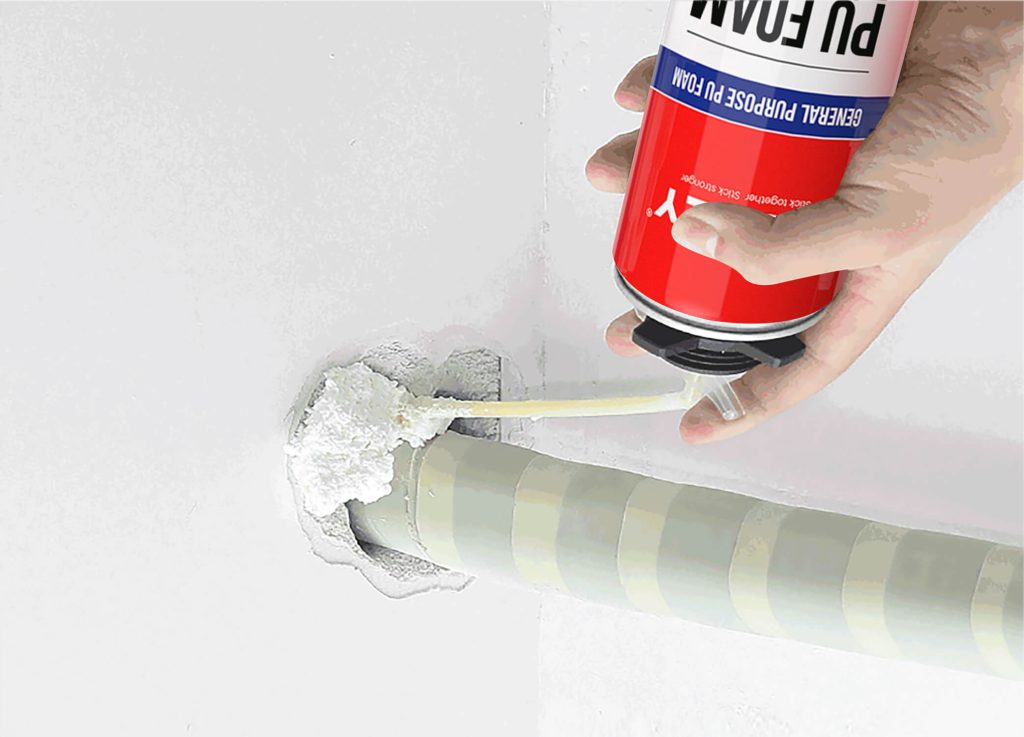
Sealing gaps and spaces around pipes and other structural openings is essential for maintaining energy efficiency, preventing moisture intrusion, and improving overall building performance. Foam sealant is one of the most effective materials for this purpose, offering both insulation and a reliable air- and moisture-tight seal. Proper application around pipes and gaps ensures optimal results and long-lasting performance.
Understanding Foam Sealant
Foam sealant is a polyurethane-based expanding material that fills cracks, gaps, and cavities in walls, ceilings, floors, and around fixtures. Its ability to expand and adhere to multiple surfaces makes it ideal for sealing around pipes, electrical conduits, and other penetrations. For reliable performance in various applications, foam sealant comes in different formulations suitable for both indoor and outdoor use, offering excellent adhesion, durability, and insulation properties.
Preparing the Area
1. Clean the Surface
Before applying foam sealant, it is crucial to clean the area around the gap or pipe. Remove dust, debris, oil, or moisture to ensure maximum adhesion. A clean surface prevents gaps between the foam and the material, enhancing the seal’s effectiveness.
2. Protect Surrounding Surfaces
Foam sealant expands significantly after application. Cover adjacent surfaces with masking tape, plastic sheets, or drop cloths to prevent accidental overspray. This is particularly important around painted walls, countertops, or fixtures that could be damaged by cured foam.
Application Tips Around Pipes
1. Use the Right Nozzle
Foam sealant comes with different types of nozzles to control flow and expansion. For tight gaps around pipes, a thin, pointed nozzle allows for precise application, reducing waste and preventing excessive expansion.
2. Apply Gradually
Apply foam slowly and in layers if necessary. Because foam expands after application, filling the gap too quickly can cause overflow or pressure on pipes. Start with a small amount and allow it to expand before adding more.
3. Maintain Clearance
When sealing around pipes, avoid completely covering movable or flexible components. Some pipes expand or contract with temperature changes, and foam should allow slight movement without cracking or losing adhesion.
Handling Gaps and Irregular Spaces
1. Fill Deep or Wide Gaps in Layers
For larger gaps or irregular spaces, apply foam in multiple layers rather than a single, thick layer. This ensures uniform curing and reduces the risk of trapped air pockets or voids that can compromise insulation.
2. Trim Excess Foam
After curing, trim any excess foam with a utility knife to maintain a neat finish. Trimming also prevents interference with pipe fittings or fixtures.
3. Consider Temperature and Humidity
Foam sealant expands and cures optimally under certain environmental conditions. Check the manufacturer’s recommendations regarding temperature and humidity to ensure proper curing and adhesion.
Safety Precautions
-
Wear protective gloves and eye protection when applying foam sealant to avoid skin or eye contact.
-
Work in a well-ventilated area to minimize inhalation of fumes.
-
Keep children and pets away from the work area until the foam has fully cured.
-
Do not attempt to apply foam sealant near open flames or heat sources, as it is flammable during application.
Additional Benefits
-
Energy Efficiency: Sealing gaps around pipes reduces drafts, heat loss, and energy consumption.
-
Moisture Prevention: Foam sealant prevents water and humidity from entering walls or ceilings, reducing the risk of mold or rot.
-
Noise Reduction: The dense structure of foam provides minor soundproofing, reducing noise transmission through gaps.
-
Durability: Once cured, foam maintains its shape and insulating properties for long-term performance.
Conclusion
Using foam sealant around pipes and gaps is an effective way to improve insulation, prevent moisture intrusion, and enhance energy efficiency. Proper preparation, careful application, and attention to environmental conditions are key to achieving long-lasting results. By following these tips, homeowners and professionals can ensure a reliable and durable seal around pipes and structural openings, maximizing the benefits of foam sealant while maintaining clean, safe, and efficient spaces.
About Post Author


More Stories
Wudu Basin Installation: Important Measurements and Plumbing Considerations
Enjoy Smooth, Creamy Coffee Creations with an Efficient Electric Milk Frother
China B87 Air Pick: Specifications, Heavy-Duty Applications, and Performance Advantages