

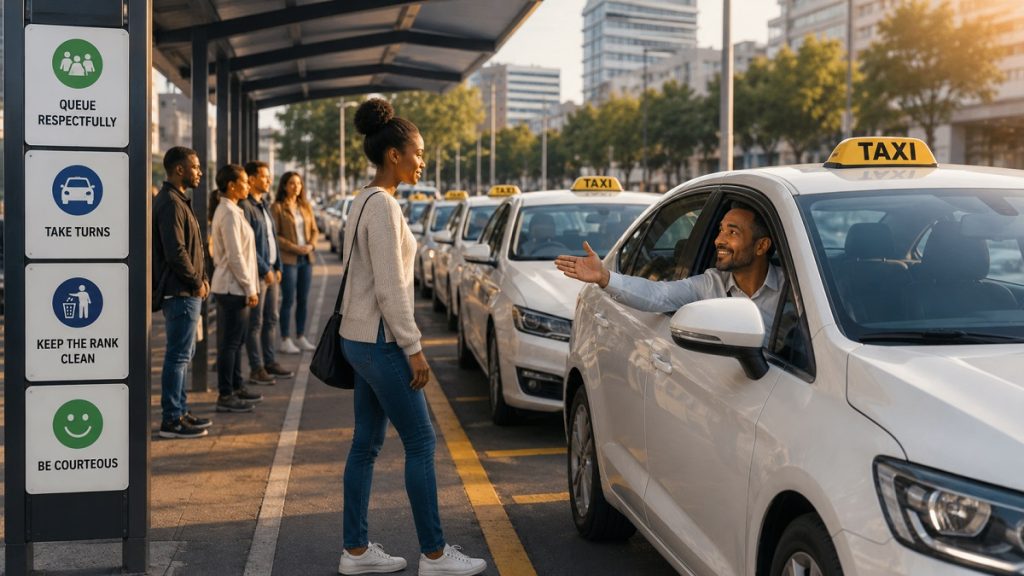
Taxi ranks work best when drivers follow clear, simple behaviour. The system is not complicated. Drivers queue in order. Passengers approach the front vehicle. Cars move forward when space opens. Everyone keeps the rank safe, tidy, and easy to use.
When drivers ignore this basic order, problems start quickly. Vehicles block traffic. Passengers become confused. Arguments can happen between drivers. A rank that should help public hire work becomes slow, tense, and less professional.
Public hire drivers depend on trust. Passengers often choose a taxi from a rank without knowing the driver, the vehicle, or the operator. The first sign of professionalism is not a long conversation. It is how the driver behaves before the passenger even opens the door.
Good rank etiquette starts with proper queueing. A driver should not cut in, hold a place unfairly, or pressure another driver to move without reason. The order of the rank protects fairness. It also helps avoid disputes during busy periods, such as weekends, station rushes, bad weather, or event closing times.
Drivers should also leave enough space for vehicles to move safely. A tight rank can trap cars, block junctions, or force passengers to step into unsafe areas. Each vehicle should be positioned with care. Doors should open without creating a hazard. Passengers should have enough room to enter, load bags, and speak to the driver.
Public hire insurance is designed for licensed drivers who can pick up passengers from ranks or be hailed where permitted. This type of work involves direct public access, so professional conduct around ranks matters. Insurance supports the business side of the work, while daily behaviour supports safety and public confidence.
Passenger choice should also be respected. In many places, passengers may usually take the taxi at the front, but there may be valid reasons to choose another vehicle. They may need a larger car, wheelchair access, card payment, help with luggage, or a driver they already know. Drivers should not argue with passengers over reasonable choices.
Noise and behaviour at the rank matter as well. Loud arguments, careless language, smoking near passengers, or crowding around customers can make the area feel unsafe. A rank is a public workplace. Drivers should treat it that way.
Cleanliness is part of rank etiquette too. Rubbish outside vehicles, food waste, and blocked pavements create a poor impression. Passengers may assume that a messy rank means careless service. Keeping the area tidy protects the reputation of all drivers using that space.
Drivers should avoid leaving their vehicles unattended for long periods while holding a place. A short break may be understandable, but an empty vehicle can delay the whole queue. If a driver is not ready to take a fare, they should not block the active line. This is especially important at stations, hospitals, airports, shopping areas, and town centre ranks.
Public hire insurance does not replace licensing rules, local authority conditions, or proper driver conduct. A driver still needs to follow the rules that apply in their area. Rank use can differ by council, location, and licence type, so drivers should know the local requirements instead of relying on habit.
Good communication between drivers can prevent problems. A simple nod, a quick explanation, or calm cooperation can keep the rank moving. Aggressive behaviour rarely helps. It can attract complaints, damage relationships with other drivers, and make passengers uncomfortable.
Taxi ranks are also watched more than drivers may realise. Passengers notice behaviour. Local businesses notice blocked access. Councils may receive complaints. Other drivers remember who causes trouble. A driver’s reputation can be shaped while waiting, not only while driving.
About Post Author




More Stories
The Complete Guide to Safe and Efficient Gray Raven Top-Ups
The Immortal Appeal Of Local Flim Labs: Creating Film In The Computerized Age
Why This Cake Delivery Service Is Best For Instant Celebration?